Canon C80 vs. C70: Is Full-Frame Worth the Jump?
The C70 and C80 sit close in price but far apart in sensor format. Here's whether full-frame is actually worth the jump.

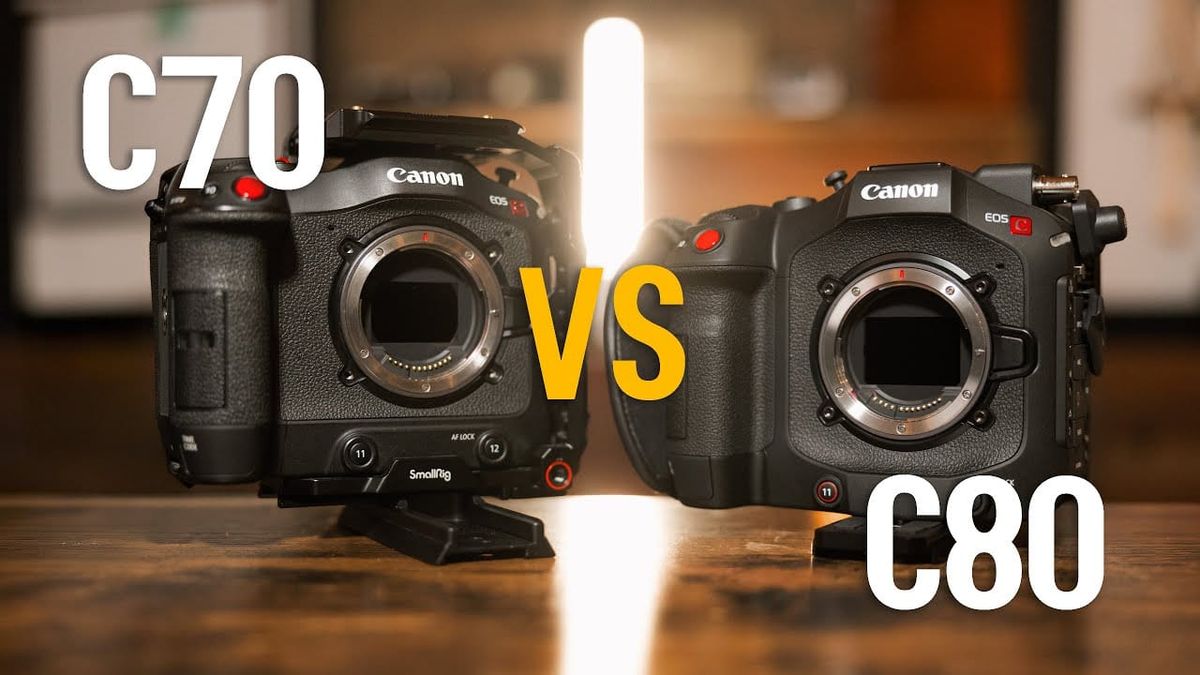
Canon's C70 and C80 sit close in price, $4,799 for the C70 (recently discounted as low as $3,499) against roughly $5,500 for the C80, but they're built around genuinely different sensor formats. The C70 uses Super 35mm; the C80 steps up to full-frame. That single difference cascades into resolution, autofocus generation, and low-light behavior.
Sensor Format Is the Real Divide
The C70's Super 35mm Dual Gain Output (DGO) sensor tops out at 4K DCI up to 60fps, with 4K UHD up to 120fps and 2K up to 180fps for slow motion, and a claimed 16+ stops of dynamic range through its dual-gain readout design. The C80 moves to a genuinely larger full-frame 6K sensor, adding real resolution headroom and a full stop more shallow depth-of-field potential at equivalent apertures, the kind of look full-frame shooters specifically buy in for.
Base ISO Structure Is Different Too
The C80 uses triple base ISO (800, 3200, 12,800), giving it three distinct clean points across the exposure range. The C70's DGO sensor takes a different approach entirely, combining two simultaneous gain readouts per pixel rather than switching between discrete base ISO points, optimized instead for consistent highlight and shadow detail across a wider working range without needing to select a specific ISO tier.
Autofocus Generation Matters More Than It Sounds
The C70 uses Canon's original Dual Pixel CMOS AF. The C80 steps up to Dual Pixel CMOS AF II, a genuine generational improvement in tracking precision and subject recognition, not just a rebrand. For solo shooters relying on autofocus without a dedicated focus puller, that's a real, tangible difference in reliability, not a marginal spec bump.
What's Shared Between Them
Both cameras use RF mount, offer built-in ND filter systems, dual SD card slots, internal 12-bit Cinema RAW Light recording, mini-XLR audio inputs, and a similar compact, run-and-gun-friendly body design. Canon didn't rebuild the fundamental shooting experience between these two, it upgraded the sensor and autofocus specifically.
Competitive Context
At current street pricing, the gap between these two cameras is smaller than the spec difference might suggest, sometimes under $1,000 depending on promotions. That makes the C70 a genuinely compelling budget pick for anyone who doesn't specifically need full-frame's shallow depth of field or the C80's higher resolution, rather than a clearly inferior older model to avoid.
The Signal in the Noise
This comparison comes down to whether full-frame's look and the newer autofocus generation matter enough to your work to justify the premium, which, at current sale pricing, isn't always large. For documentary and run-and-gun shooters who value Canon's autofocus above nearly everything else, the C80's AF II alone may justify the step up regardless of sensor format preference.
Would full-frame's shallow depth of field and the C80's newer autofocus generation be worth the premium for your work, or does the C70's Super 35 sensor already cover what you need?
The Details
- Canon EOS C70: $4,799 standard (recently discounted to $3,499), Super 35mm DGO sensor, 4K DCI up to 60fps, 4K UHD up to 120fps, 2K up to 180fps, 16+ stops dynamic range, Dual Pixel CMOS AF, dual SD card slots
- Canon EOS C80: ~$5,500, full-frame 6K BSI stacked sensor, triple base ISO (800/3200/12,800), 16 stops dynamic range, Dual Pixel CMOS AF II, dual SD card slots (V90 required for RAW)
- Shared: RF mount, built-in ND filter system, internal 12-bit Cinema RAW Light, mini-XLR audio inputs, compact body design