Canon's New EOS R6 V Is a Video-First Full-Frame Body Built for Working Filmmakers
Canon's new video-first full-frame body brings 7K RAW, active cooling, and Cinema EOS DNA to a $2,499 mirrorless body. Here's what working filmmakers need to know.

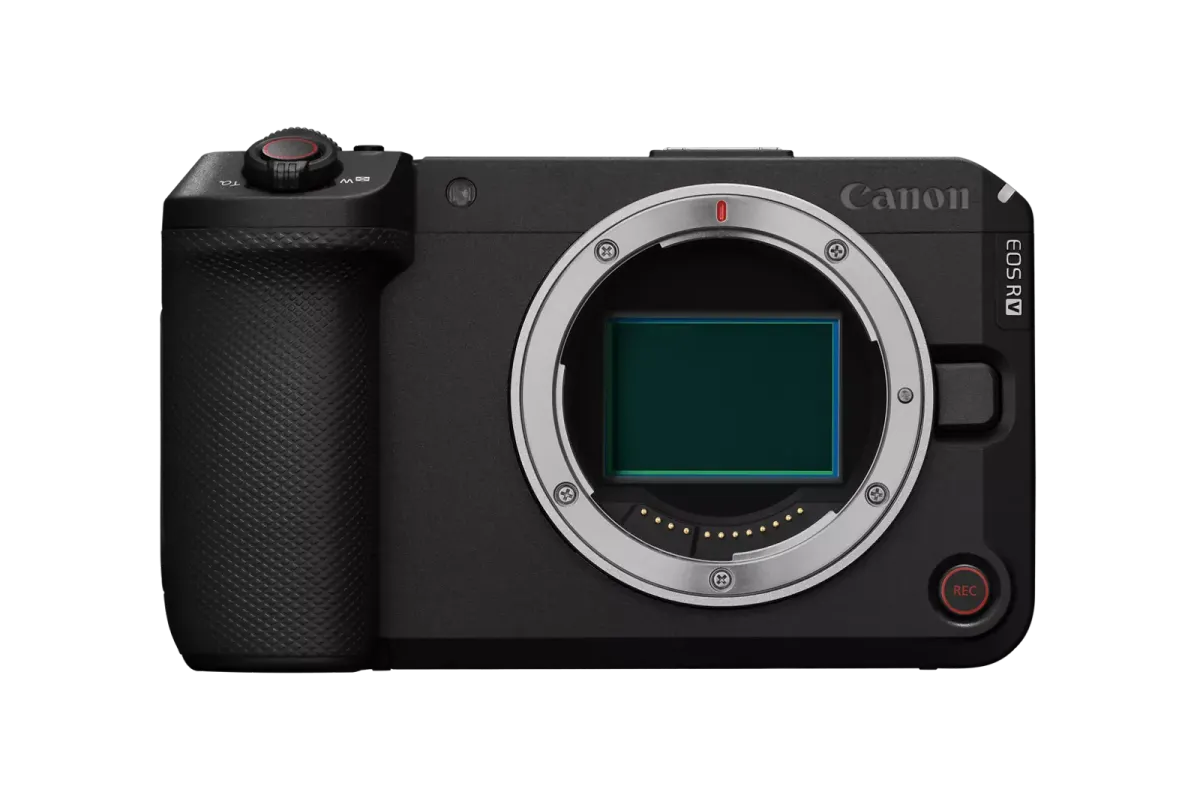
$2,499 gets you 7K RAW, active cooling, IBIS, and a body designed from the ground up around video production — not stills.
Canon officially pulled the curtain back on the EOS R6 V on May 13, and it's the clearest signal yet that the company is serious about separating its video-first lineup from its hybrid bodies. The R6 V isn't an R6 Mark III with extra video modes bolted on. It's a purpose-built video camera in a mirrorless body — and for indie filmmakers who've been waiting for Canon to bring Cinema EOS thinking into an accessible price point, it's worth paying attention to.
What It Is
The R6 V sits in Canon's expanding EOS V-series, a video-first branch of the RF system that runs parallel to the traditional hybrid line. At its core is a 32.5MP full-frame CMOS sensor — the same one found in the Cinema EOS C50 — capable of recording 7K 60p RAW internally and 7K 30p in Open Gate mode. Uncropped 4K 120p is also on the table for slow motion work.
The headline feature for working shooters is the active cooling system. Canon has historically avoided fans in its bodies, which meant overheating was a real concern on longer shoots. That changes here. The R6 V ships with an internal fan, enabling extended recording sessions without the thermal throttling that's plagued previous bodies on multi-hour shoots.
IBIS rounds out the spec sheet in a meaningful way — rated at up to 7.5 stops, with coordinated IS that works automatically alongside RF lenses with optical stabilization.
What's Missing
No EVF. Canon made the deliberate call to strip the viewfinder for a flatter, more video-friendly body profile. That's a non-issue on a gimbal or tripod, and a genuine tradeoff if you're shooting run-and-gun in mixed conditions. Worth knowing before you commit.
Color science comes courtesy of Canon Log 2 and Canon Log 3, with Canon claiming approximately 15+ stops of dynamic range in Log 2. Real-world tests are pending — the C50 with the same sensor returned around 11 stops at SNR=1 in CineD's lab, which is the more grounded benchmark to hold in mind.
Who It's For
At $2,499, the R6 V undercuts the R6 Mark III by $300–400 and slots cleanly below the Cinema EOS C50 for shooters who want serious video capability without the dedicated cinema body price tag. Solo documentary shooters, small production companies running lean kit, and hybrid creators who've outgrown their current bodies are the obvious target.
The full-size HDMI port (not mini), vertical tripod mount, and cinema-op-friendly button layout all signal that Canon designed this for people on actual productions, not just YouTube setups.
It ships June 24. The companion RF20-50mm F4 L IS USM PZ power zoom lens launches alongside it.