Apple's New Mac Studio and Mac Mini Put Editing and Local AI on the Same Chip
Apple's new Mac Studio and Mac mini pair editing performance and local AI compute on the same chip, not separate tiers.

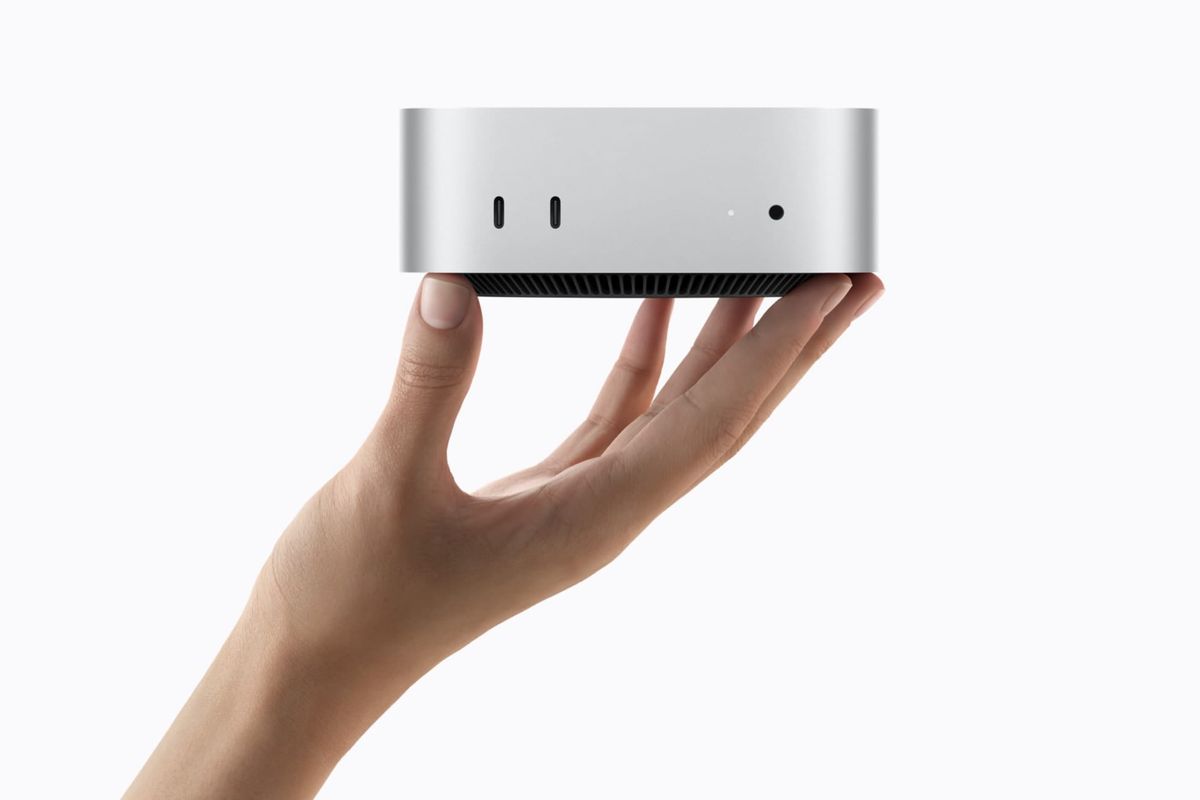
Apple announced a new Mac Studio and Mac mini today, its first hardware refresh to pair every tier of desktop with real local AI capability rather than treating that as a separate, higher-end feature. The Mac Studio gets M5 Max and an all-new M5 Ultra, Apple's first quad-die chip. The Mac mini gets M6, Apple's first 2-nanometer chip, alongside M5 Pro. Pre-orders opened today, with shipping starting September 22.
What's In Each Machine
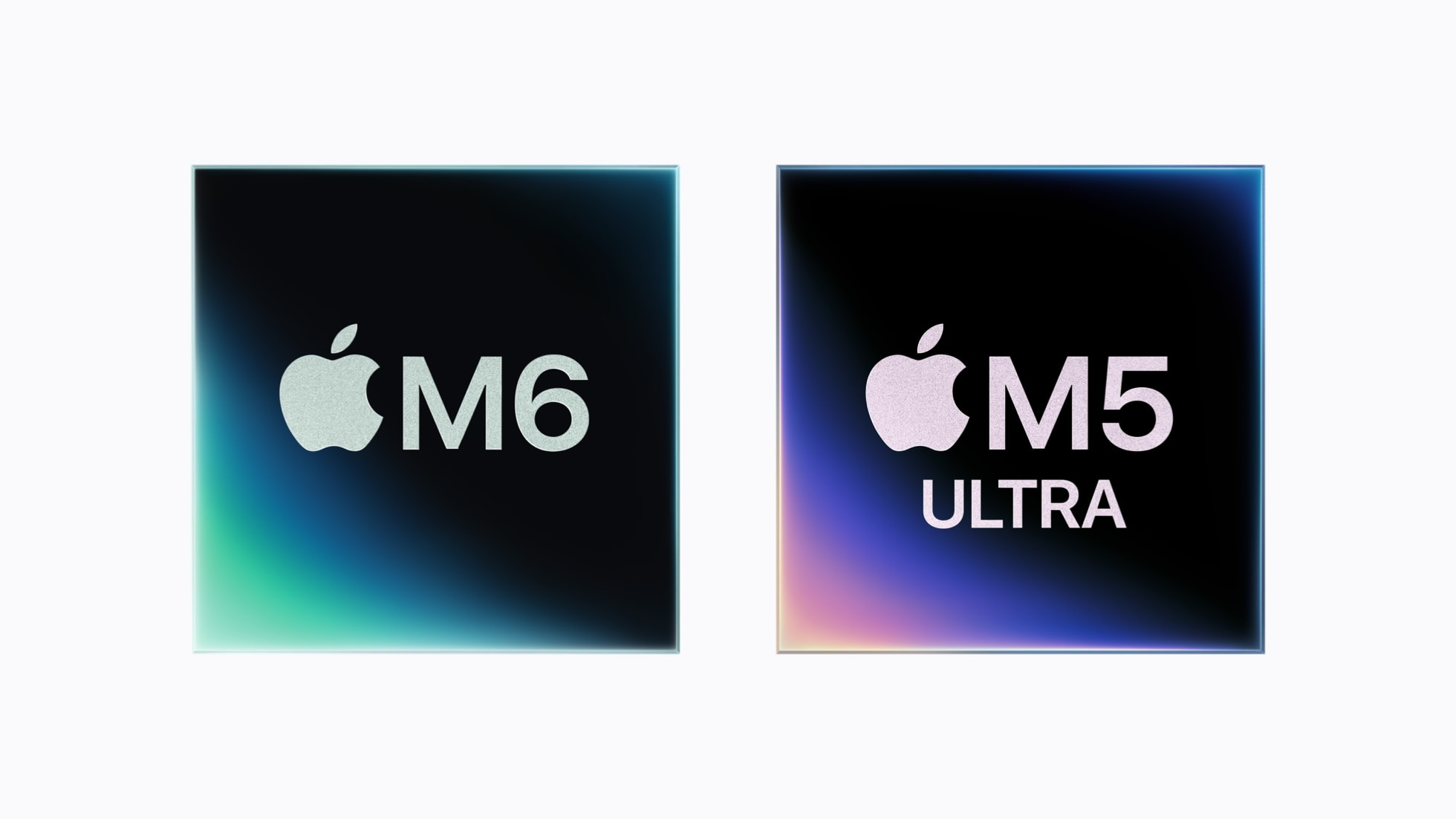
Mac Studio with M5 Max starts at $2,499 and includes an 18-core CPU, up to a 40-core GPU with Neural Accelerators in every core, and up to 128GB of unified memory at 614GB/s of bandwidth.
Mac Studio with M5 Ultra starts at $5,499. It uses UltraFusion to fuse two M5 Max dies into a single quad-die processor, Apple's first, with up to a 36-core CPU, an 80-core GPU, and up to 512GB of unified memory moving at 1.2TB/s, 50% more bandwidth than the previous M3 Ultra. The 512GB configuration ships in late October, after the rest of the lineup.
Mac mini with M6 starts at $899. It's built on Apple's first 2nm process, with a 12-core CPU, a 12-core GPU carrying Neural Accelerators for the first time on Mac mini, and a Dual 16-core Neural Engine delivering roughly double the prior generation's peak AI throughput.
Mac mini with M5 Pro starts at $1,699, with up to an 18-core CPU, a 20-core GPU, and up to 64GB of unified memory at 307GB/s.
Editing and AI Are Now the Same Spec Sheet

Apple's own benchmarks tell the real story here. In the same press materials, the company cites DaVinci Resolve Magic Mask performance and LM Studio LLM prompt processing as equally weighted selling points for the same chip, up to 5.3x faster Magic Mask and up to 9.8x faster LLM prompt processing on M5 Ultra compared to M1 Ultra. Those aren't two different products anymore. They're two benchmarks pulled from the same Neural Accelerator hardware inside the GPU.
The Media Engine reinforces the same pattern. M5 Ultra can play back 33 simultaneous streams of 8K ProRes 422 at 30fps, useful for real multicam and VFX pipelines, while that same chip's 512GB of unified memory is explicitly marketed for running LLMs with hundreds of billions of parameters entirely on device. A machine bought for color grading and a machine bought for local AI inference are now, for the first time, the same purchase decision rather than two different tiers of the lineup.
Thunderbolt 5 clustering adds another layer. Multiple Mac Studio units can now pool memory over RDMA for distributed AI inference, up to 3x faster across four systems, a feature aimed squarely at running larger open-weight models locally rather than anything editing-related. Genlock over USB-C, meanwhile, syncs displays directly with professional camera capture like iPhone 17 Pro, a production feature sitting right next to the AI clustering spec in the same press release.
Competitive Context
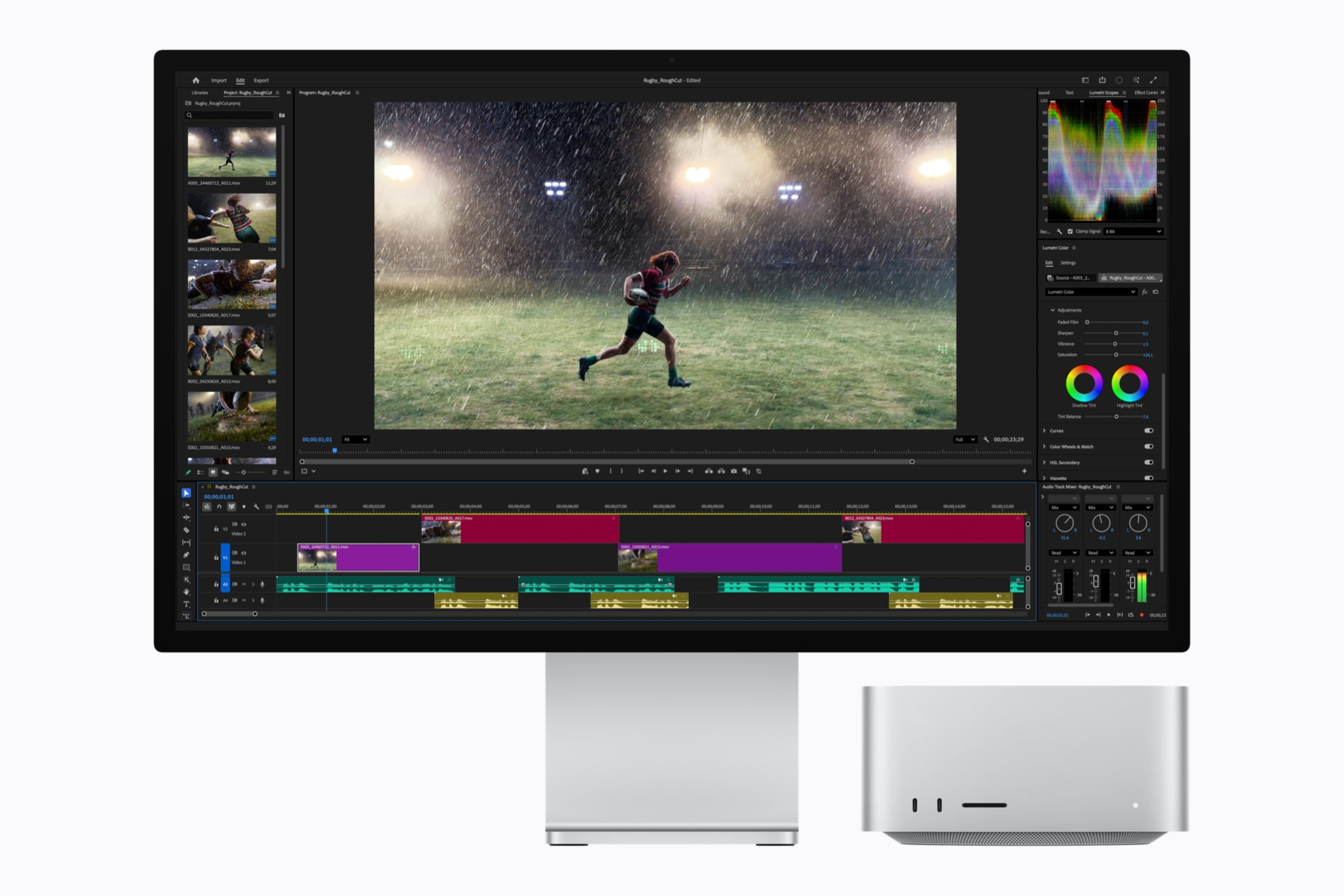
This shift tracks with where the rest of the industry has been heading. NVIDIA's workstation GPUs have long split AI compute and creative rendering into separate product lines and separate purchases. Apple's unified memory architecture has always blurred that line somewhat, but the scale here is new: 512GB of memory addressable by both a video timeline and a local LLM is a genuinely different proposition than anything in Apple's prior lineup, and it puts real pressure on PC workstation builders who still treat GPU memory for rendering and GPU memory for AI as two separate budget lines.
The Signal in the Noise
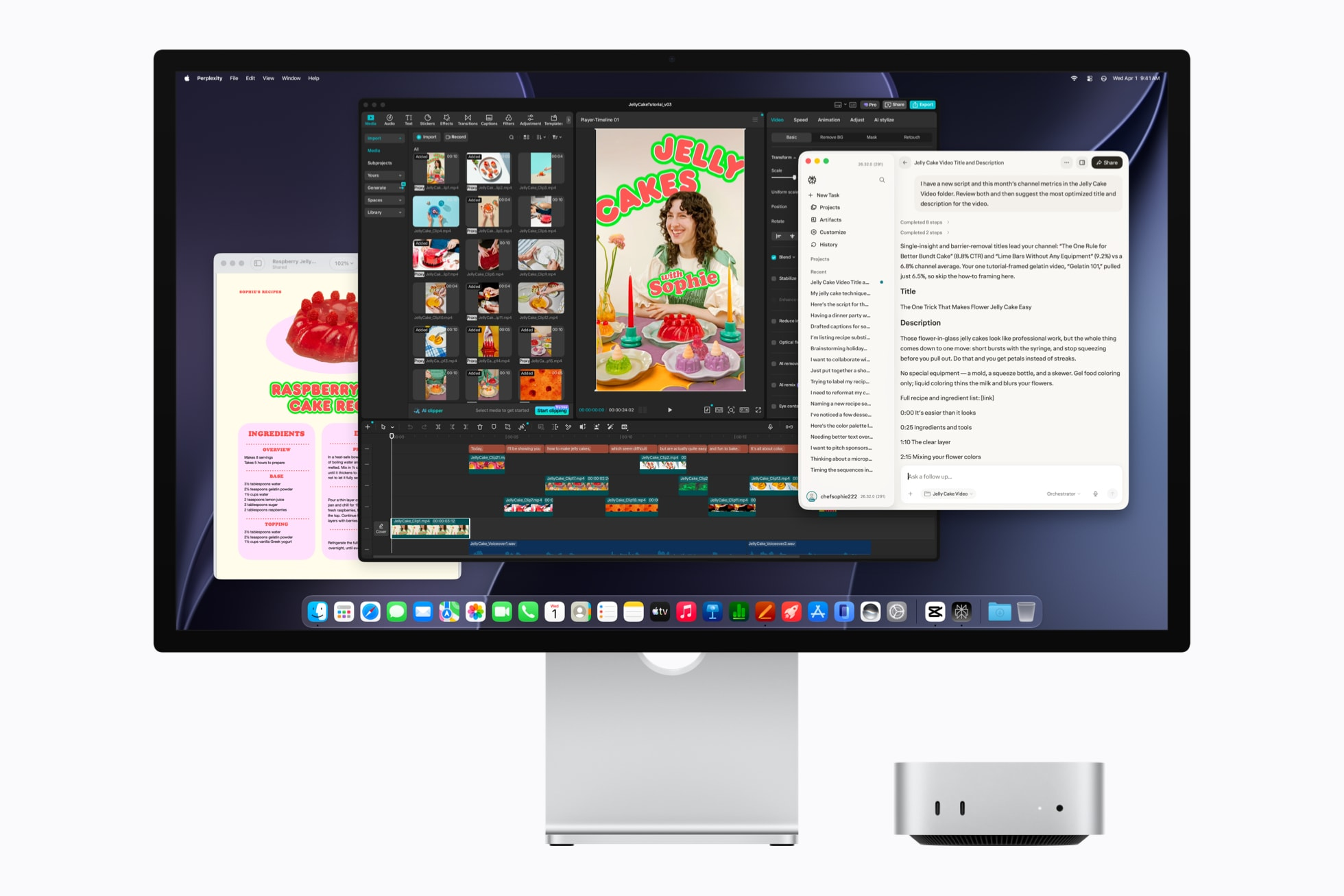
The interesting part isn't that Apple made faster chips, chip refreshes are annual and expected. It's that Apple stopped positioning "power for editing" and "power for AI" as different products aimed at different buyers. Every benchmark in today's announcement pairs a creative app with an AI workload on the same hardware. For anyone building an AI-assisted filmmaking workflow that also needs to cut and grade footage, that convergence is the actual news, more than any individual core count.
Does having both jobs handled by one machine change how you'd think about your next hardware upgrade, versus keeping a dedicated AI rig separate from your edit bay?
Specs & Pricing
- Mac Studio (M5 Max): 18-core CPU, up to 40-core GPU, up to 128GB memory, 614GB/s bandwidth — from $2,499
- Mac Studio (M5 Ultra): up to 36-core CPU, up to 80-core GPU, up to 512GB memory, 1.2TB/s bandwidth, quad-die UltraFusion — from $5,499 (512GB config ships late October)
- Mac mini (M6): 12-core CPU, 12-core GPU, Dual 16-core Neural Engine, up to 32GB memory, first 2nm chip — from $899
- Mac mini (M5 Pro): up to 18-core CPU, up to 20-core GPU, up to 64GB memory, 307GB/s bandwidth — from $1,699
- Shared features: Wi-Fi 7, Bluetooth 6, Thunderbolt 5 clustering for distributed AI inference, genlock over USB-C
- Availability: pre-orders open now, shipping begins September 22, 2026