YouTube Now Owns a Record 15.8% of TV Time, Nearly Double Netflix. Here’s What That Means for Creators
YouTube hit a record 15.8% of U.S. TV viewing in August, nearly double Netflix, according to Nielsen. Here’s what the numbers show and what they mean for creators.


YouTube reached a record 15.8% of all TV viewing in the U.S. in August, according to Nielsen’s latest Gauge report. That’s more than double Netflix’s 7.7% share and the highest share YouTube has ever recorded.
Streaming as a whole reached 49.6% of TV viewing, getting closer to half of everything watched on TV sets. Nielsen released the August numbers on October 22, later than usual, because of a methodology change starting with September.
What the August Gauge Shows
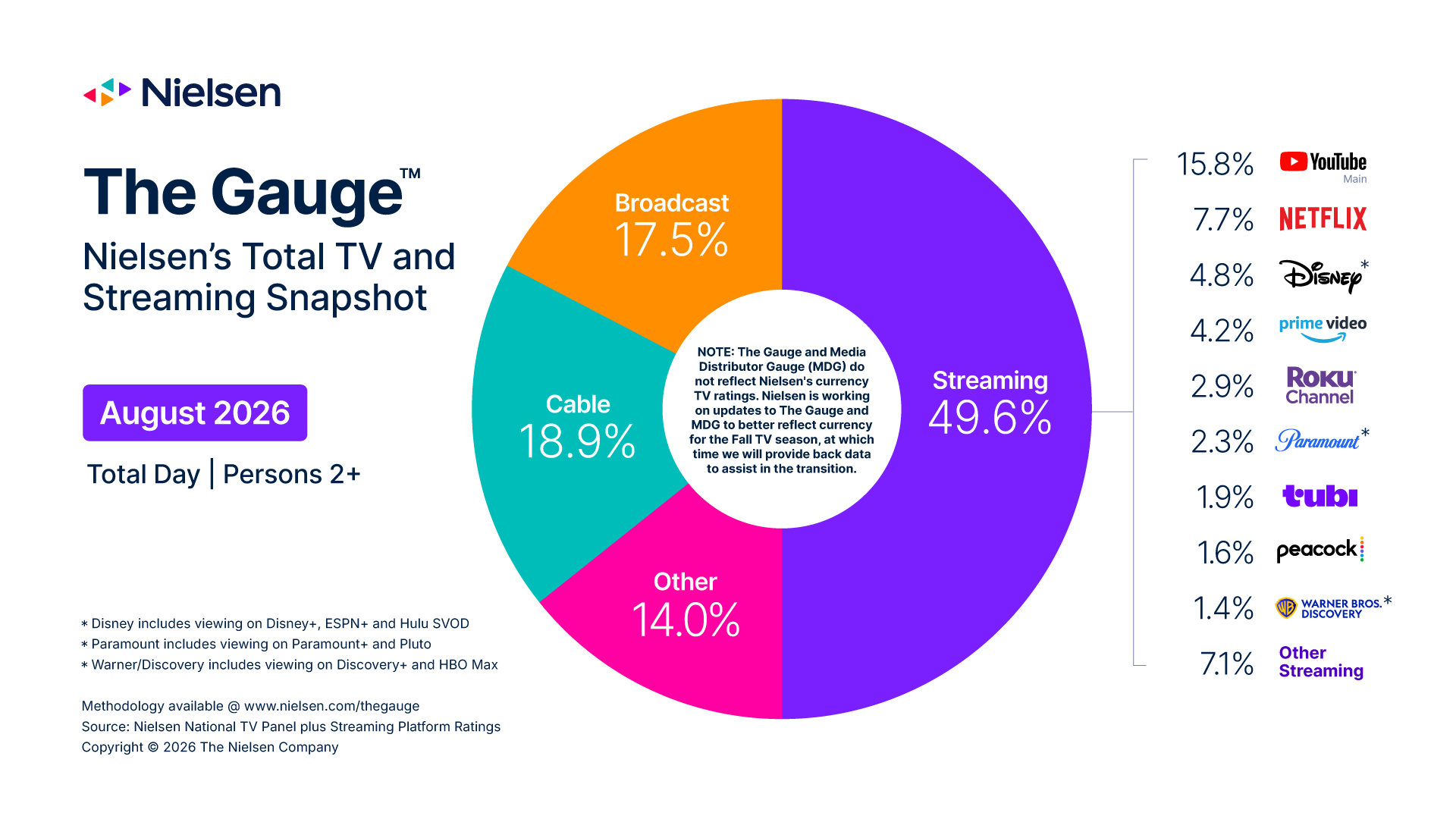
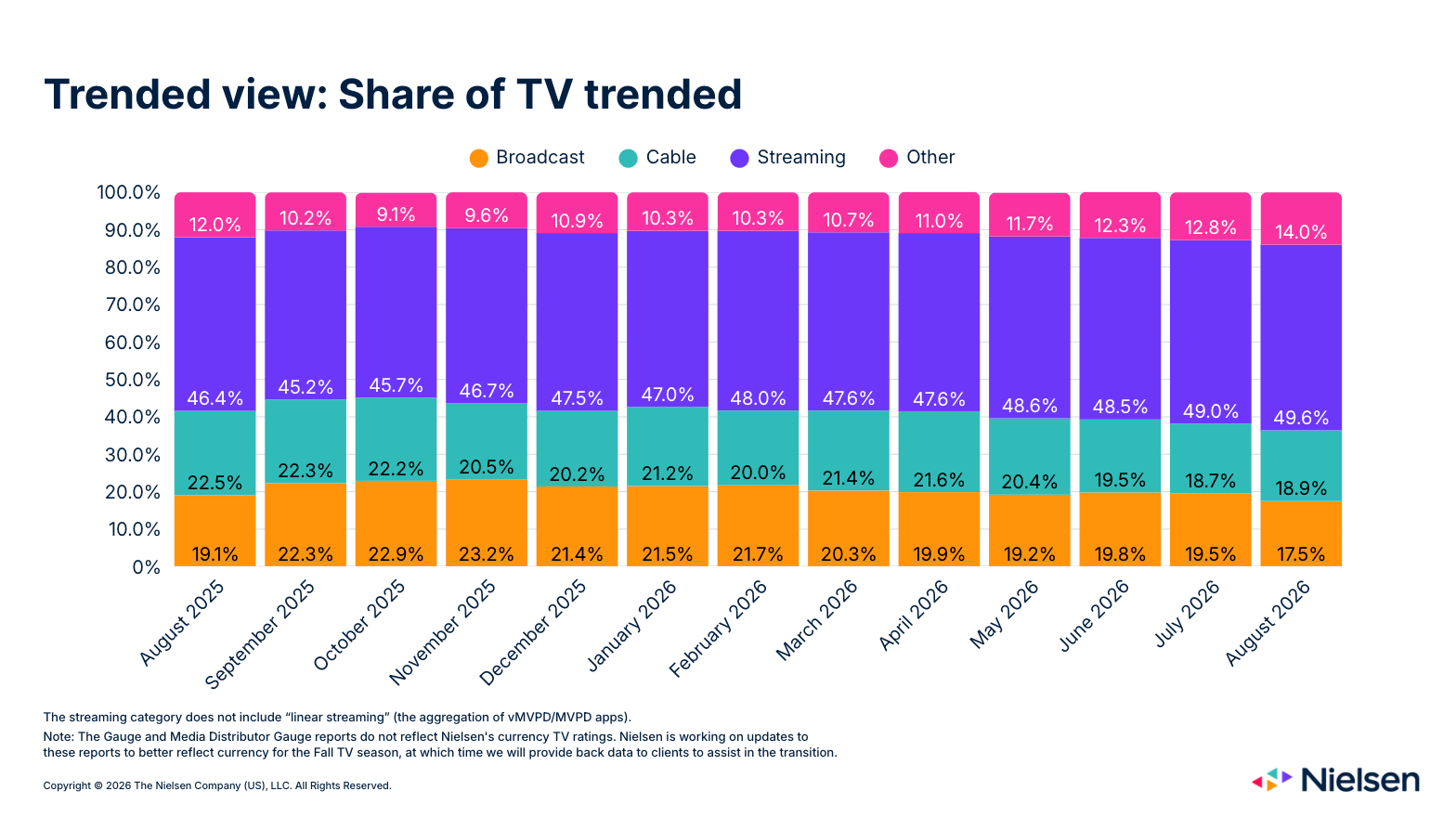
Total TV usage fell 4.4% from July, as the World Cup ended and kids went back to school. Even so, streaming gained 0.6 share points, cable rose 0.2 points to 18.9%, and broadcast dropped 2 points to 17.5%.
Among streaming platforms, YouTube led at 15.8%, followed by Netflix at 7.7%, Disney at 4.8%, Prime Video at 4.2%, and the Roku Channel at 2.9%. Paramount, Tubi, Peacock, and Warner Bros. Discovery each held under 2.5%.
Older Viewers Drove YouTube’s Growth
YouTube’s viewing on TV sets rose 6% in August. According to Nielsen, viewing among adults 50 and older rose 9%, a big part of the increase.
That broadens the picture of who’s watching YouTube on a TV. It’s not just younger viewers on phones; a growing share of the audience is older and watching from the couch.
YouTube Leads Media Companies, Too
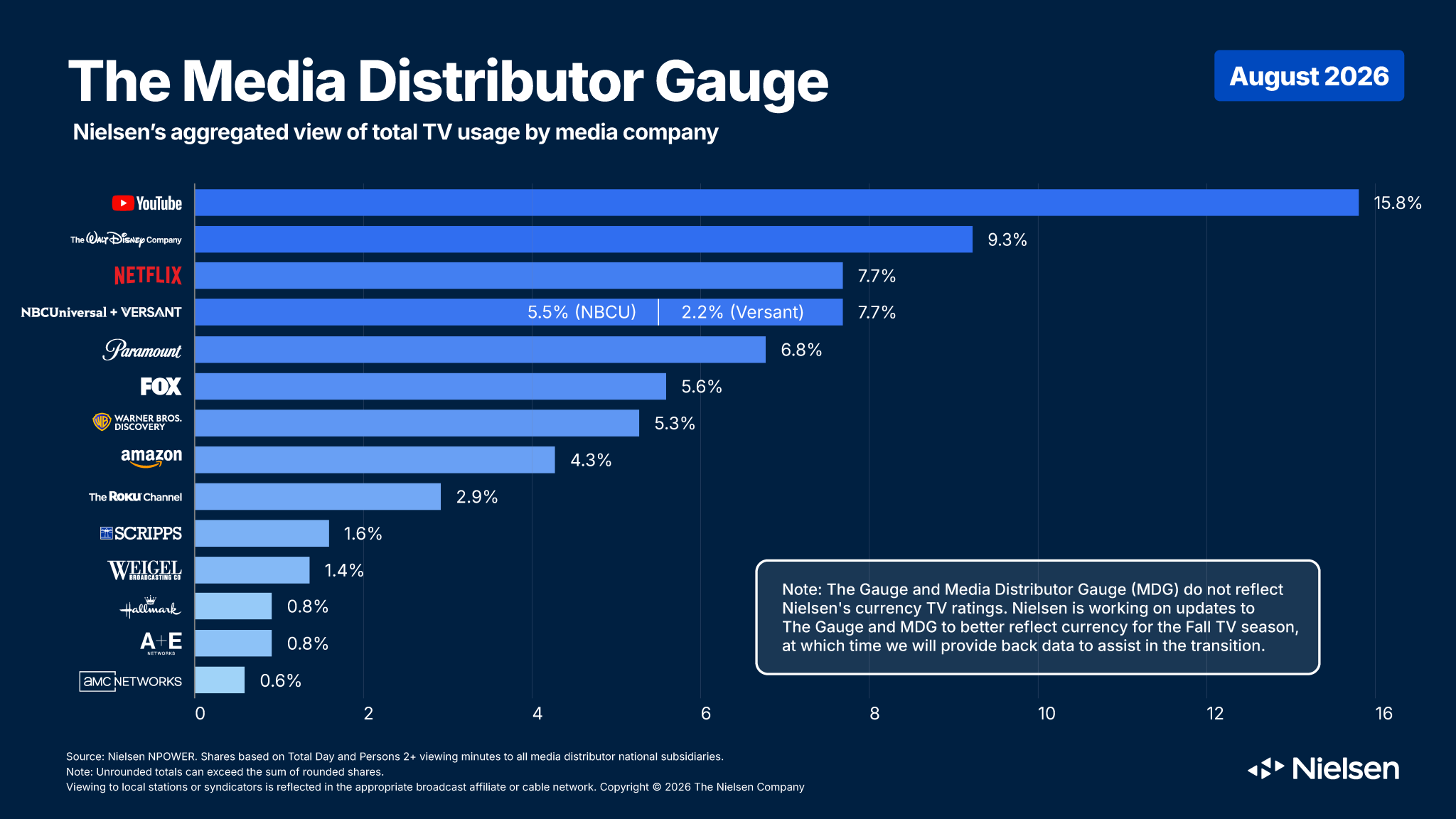
In Nielsen’s Media Distributor Gauge, which combines each company’s streaming, cable, and broadcast viewing, YouTube remained No. 1. Disney ranked second at 9.3%, Netflix third at 7.7%, and NBCUniversal and Versant combined just behind.
That puts YouTube’s creator-driven platform ahead of every traditional media company in total TV viewing.
What This Means for Creators
Your videos are playing on TVs. Nielsen’s Gauge measures viewing on TV sets, so YouTube’s record share is living-room viewing. Creators should assume a meaningful part of their long-form audience is watching on a big screen.
Make it work on a TV. Text, graphics, and thumbnails should hold up at a distance, and the sound mix should work through TV speakers and soundbars, not just earbuds. Horizontal, long-form video fits TV viewing best.
Older audiences are worth considering. With viewing among adults 50+ growing fastest, topics, pacing, and formats that work for older viewers may reach a bigger audience than expected.
Long-form still matters. Shorts get attention on phones, but TV viewing favors longer videos. For how YouTube is treating reposted and unoriginal Shorts, see YouTube Is Cutting Reach for Reposted Shorts.
Competitive Context
YouTube’s growth puts it in direct competition with streaming services for viewers’ time. Creators are increasingly moving between platforms, with some striking deals with streamers, as covered in Drew Binsky’s Netflix and YouTube Deal.
Other platforms are also courting creators and filmmakers. Vimeo recently removed limits on public videos for free accounts, covered in Vimeo Wants Filmmakers Back.
The Signal in the Noise
YouTube is now the most-watched platform on American TVs by a wide margin. For creators, that means the gap between “YouTube video” and “TV show” keeps shrinking, in both how audiences watch and what they expect.
The practical takeaway is to make videos that hold up on a big screen and to consider the older audiences who are increasingly watching. The next Gauge reports, for September and October, will use Nielsen’s updated methodology, so expect the numbers to shift slightly.
How do you think about TV viewers when you make YouTube videos? Share your approach in the comments.
The Details
- Report: Nielsen’s The Gauge, August 2026 (July 27–August 30)
- YouTube: 15.8% of TV viewing (record), viewing up 6%, 50+ viewing up 9%
- Netflix: 7.7%
- Streaming total: 49.6% (+0.6 points)
- Cable: 18.9% (+0.2 points)
- Broadcast: 17.5% (−2.0 points)
- Total TV usage: Down 4.4% from July
- Next report: September and October to be published together later this year