The Audio Basics Every Beginner Filmmaker Gets Wrong
In-camera audio is a last resort. Spencer Fackrell breaks down the signal chain, the preamp problem, and which recording approach fits which shooting scenario.

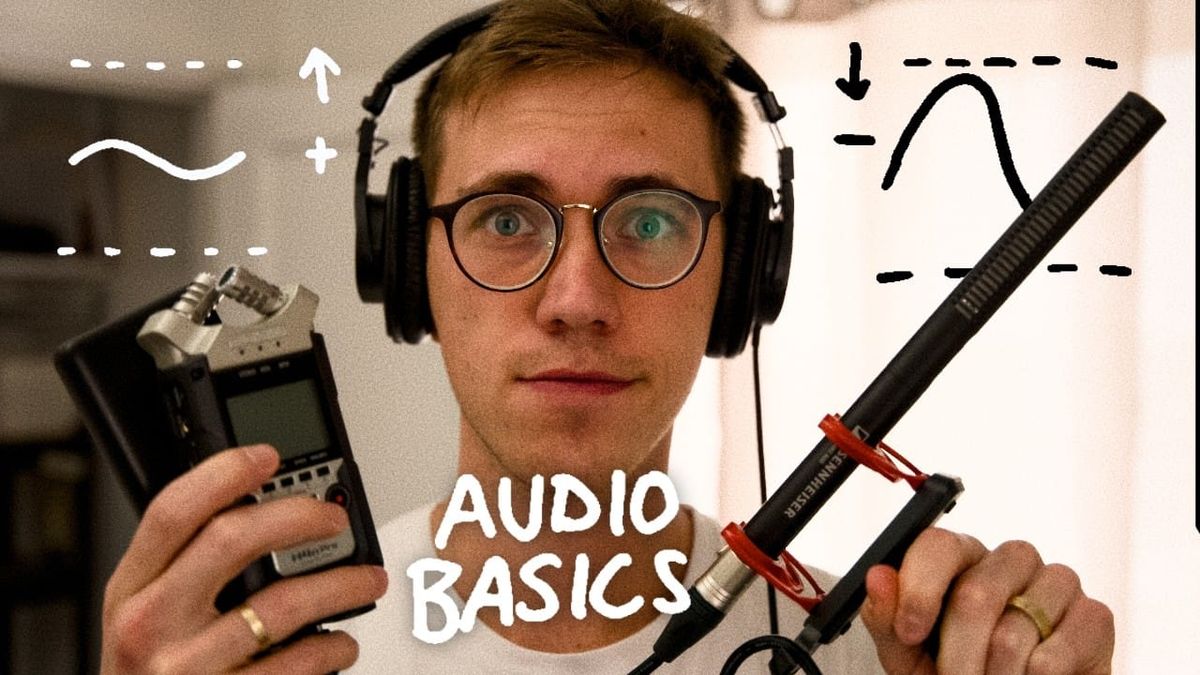
Bad audio kills good footage. It's one of the most repeated pieces of advice in filmmaking education, and also one of the most ignored — because cameras are visible and exciting, and audio infrastructure is neither.
Spencer Fackrell's breakdown of audio basics for beginners covers the signal chain from mic to recorder, the scenarios that call for different recording approaches, and the specific reasons why in-camera audio is almost always the wrong choice.
Why In-Camera Audio Is a Last Resort
The built-in microphone on any camera — regardless of price — has two fundamental problems: it's omnidirectional, which means it picks up everything in the room equally, and it feeds into the camera's built-in preamp, which is almost universally inferior to a dedicated external audio device.
As Fackrell states directly: "The lowest level of audio is relying on your camera's built-in microphone."
The preamp is the more important issue of the two. A preamp boosts a weak audio signal to a usable recording level. Camera preamps do this job adequately at best and introduce noise and distortion at worst. An external field recorder with a quality preamp handles that signal boost more cleanly, producing a quieter, more usable recording even from the same microphone source.
The in-camera mic has one legitimate use: scratch audio for syncing external recordings in post. Record it, but don't rely on it.
The Signal Chain
Understanding audio quality requires understanding the path a signal takes from source to recording. A voice generates an acoustic signal. A microphone converts that to an electrical signal. A preamp boosts that electrical signal to a recordable level. A recorder captures it to a file.
Every link in that chain affects the final quality. A good microphone feeding into a bad preamp produces worse results than a decent microphone feeding into a good preamp. The recorder's bit depth affects how much dynamic range the file can capture — 24-bit is the current industry standard, while 32-bit float recording (available on newer field recorders from Zoom and Sound Devices) provides better recovery from clipping at the top of the dynamic range.
The practical takeaway: invest in the field recorder before investing in the microphone. The recorder's preamp quality has more impact on the final recording than the specific mic choice, especially at entry-level price points.
Matching Mic and Technique to Scenario
Different shooting situations call for different recording approaches, and the polar pattern of the microphone matters as much as the mic itself.
Shotgun microphones are highly directional — they reject sound from the sides and rear, isolating the subject in front of them. That directionality makes them the right choice for dialogue scenes where a boom operator can position the mic close to the subject, outside the frame. The isolation they provide is their primary advantage.
Lavalier microphones are typically omnidirectional — they pick up sound from all directions. That sounds like a disadvantage, but the proximity to the source (clipped to the subject's clothing) means the subject's voice dominates the recording even though the mic is picking up the room as well. Lavs are the right choice for wide shots where a boom can't get close enough to the subject without entering the frame.
For run-and-gun shooting where neither a boom operator nor a clean lav placement is practical, an on-camera shotgun microphone mounted in the camera's hot shoe is a significant upgrade over the built-in mic — still picking up some room noise, but at least directional and feeding into an external preamp if run through a recorder rather than directly into the camera.
The 32-Bit Float Argument
Field recorders with 32-bit float recording have come down significantly in price over the past few years — the Zoom F3 and the newer entry-level recorders from Deity and others have made the format accessible below $300.
The practical advantage of 32-bit float is clipping recovery. A standard 24-bit recording that goes into the red is distorted and largely unrecoverable. A 32-bit float recording that appears to clip can often be brought back in post because the format captures more information above the nominal ceiling. For run-and-gun situations where levels can't be monitored continuously, that safety net has real value.
The Power Bank Tip
A small practical detail worth noting: many field recorders can be powered via USB rather than internal batteries. Running a recorder off a power bank extends recording time significantly and removes battery management as a concern on longer shoots. For documentary work or any situation where the recorder is running for extended periods, it's a simple fix to a common problem.
Competitive Context
The camera-versus-audio investment question has a clear answer in professional production: audio is treated as a separate department with a separate budget for good reason. The gap in perceived quality between mediocre audio and good audio is more immediately noticeable to a general audience than the equivalent gap in image quality.
As Fackrell puts it: "People will forgive bad visuals if there's good audio but will have a hard time forgiving bad audio if there's good visuals."
That asymmetry is documented enough to be almost axiomatic in filmmaking education. It doesn't stop beginners from spending their entire budget on cameras and lenses. But it's worth understanding before the next gear purchase decision.
The Signal in the Noise
The hierarchy Fackrell outlines — in-camera mic, then on-camera shotgun, then external recorder with lavalier or boom — maps cleanly onto shooting scenarios and budget levels. The upgrade that produces the most improvement per dollar is almost always moving from in-camera audio to a field recorder, not moving from one camera body to another.
For any filmmaker who has been prioritizing image quality over audio quality: the audience will notice the audio first.
Specs & Pricing
Field recorders:
- Zoom H5 — approximately $200, 24-bit, solid entry-level preamps
- Zoom F3 — approximately $270, 32-bit float, two channels
- Sound Devices MixPre-3 II — approximately $650, professional preamps, 32-bit float
Shotgun microphones:
- Rode NTG5 — approximately $499
- Sennheiser MKH 416 — approximately $999, industry standard
Lavalier microphones:
- Rode Wireless GO II — approximately $299 for wireless lav system
Current pricing on all at B&H: bhphotovideo.com
Resources & Reads
- Spencer Fackrell's full video: https://www.youtube.com/watch?v=gULyPx-F_Xs
- Zoom F3 field recorder: https://zoomcorp.com/en/us/field-recorders/field-recorders/f3/
- Rode NTG5 shotgun mic: https://rode.com/en/microphones/shotgun/ntg5
- Sound Devices MixPre-3 II: https://www.sounddevices.com/product/mixpre-3-ii/
- B&H audio for video department: https://www.bhphotovideo.com/c/browse/Audio-for-Video/ci/9531