Fewer Units, Higher Prices: What Canon's Earnings Say About Where Cameras Are Headed
Canon sold 10% fewer interchangeable-lens cameras this quarter, and made 12.9% more revenue anyway. Here's what that reveals about the EOS R6 V and where Canon is actually placing its bets.

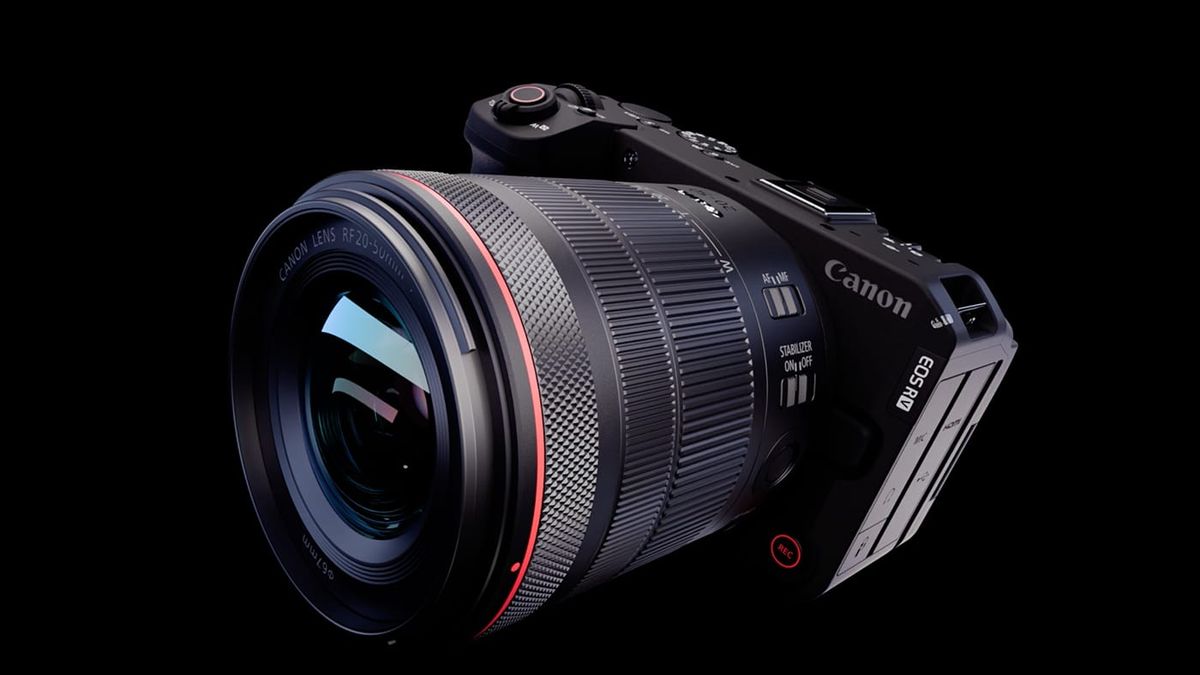
Canon's Q2 2026 earnings report is a dense investor document, but buried in the numbers is a clear signal about where the camera market is actually headed: Canon sold fewer interchangeable-lens cameras this quarter than a year ago, and made significantly more money doing it.
The Numbers That Actually Matter
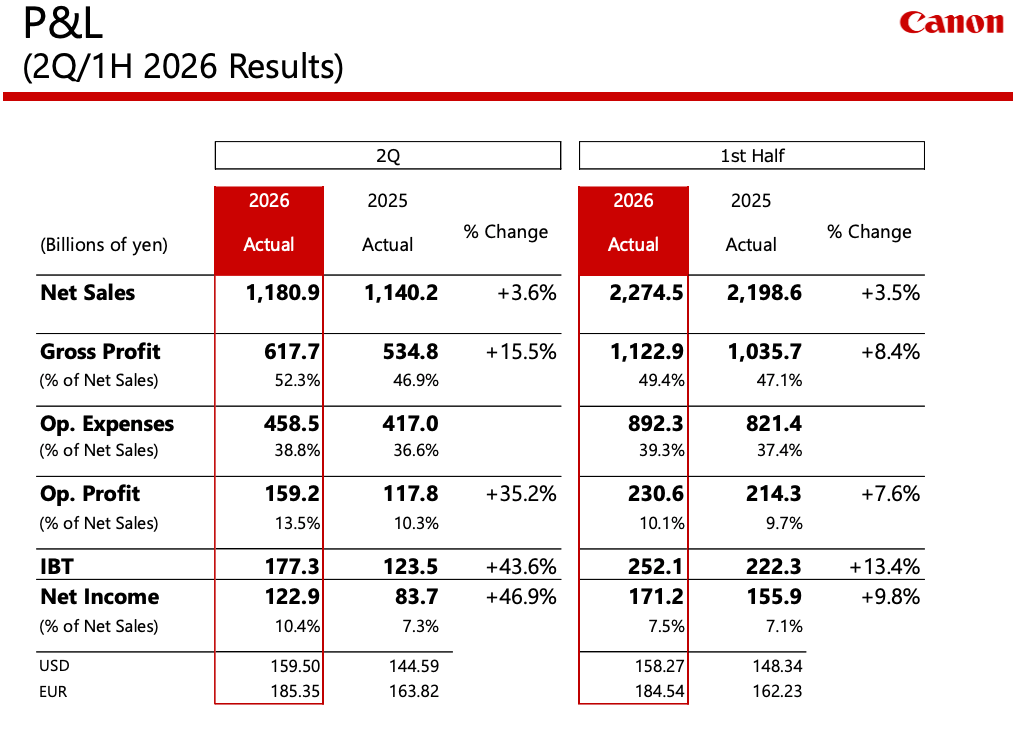
Canon's interchangeable-lens camera (ILC) unit shipments fell 10% year-over-year in Q2, down to 0.67 million units. Camera segment revenue rose 12.9% in the same quarter. That's not a contradiction, it's the average selling price climbing fast enough to more than offset the unit decline, driven by strong sales of full-frame models, specifically the EOS R6 Mark III, launched last November.
Zoom out further and the pattern gets more striking: Canon's Imaging business (cameras plus network cameras) now accounts for roughly 24.3% of the company's total first-half sales, up from 21.5% a year earlier. Imaging operating profit jumped 78.7% in Q2 alone. For a company whose historical identity spans printing, medical imaging, and semiconductor equipment, cameras have quietly become one of Canon's most important growth engines, not a legacy category being managed for stability.
Where the EOS R6 V Fits Into This
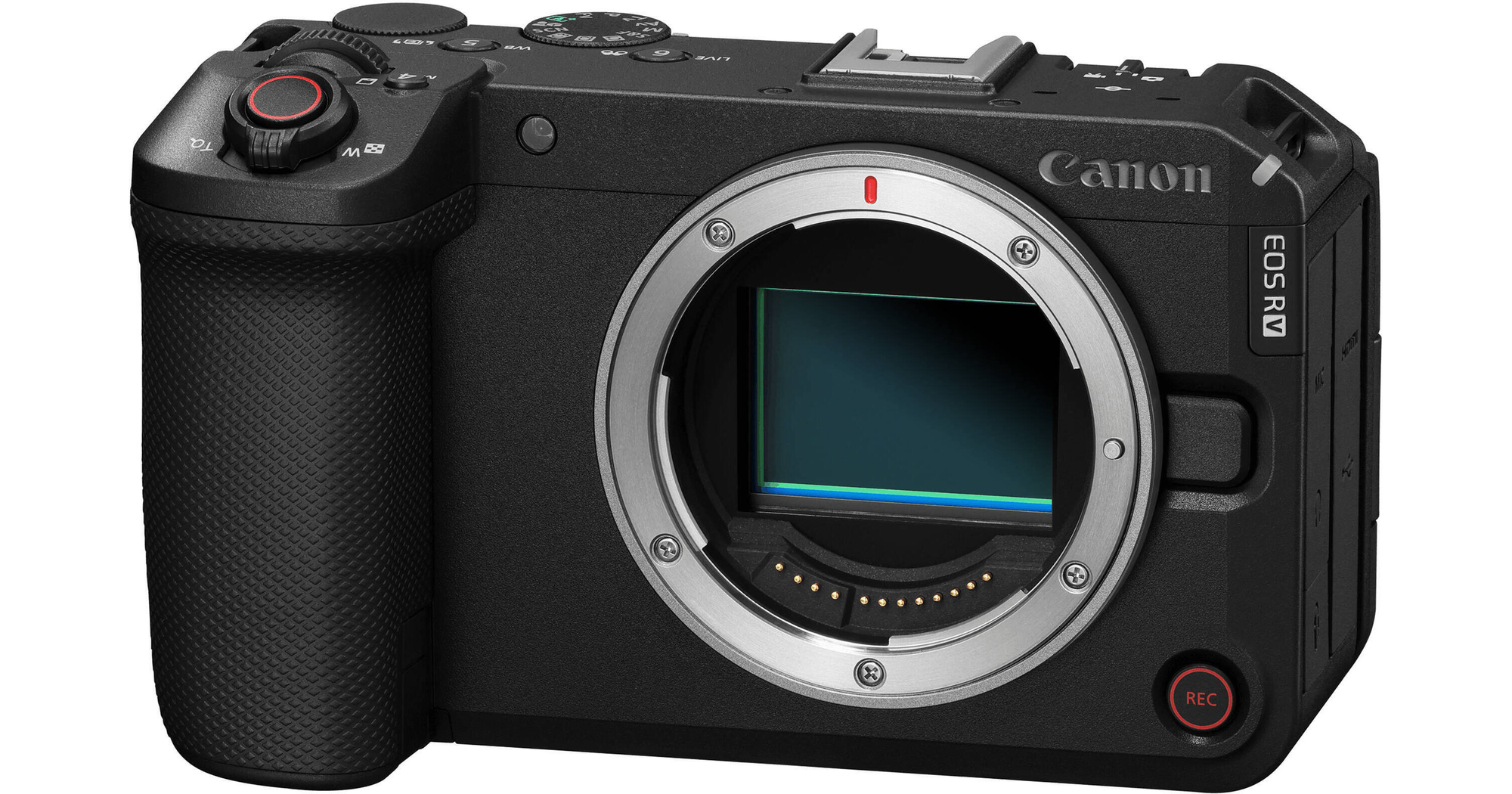
Canon's own earnings commentary is direct about the strategy behind that shift: alongside the R6 Mark III, the company is explicitly betting on the EOS R6 V, launched in June and described in its own investor materials as "a full-frame mirrorless camera for video creators," to drive full-year camera revenue growth of 11.6%.
The R6 V itself is a genuinely serious spec sheet: a 32.5MP full-frame sensor capturing 7K internally, in-body stabilization rated up to 7.5 stops at center, active cooling for sustained recording, and no built-in viewfinder at all, a deliberate design choice for a camera built around a screen-first, video-first workflow rather than stills shooting through an eyepiece. It exports uncompressed RAW over full-size HDMI for Apple ProRes RAW recording on compatible Atomos recorders, at 7K30p or a 4.3K 60p crop, with a 2K DCI proxy recording simultaneously to an SD card, a real production-oriented feature set, not a consumer camera with a video mode bolted on. It launches at $2,499, alongside Canon's first L-series power zoom lens.
The R6 V isn't a one-off, either. It extends a video-first branch of the EOS system that started with the APS-C EOS R50 V earlier this year, meaning Canon is now building a deliberate, multi-tier lineup specifically for video creators, not treating video capability as a stills camera feature.
Why the Unit-Volume Decline Actually Makes Sense
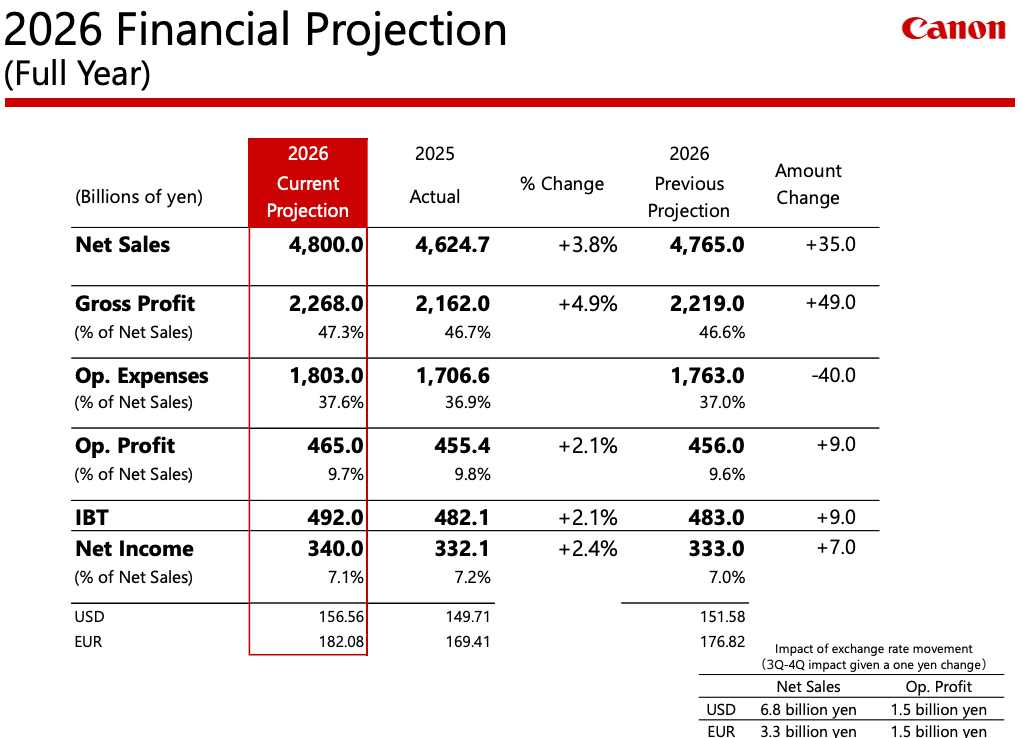
A 10% drop in units against a 12.9% revenue gain reads less like market weakness and more like Canon deliberately trading volume for margin, leaning into higher-priced, higher-margin full-frame and video-focused models rather than chasing entry-level unit sales. That's a defensible strategy in a period where component costs, memory prices specifically, are rising industry-wide, a pressure Canon's own filing cites directly as a headwind it's managing through pricing and cost reduction rather than absorbing at the low end of its lineup.
Canon's full-year DILC (digital interchangeable-lens camera) market forecast was also revised down to 6.45 million units industry-wide, reflecting broader economic uncertainty tied to the Middle East situation and its knock-on effects on component costs and consumer spending. Canon growing revenue against a shrinking overall unit market is itself a meaningful signal about where its actual growth is coming from: better-mix, higher-price sales rather than expanding the total pool of camera buyers.
Competitive Context
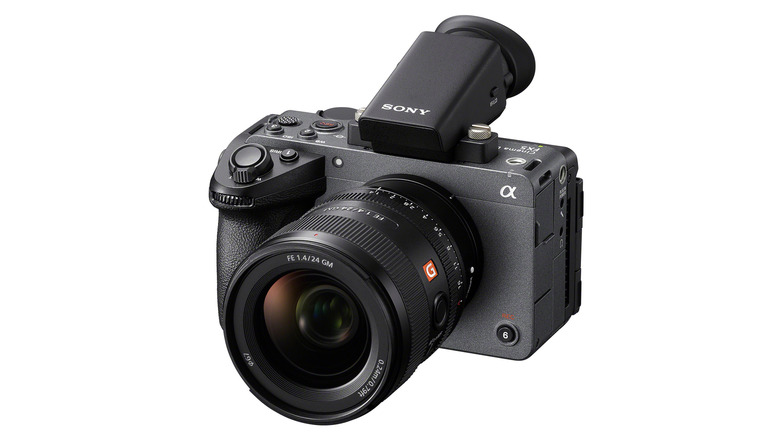
Canon isn't alone in leaning into higher-priced, video-capable full-frame bodies as the growth lever in a maturing camera market, Sony and Nikon have followed similar patterns with their own flagship and video-oriented lines. What's notable about Canon's specific move is the deliberate, tiered video-first branding, EOS V-series as a distinct line rather than a feature checkbox, signaling the company sees video creators as a defined strategic segment worth building dedicated products around, not simply a subset of stills photographers who also shoot clips.
The Signal in the Noise
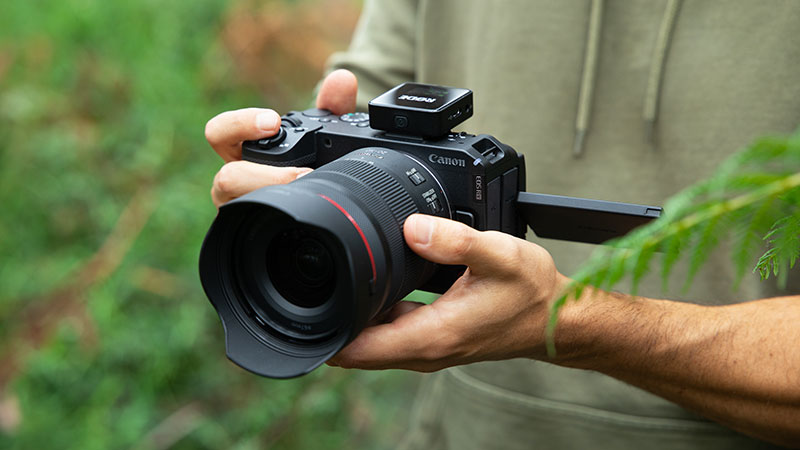
The real story in Canon's earnings isn't that cameras are selling well, compact camera demand from younger buyers is doing plenty of that work on its own. It's that Canon's most profitable growth is coming specifically from higher-priced, video-oriented full-frame gear, and the company is willing to sell fewer total cameras to get there. For anyone tracking where camera manufacturers are actually placing their bets, that's a clearer signal than any single product launch: the money is in serious video-capable bodies, not entry-level volume, and Canon's own investor filings now say so directly.