Someone Trained Claude on All 39 Succession Scripts as a Screenwriting Method
A solo developer's Claude Skills pack distills screenwriting craft books and produced scripts, including all 39 Succession scripts, into working tools.


A developer who goes by jtydhr88 built a collection of Claude Skills that distill screenwriting craft books and complete produced scripts into structured reference material, and just expanded the project from feature films into television specifically. The pack now spans 32 books and 12 volumes of published scripts across film, television, and the stage, with seven new skills built specifically around how series storytelling actually works.
What This Project Actually Is
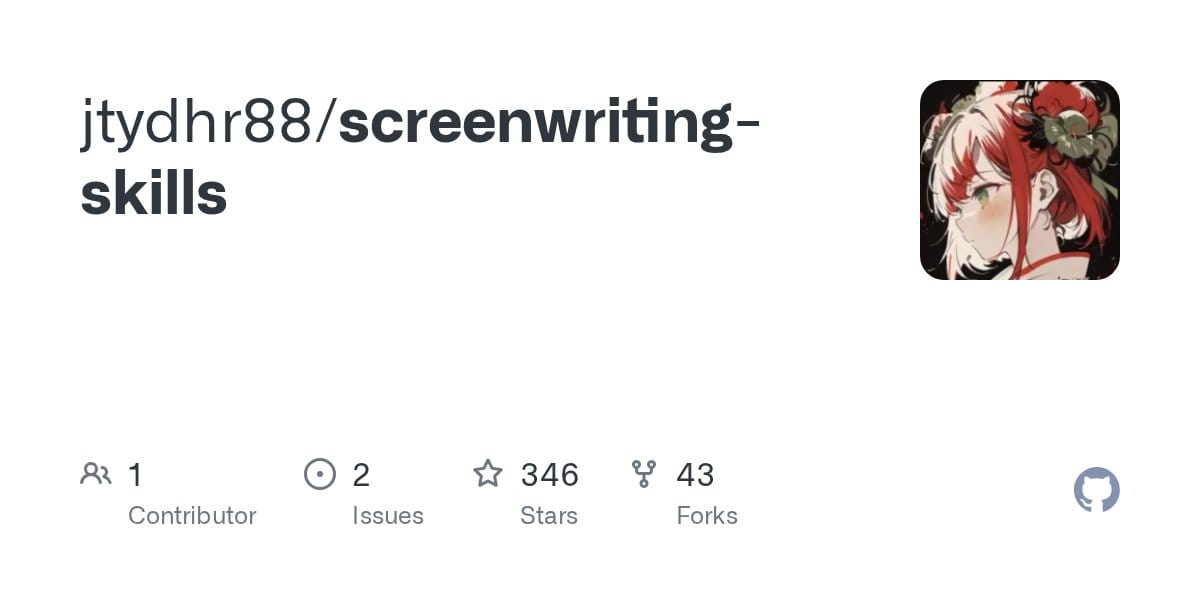
Claude Skills are reusable instruction sets that give Claude specialized knowledge for a specific kind of task. This particular pack takes the unusual step of treating entire craft books, and in some cases complete produced screenplays, as source material rather than just summarizing general screenwriting advice. The original film-focused version already included full corpora of Chekhov's plays and Yasujiro Ozu's screenplays, read as working methods rather than isolated reference points.
What's New in the Television Expansion
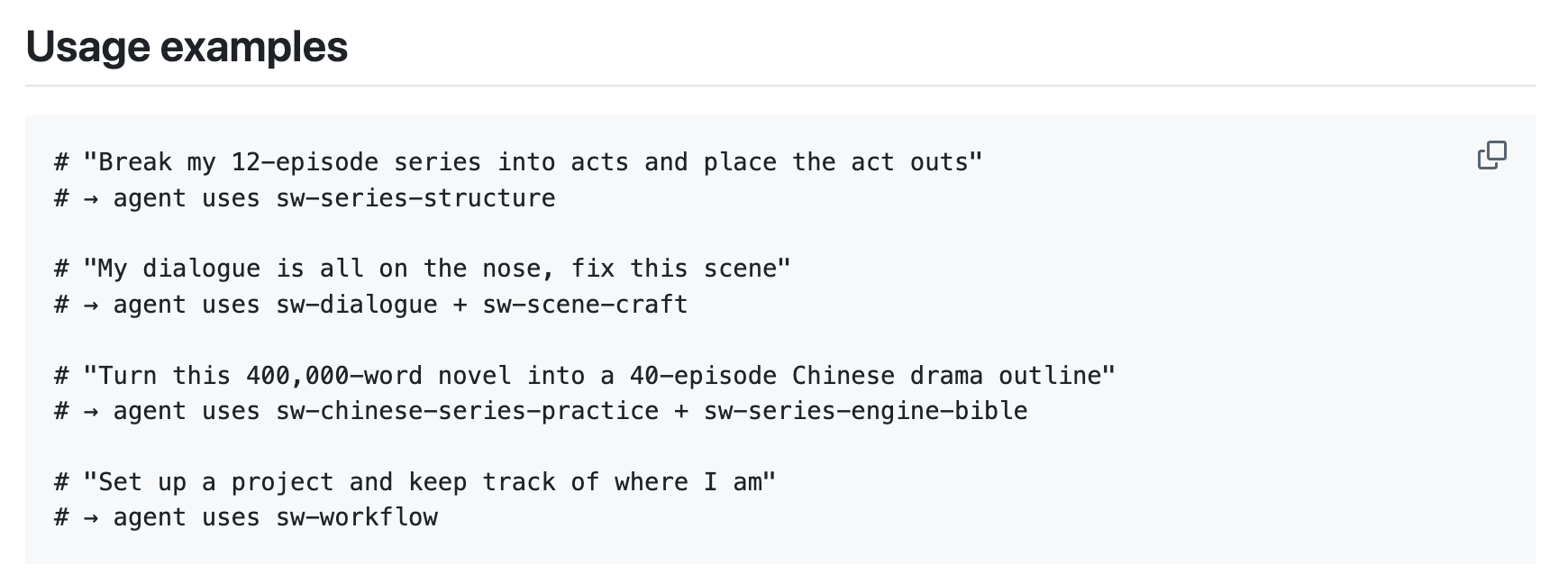
The seven new skills cover distinct pieces of series craft. sw-series-structure breaks down teaser structures, act grids with page anchors, and techniques for identifying the "invisible acts" inside a streaming script. sw-series-engine-bible covers what the developer calls the "100-episode test," a way of evaluating whether a series premise can actually sustain long-term storytelling, alongside the full set of selling documents a show needs: logline, springboard, pitch, series format, and bible.
sw-writers-room addresses the actual mechanics of a writers' room: a showrunner's duties and veto power, methods for breaking story, document chains and page budgets, and the staff ladder. sw-sitcom-comedy focuses specifically on half-hour comedy structure, joke mechanics, and page counts across multi-cam, single-cam, and animated formats.
The most specific addition is succession-series-writing, which treats all 39 Succession shooting scripts as a single working method, examining container episodes, pressure-chamber plotting, and the show's pattern of humiliation passed downward through its characters.
sw-series-case-studies extends that approach to The West Wing, The Sopranos, Downton Abbey's second season, and Fleabag, alongside two prominent screenwriters, Sakamoto Yuji and Noh Hee-kyung. A separate skill, sw-chinese-series-practice, covers mainland Chinese television conventions specifically, including format rules and the process of adapting novels into 30-to-50-episode dramas.
Why the Replacement Model Matters
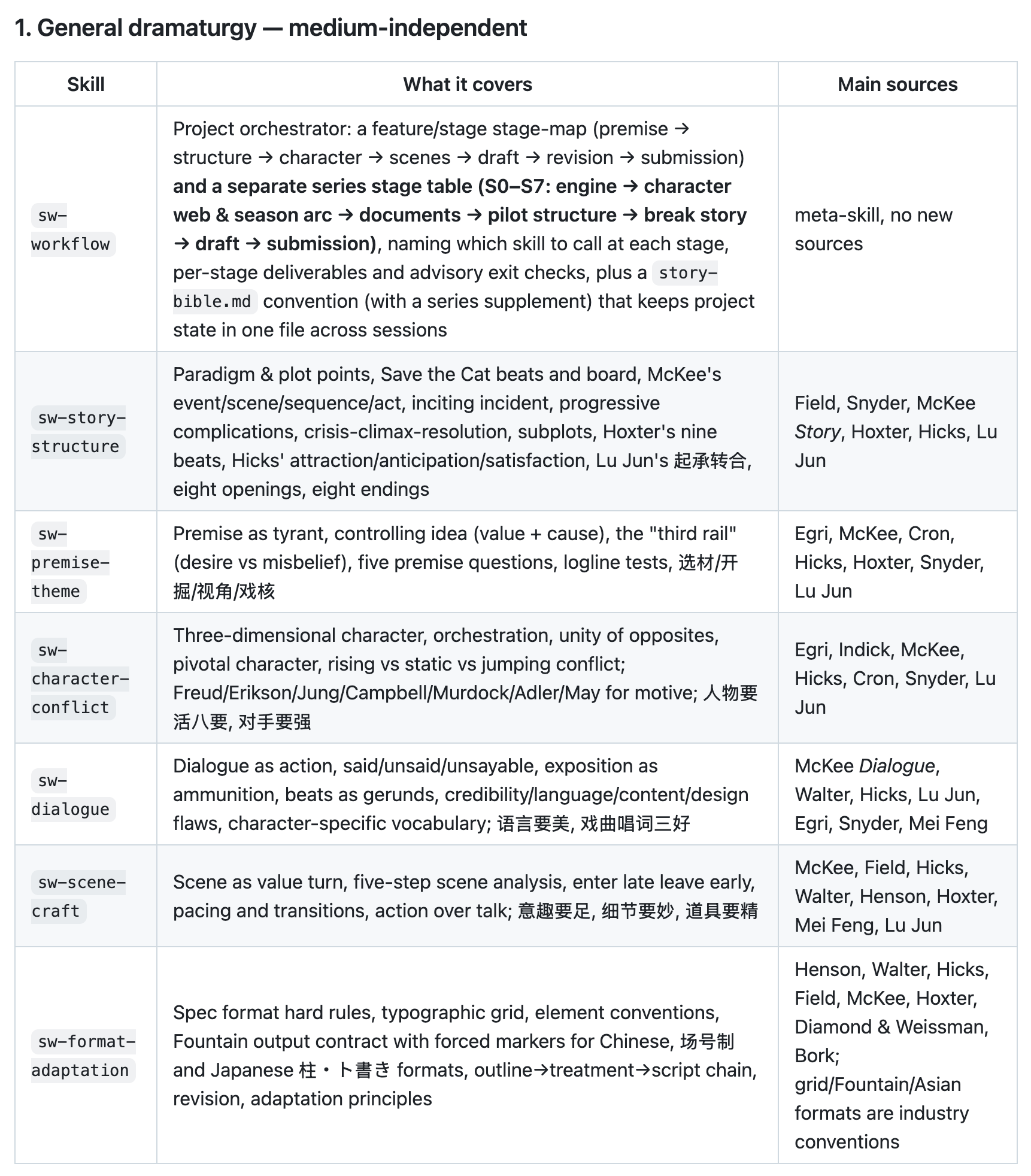
The developer describes the core mechanism directly: writing a series causes "engine plus season" to replace "a three-act structure designed for one film" as Claude's working framework. That's a meaningful design choice rather than just additional content bolted onto the original pack, the skill set actively swaps its underlying model of story structure depending on whether you're writing a feature or a series, rather than forcing television writing through a framework built for a two-hour film.
Competitive Context
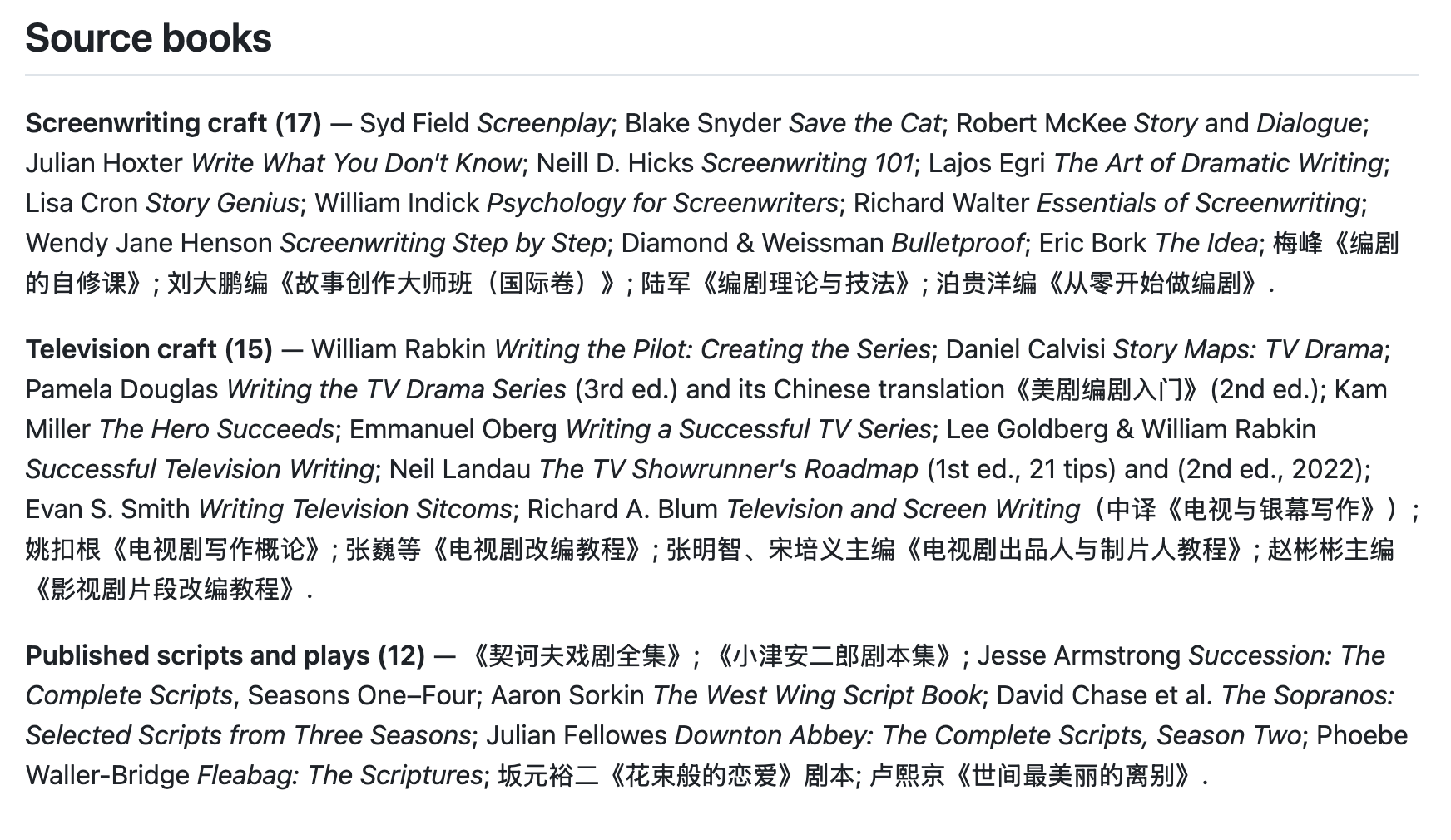
This is a small, solo-built project, and it sits in interesting company alongside other niche, craft-focused Claude and AI filmmaking tools BRC has covered recently, tools built by individuals distilling real expertise into reusable, structured resources rather than general-purpose prompting advice. What distinguishes this one is the sourcing discipline: full produced scripts and complete craft books as source material, with specific page anchors and structural tables, rather than paraphrased general advice about "what makes good TV."
The Signal in the Noise
Treating produced scripts as data, rather than just craft books as inspiration, is a genuinely interesting approach to building AI tooling for screenwriting specifically. Whether a skill like this actually improves a writer's own scripts probably depends on how it's used, as a structural checklist to test a draft against, rather than a template to write from directly. But the underlying idea, that a well-organized reference built from real produced work can meaningfully change what Claude notices in a screenwriting conversation, is worth taking seriously even at this small a scale.
Would a tool built from produced scripts and craft books change how you'd use Claude for screenwriting work, versus treating it as a general writing assistant?
The Details
- Project: screenwriting-skills, Claude Skills pack by developer jtydhr88
- Scope: expanded from feature films only to include television, 13 skills to 20
- New TV-specific skills: series structure, series engine/bible, writers' room mechanics, sitcom/half-hour comedy, Succession as a case study (all 39 scripts), broader series case studies (West Wing, Sopranos, Downton Abbey, Fleabag), Chinese series practice
- Full pack scope: 32 books and 12 volumes of published scripts, covering film, television, and stage
- Access: free, open source, installable as a Claude Code plugin