FastH3 Is a 14x Faster MiniMax H3 You Can Now Run on a Mac
FastH3 compresses MiniMax H3's generation into 4 steps for a 14x speedup, and now runs locally on DGX Spark and Apple Silicon.

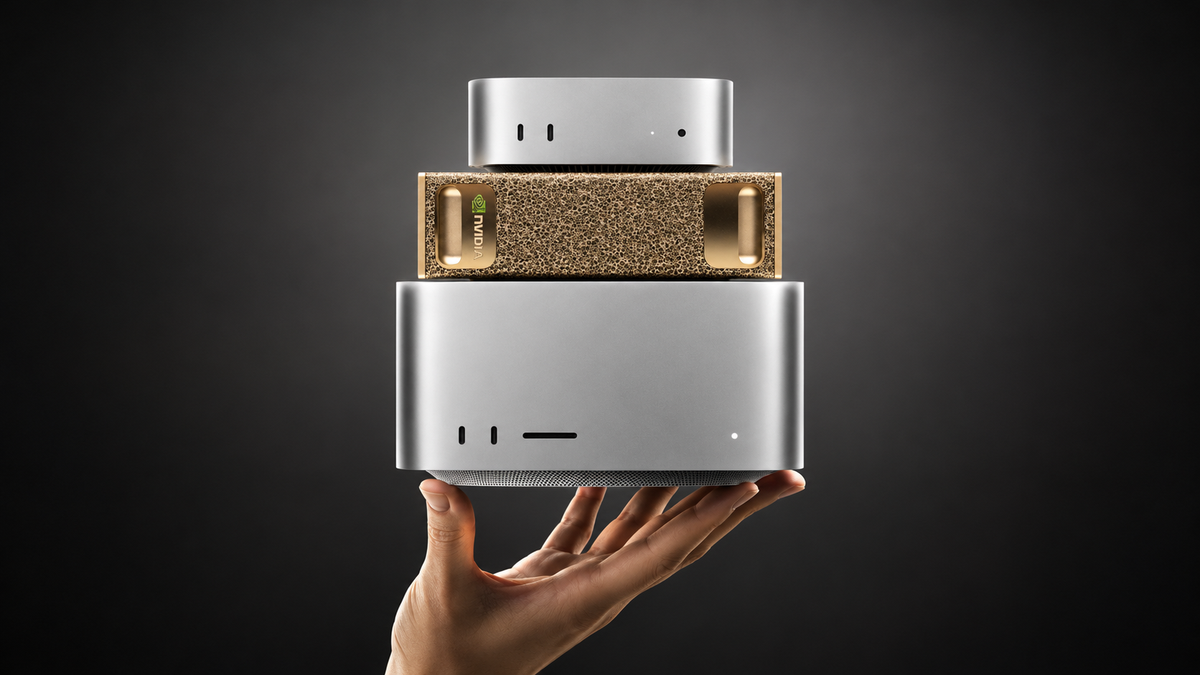
FastVideo, working with Nuva Lab and NVIDIA's FastGen team, released FastH3, a distilled version of MiniMax H3 that compresses the model's 50-step generation process down to just 4 steps. On a single NVIDIA Blackwell GPU, that's up to a 14x speedup. And in a recent follow-up release, the same model now runs locally on NVIDIA's DGX Spark and on Apple Silicon through MLX.
How FastH3 Actually Gets There
FastH3 combines two distinct optimization techniques. DMD2 distillation trains a smaller "student" model to reproduce the base H3 model's output using far fewer steps, 4 transformer evaluations instead of the original 49. Video Sparse Attention (VSA) then prunes 90% of the computation within each of those steps, since video generation involves an enormous number of tokens once spatial and temporal information get combined, and most of that attention computation turns out to be unnecessary.
The combined effect is real: on a single NVIDIA B200 GPU, a 15-second 768p clip with audio generates in 47.2 seconds, 14.38 times faster than the dense base model on the same hardware. Scaled across 8 GPUs, that same clip generates in 15.5 seconds, edging close to the length of the clip itself.
What Carries Over, and What Doesn't Yet
FastH3 reuses H3-Base's text encoder, video VAE, audio VAE, tokenizers, and schedulers rather than rebuilding them from scratch, which is part of why the distillation process could move quickly. Checkpoints are trained and validated across multiple aspect ratios, including square, portrait, landscape, and ultrawide formats.
This first preview release covers text-to-video-and-audio generation only. First-frame image conditioning and reference-image conditioning, both features of the base H3 model, haven't been distilled into FastH3 yet, and the team is upfront that difficult motion, fine detail, and some audio quality can fall below what the full base model produces.
Now Running Locally, Not Just on Data Center Hardware
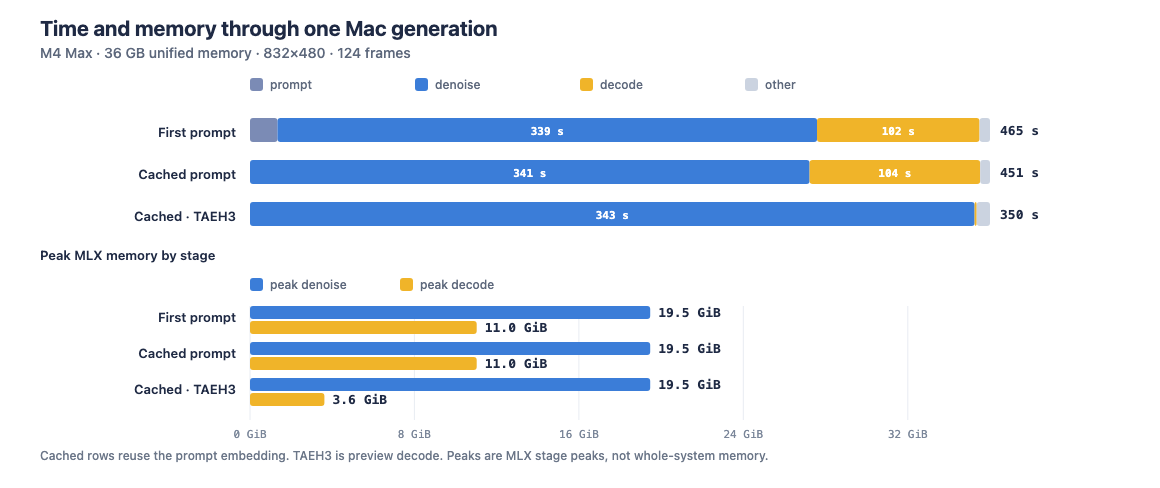
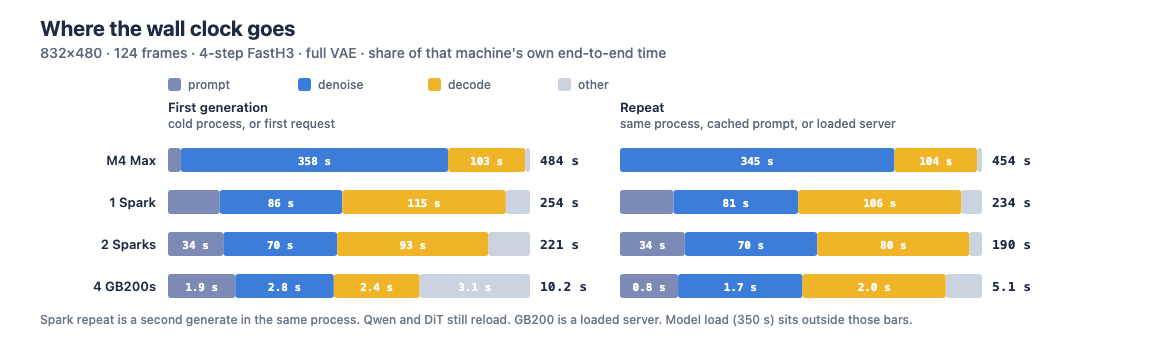
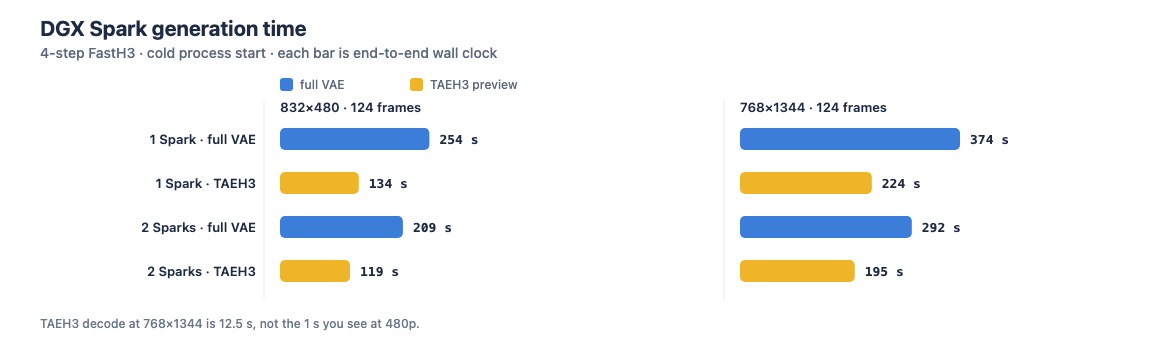
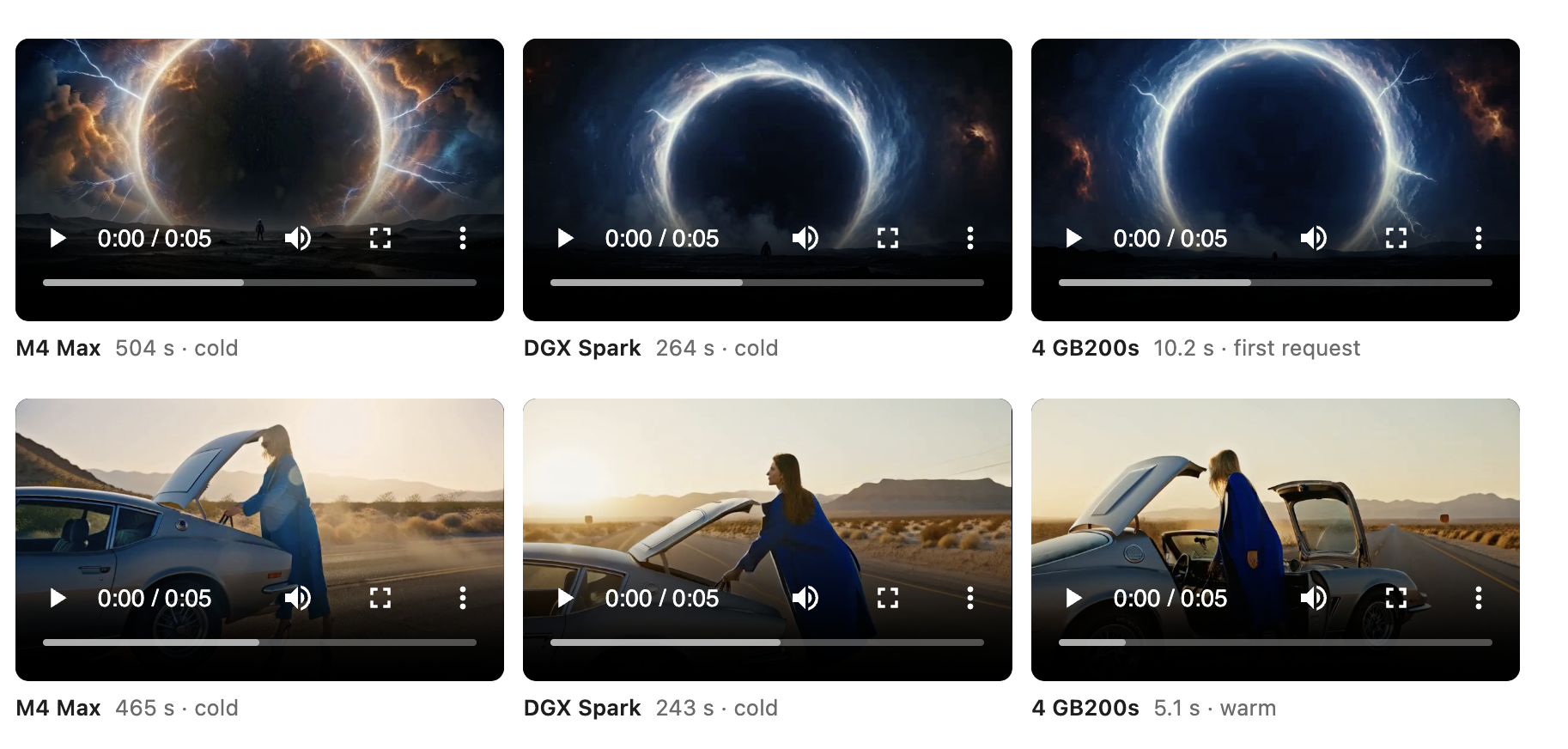
The more practically interesting update is FastH3's expansion beyond data center GPUs. It now runs on up to two NVIDIA DGX Sparks, and separately on Apple Silicon through MLX, with a combined speedup of up to 8x on that hardware. That mirrors the same trajectory BRC covered with h3.c, antirez's Mac-native inference engine for base H3, real, sustained community effort to get this model running on hardware people actually own, not just rented cloud GPUs.
The Access Details Worth Knowing
FastH3 ships as fully open weights, including a pre-extracted LoRA version, under the MiniMax H3 Community License rather than the more permissive Apache 2.0 license, worth checking before assuming your intended use is covered. It's also not a drop-in generic LoRA for ComfyUI: the VSA adapters currently require FastVideo's own VSA-H3 backend and launchers rather than a standard LoRA loader, so getting it running takes a bit more setup than downloading a file and pointing your existing workflow at it.
Competitive Context
FastH3 is one of several genuinely distinct approaches to H3 speed BRC has now covered, alongside fal's H3 Max (a separately post-trained, speed-optimized variant) and NVIDIA's own Sol-H3 (a full-stack inference runtime combining sparse attention with fused kernels). FastH3's specific contribution is the distillation-plus-sparsity combination applied openly, with weights anyone can download and inspect, rather than a hosted-only product.
The Signal in the Noise
The pattern here is becoming familiar: an open foundation model ships, and within days, a distilled, dramatically faster version follows from the broader research community. FastVideo's own lineage traces this exact pattern through earlier projects like FastWan before landing on FastH3, evidence this isn't a one-off effort but a repeatable approach the team has refined across multiple base models.
Does the ability to run a genuinely capable, open video model on hardware you already own, rather than renting cloud GPU time, change how seriously you'd consider building a real project around MiniMax H3?
The Details
- Project: FastH3 Preview v1, by FastVideo (Hao AI Lab), with Nuva Lab and NVIDIA FastGen
- Method: DMD2 distillation (50 steps → 4) combined with Video Sparse Attention (90% sparsity)
- Speedup: up to 14x on a single NVIDIA Blackwell GPU
- Benchmark: 15-second 768p clip with audio in 47.2s on 1x B200, 15.5s on 8x B200
- Local hardware support: up to 2x NVIDIA DGX Spark, Apple Silicon via MLX (up to 8x combined speedup)
- Scope: text-to-video-and-audio only in this release; image and reference conditioning not yet distilled
- License: MiniMax H3 Community License (not Apache 2.0)
- Setup note: requires FastVideo's VSA-H3 backend, not a drop-in generic LoRA loader