A Former A24 Exec Just Launched an AI Video Editor Built on Editable Code
Former A24 producer Will Hoppin launched Osmo Studio, an AI video editor that outputs editable code instead of a locked video file. Here's how it works, and what it costs.

Osmo Studio launched publicly this week, founded by Will Hoppin, a former A24 producer, alongside collaborators from NBC's Saturday Night Live. The company raised a $5 million seed round to build it. What makes Osmo genuinely different from the AI video tools BRC has covered recently isn't a new generation model, it's what actually comes out the other end: editable code, not a locked video file.
What Osmo Actually Does
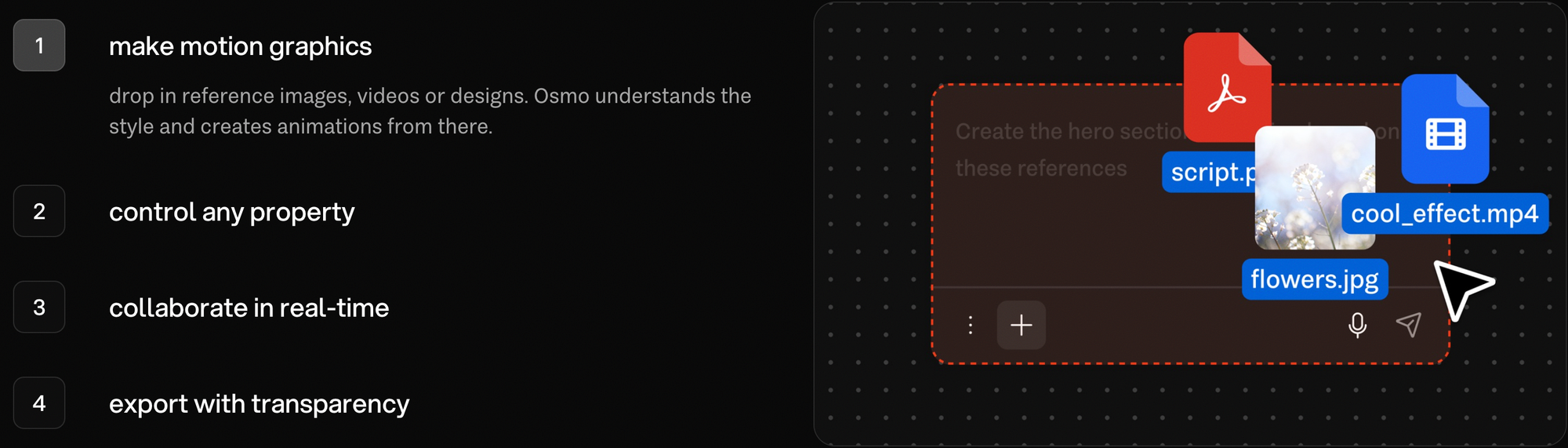
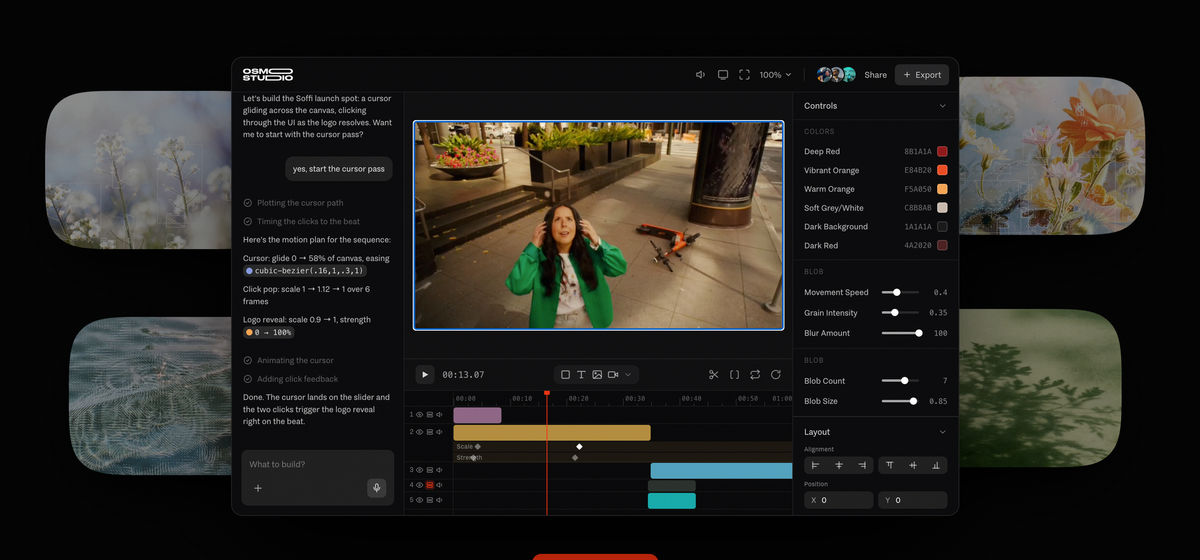
Osmo positions itself as an AI-native video editor specifically for motion graphics, product launch videos, and brand content, built around turning Figma files, code, and reference footage into "fully editable motion." That's the core distinction from Runway, Kling, Veo, or Seedance: those platforms generate a finished video clip you can regenerate or re-prompt, but can't directly edit at the layer level once it's rendered. Osmo's output is built as code, meaning individual elements stay editable after generation, timing, easing, camera movement, and layout, the way a motion graphics artist would work in a traditional animation tool rather than treating the result as a sealed video file.
The full editor includes a timeline with keyframes, easing, and camera controls, AI-generated sound effects, music, and voiceovers, shared brand kits and design libraries for team consistency, and the ability to drop in Figma frames and SVGs as instantly editable elements rather than flattened footage. Exports support 4K ProRes with transparent backgrounds, a detail that matters specifically for motion graphics and brand work meant to composite into other footage.
Pricing
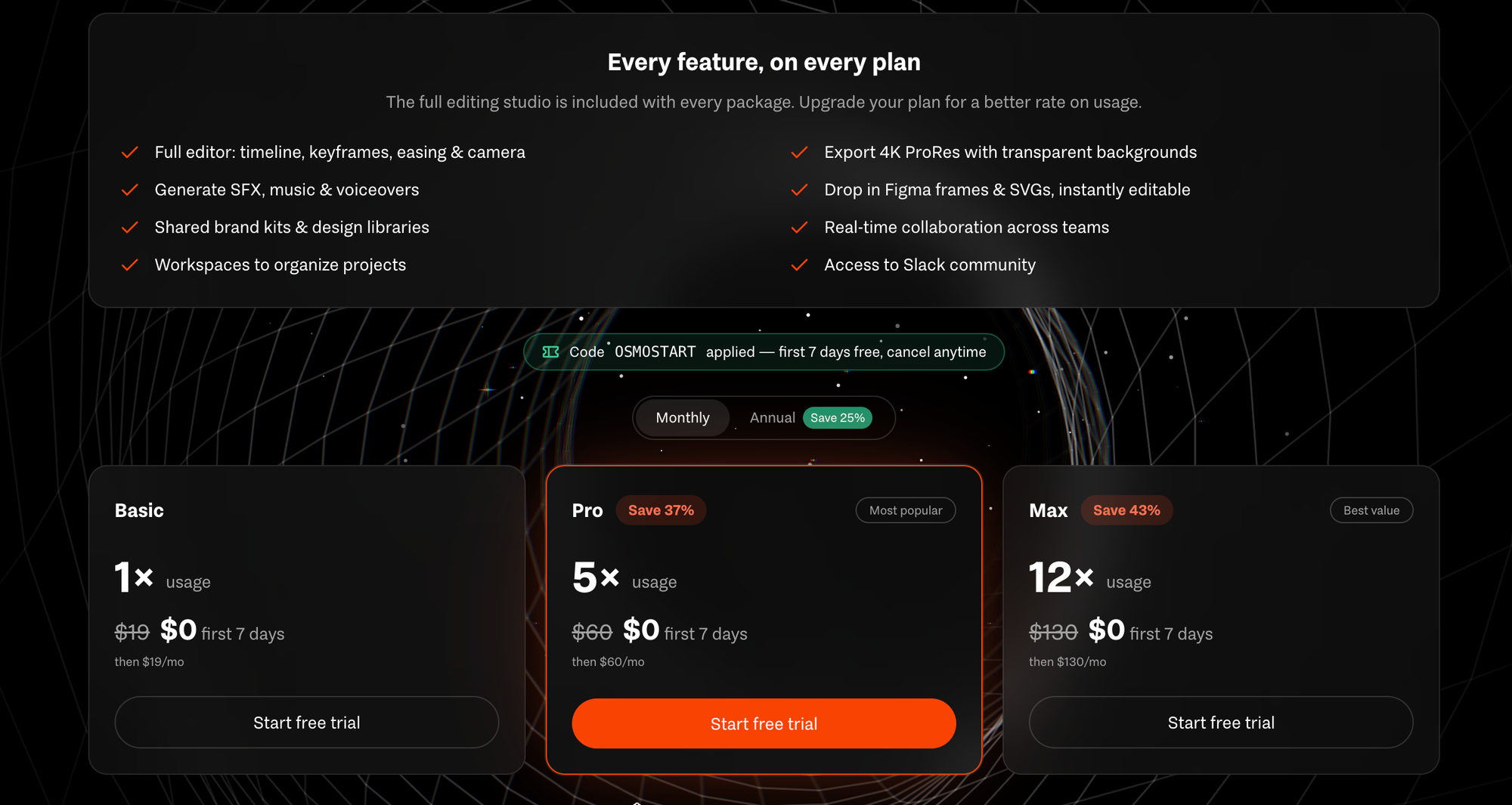
Osmo runs three tiers, and every plan includes the full feature set, timeline editing, SFX/music/voiceover generation, brand kits, Figma integration, real-time collaboration, and 4K ProRes export. Usage allotment is the actual differentiator between tiers, not gated features.
Basic runs $19/month at 1x usage. Pro runs $60/month at 5x usage, and is highlighted as Osmo's most popular plan. Max runs $130/month at 12x usage, positioned as the best value tier. All three currently include a 7-day free trial at $0 (via launch code OSMOSTART), and annual billing saves 25% across any tier.
Who's Actually Behind It
I left @A24 to start Osmo, a storytelling studio with a software factory.
— Will Hoppin (@willyhopps) August 5, 2026
Today, we’re launching @osmo_studio to the public: an end-to-end editable video platform that turns Figma, code and reference videos into fully editable motion.
We also raised a $5M seed to build it. pic.twitter.com/yahLJxffcO
Osmo's team draws specifically from A24 and NBC's SNL, backgrounds in narrative and live production rather than pure software engineering. That's a notable pedigree for a tool aimed at brand and launch video work specifically: it signals the product was likely built by people who've actually sat in edit bays under real production deadlines, rather than purely as a generative AI experiment looking for a use case afterward.
Who This Is Actually For
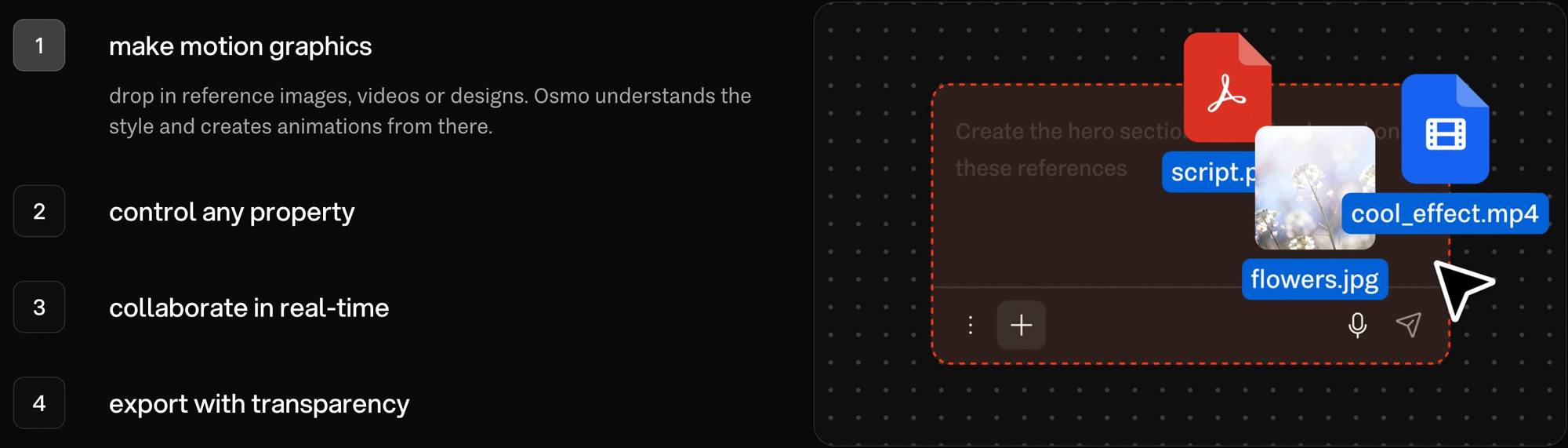
The clearest fit is teams that need polished, on-brand motion graphics repeatedly, product launch videos, explainer content, branded social assets, where consistency and the ability to make small adjustments after the fact matter more than generating something wholly new each time.
It's a meaningfully different use case than narrative AI filmmaking tools like Runway or Kling, closer to a next-generation After Effects or a code-based alternative to DaVinci Resolve's Fusion page than to a text-to-video generator.
Competitive Context
Osmo enters a motion graphics and brand video space that's historically been dominated by After Effects and template-driven tools like Canva or InVideo, neither of which is AI-native or code-based in the way Osmo is positioning itself.
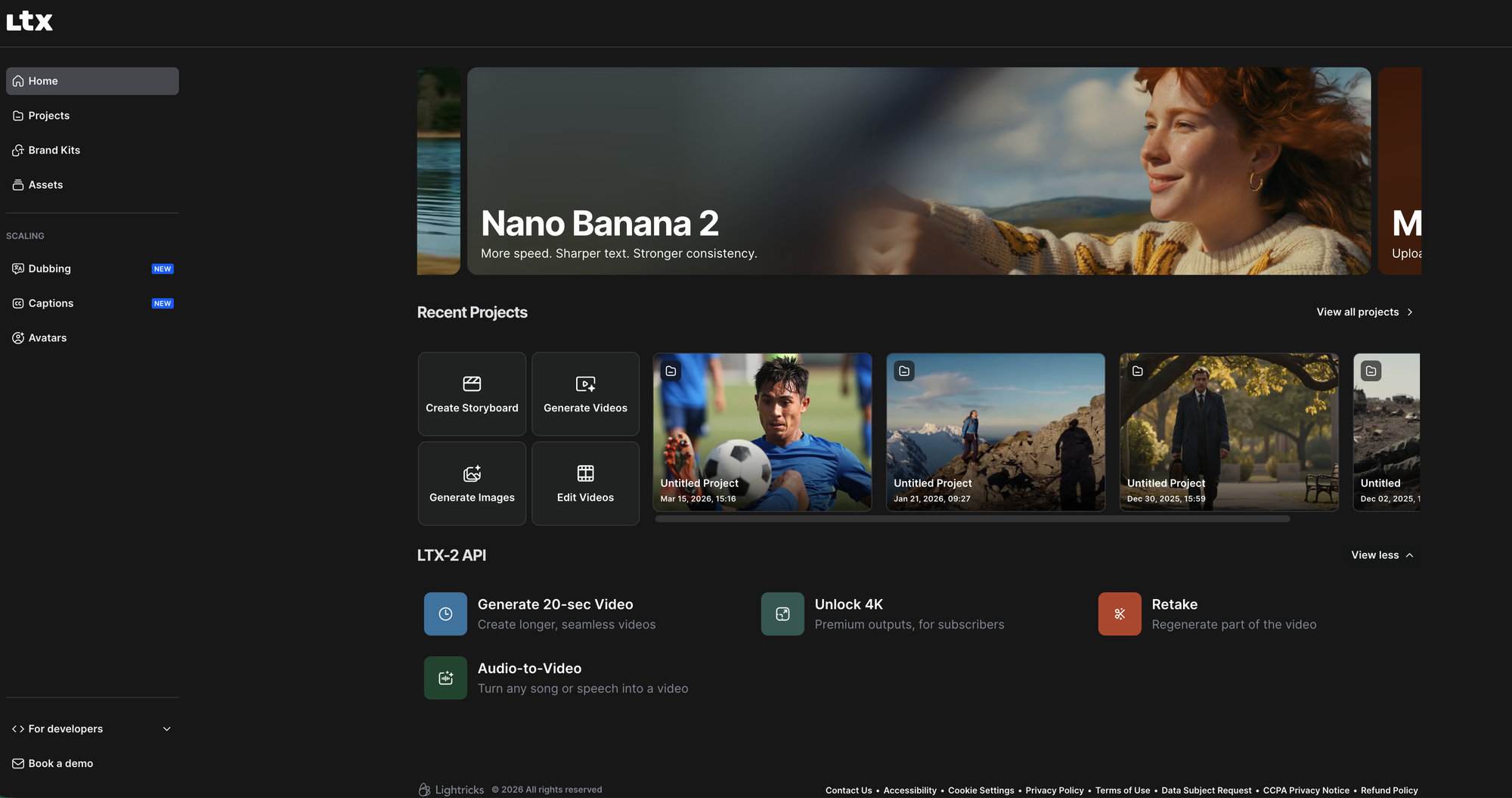
LTX Studio's recent move into in-app editing (with direct XML export to Premiere or Resolve) is a related but distinct approach, editing generated footage inside a traditional NLE workflow, rather than keeping the entire output as editable code from the start. Osmo's bet is that code-as-output is the more durable, flexible foundation for brand and motion work specifically, where a client note like "make the logo bigger" shouldn't mean regenerating an entire clip from scratch.
The Signal in the Noise
The "editable code, not locked video" distinction is worth understanding as a real architectural choice, not just marketing language, and it points to a genuinely different problem Osmo is solving than the narrative AI video platforms this beat covers most often.
Whether that approach holds up for teams used to a traditional After Effects or Resolve Fusion workflow is the real open question, and worth testing directly against a real brand or launch video project before committing a team's motion graphics pipeline to it.
Specs & Pricing
- Basic: $19/month, 1x usage
- Pro: $60/month, 5x usage (most popular)
- Max: $130/month, 12x usage (best value)
- All tiers: 7-day free trial at $0 (code OSMOSTART), annual billing saves 25%
- Export: 4K ProRes with transparent background support
- Seed funding: $5 million