Sony Is Reportedly Trying to Buy Tamron — and Cameras May Not Be the Real Reason
Sony has reportedly proposed buying Tamron outright for $1.2 billion. The camera lens story is the obvious read, but the more interesting motive may be automotive and industrial imaging.

Sony Group has reportedly proposed acquiring Tamron outright, according to an investigative report from the respected Japanese business magazine Diamond. The reported price: roughly 200 billion yen, about $1.2 billion. Neither company has confirmed or denied the report.
The obvious read is that this is a camera lens story. Tamron makes more than 20 lenses for Sony's E-mount system, and Sony has been Tamron's largest shareholder for years. But the more interesting explanation buried in the reporting has less to do with mirrorless cameras and more to do with where Sony's imaging business is actually headed.
The Camera Story, Briefly
Sony currently holds roughly 15% of Tamron's shares, a stake that's functioned as a long-standing stabilizing relationship between the two companies. That position slipped to second place recently, when Singaporean activist investment firm Effissimo Capital Management aggressively expanded its own stake from just under 11% to nearly 17.4%, overtaking Sony as Tamron's largest shareholder.
A full buyout would let Sony reclaim control of that relationship and shut out activist pressure for restructuring or asset sales. That's a real and plausible motivation on its own. It's also, notably, the least interesting part of this story for anyone who isn't a Sony shooter specifically worried about lens roadmaps.
Where the Bigger Motive Might Actually Be

Multiple reports on the rumor point past cameras entirely, toward Tamron's decades of specialized optical design, precision glass molding, and compact zoom manufacturing as capabilities with value well beyond consumer mirrorless lenses. Automotive cameras, industrial imaging, and surveillance systems all get named specifically as areas where Tamron's optical expertise could matter more to Sony's broader imaging and sensor business than another E-mount zoom lens ever would.
Sony's semiconductor division is already the dominant global supplier of image sensors, powering everything from smartphones to automotive systems. Owning Tamron's optical manufacturing outright, rather than just holding a shareholder stake, would let Sony pair sensor technology with in-house lens design and manufacturing across a much wider range of applications than photography alone.
Read that way, the camera lens angle is almost incidental — a byproduct of a deal that's really about computational imaging and sensor strategy at a much larger scale.
What This Would Mean If It Happens
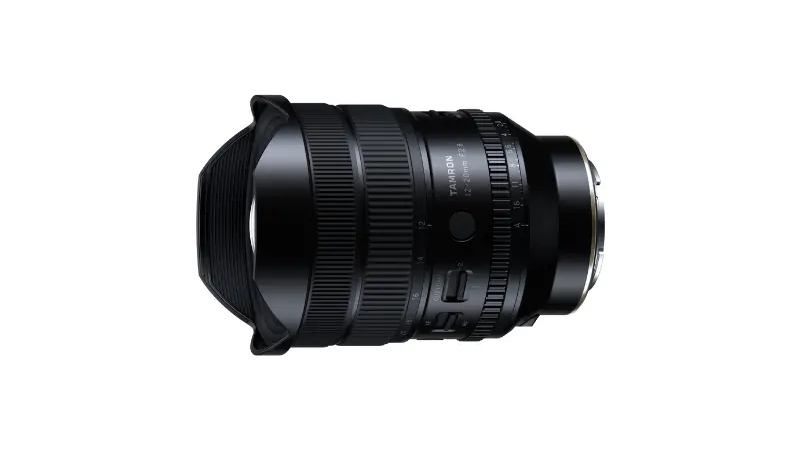
For photographers, the immediate practical concern raised across multiple outlets is what happens to Tamron's lenses for other mounts. Tamron currently lists 23 E-mount lenses, 13 Nikon Z lenses, four Canon RF lenses, and four Fujifilm X-mount lenses — a multi-mount lineup that's only recently started accelerating for non-Sony systems.
Full Sony ownership creates an obvious incentive to slow or eventually end that expansion in favor of keeping Tamron's best output exclusive to E-mount.
None of that would happen immediately even in a completed deal. Existing product lines and commercial relationships don't typically vanish overnight, and ending profitable partnerships wouldn't automatically benefit Sony either. But ownership changes incentives over time, even when nothing changes on day one.
Competitive Context

$1.2 billion is a real number, but it's under 1% of Sony Group's total market capitalization — for comparison, Sony spent roughly three times that acquiring video game developer Bungie a few years ago.
Tamron's current market cap sits close to the reported offer price, at roughly ¥193.69 billion. This is a low-risk move for Sony financially, regardless of which motivation turns out to be the primary one.
The Signal in the Noise

Nothing here is confirmed. Diamond has a strong reputation for Japanese business reporting, and Sony's existing stake makes the rumor immediately plausible, but acquisitions of this size can fall apart for reasons that have nothing to do with strategic logic. It's worth treating this as credible speculation rather than settled fact until Sony or Tamron say something directly.
What makes this worth watching either way is the reminder that a camera lens company isn't only a camera lens company anymore. Precision optics matter to automotive systems, industrial vision, and sensor technology well beyond what shows up on a spec sheet for a mirrorless lens, and that's increasingly where the real strategic value in a deal like this sits.
Specs & Pricing
- Reported acquisition offer: ~¥200 billion (~$1.2 billion)
- Tamron's approximate current market cap: ~¥193.69 billion
- Sony's current Tamron stake: ~15%
- Effissimo Capital Management's stake: ~17.4% (largest shareholder as of last month)
- Tamron's current lens lineup: 23 E-mount, 13 Nikon Z, 4 Canon RF, 4 Fujifilm X-mount