The Only Camera You Actually Need for Cinematic Video Is Probably One You Already Own
Filmmaker Ermia Ramez makes the case that the $2,000 Sony ZV-E1 shares the same sensor as the $7,000 FX6, and that pre-production discipline matters more than any upgrade.

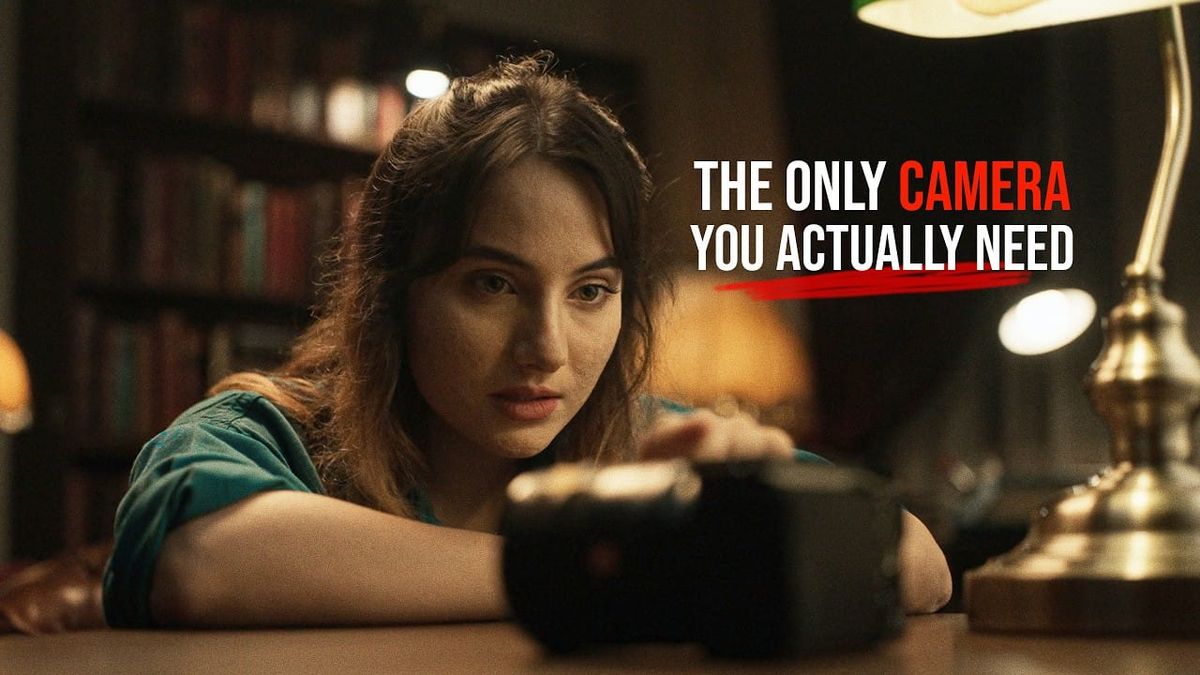
The camera upgrade cycle has a new challenger, and it's a $2,000 vlogging camera.
Filmmaker Ermia Ramez makes a pointed argument in a recent video: the Sony ZV-E1, widely dismissed as a content creator's camera, shares the same sensor and processor as the FX3 and FX6 cinema cameras. The image quality, in practical terms, is functionally identical. The price is roughly three times lower.
The Gear Obsession Problem
The video opens with a sharp observation about the current camera market. As Ramez puts it: "The camera industry turned into a chessboard recently and every company made their move... But one player never moved a piece." The point isn't that the ZV-E1 is the best camera available. It's that the framing around gear upgrades has become disconnected from what actually makes footage look cinematic.
The ZV-E1 shoots full-frame 4K up to 120fps, handles low light well, has minimal rolling shutter, and includes built-in IBIS. On paper and in practice, that's a professional toolkit. The gap between it and a $7,000 FX6 exists mostly in ergonomics, form factor, and marketing positioning rather than image output.
The real target of the video isn't Sony's lineup. It's what Ramez calls "gear junkie and procrastination demons" — the mental friction that convinces creators they can't make great work with what they already have.
Pre-Production as the Real Differentiator
The more substantive part of the argument isn't about the camera at all. Ramez spends significant time on pre-production discipline, using Milanote to organize mood boards, shot lists, and script planning before the shoot begins.
That's the actual argument underneath the gear skepticism: cinematic results come from rigorous preparation and intentional creative decisions, not from sensor specs. The camera is the last variable that matters, and yet it's the one most creators fixate on first.
The production gear on the shoot itself reinforces the point. Alongside the ZV-E1, Ramez used Camakis X00Rs (100W battery-powered lights), a Viltrox 28mm lens, and a Viltrox 40mm lens — a modest, practical kit by any professional standard.
Competitive Context
Gear Acquisition Syndrome, or GAS, is a well-documented phenomenon in the filmmaking community, and camera manufacturers have built entire marketing cycles around it. Sony, Canon, and others release incremental updates at regular intervals, each positioned as the upgrade that will finally unlock professional results.
The ZV-E1 disrupts that narrative specifically because it's a Sony product making the case against Sony's own upgrade cycle. A camera sharing internals with the FX3 and FX6 but priced and marketed toward vloggers is an awkward product for the company's cinema line positioning — which is probably why it's been easy to dismiss as "just a vlogging camera" in online gear discourse.
The broader market context: full-frame sensors and 4K at high frame rates are no longer differentiators at the professional tier. The spec gap between consumer and cinema cameras has compressed significantly over the past several years. The ZV-E1 is a particularly clear example of that compression, but it's not the only one.
The Signal in the Noise
The "95% of the time, what you already have is good enough" argument is one filmmakers have been making for decades, and it's always been true. What changes is which specific camera represents "good enough" at a given moment. Right now, the floor for professional-quality full-frame footage is lower than it's ever been.
The more durable takeaway from Ramez's video isn't about the ZV-E1 specifically. It's about where preparation time actually compounds. Spending ten hours on pre-production — refining the shot list, building the mood board, locking the locations — produces more visible improvement in the final cut than spending the same ten hours researching the next camera upgrade. That's true regardless of what's in your bag.
Specs & Pricing
The Sony ZV-E1 is available at approximately $2,000 body-only. Current pricing is available on Sony's website and B&H. The FX3 and FX6, for comparison, retail at roughly $3,500 and $7,000 respectively.
Resources & Reads
Ermia Ramez's full video includes a complete breakdown of the production workflow, gear list with links, and Milanote setup for pre-production planning.