Viltrox Launches AF 75mm F1.8 and AF 90mm F2.2 EVO Lenses
Viltrox adds two APS-C portrait primes to its EVO lineup. The AF 75mm F1.8 starts at $329 and the AF 90mm F2.2 at $369, available for Sony E, Nikon Z, and Fujifilm X.

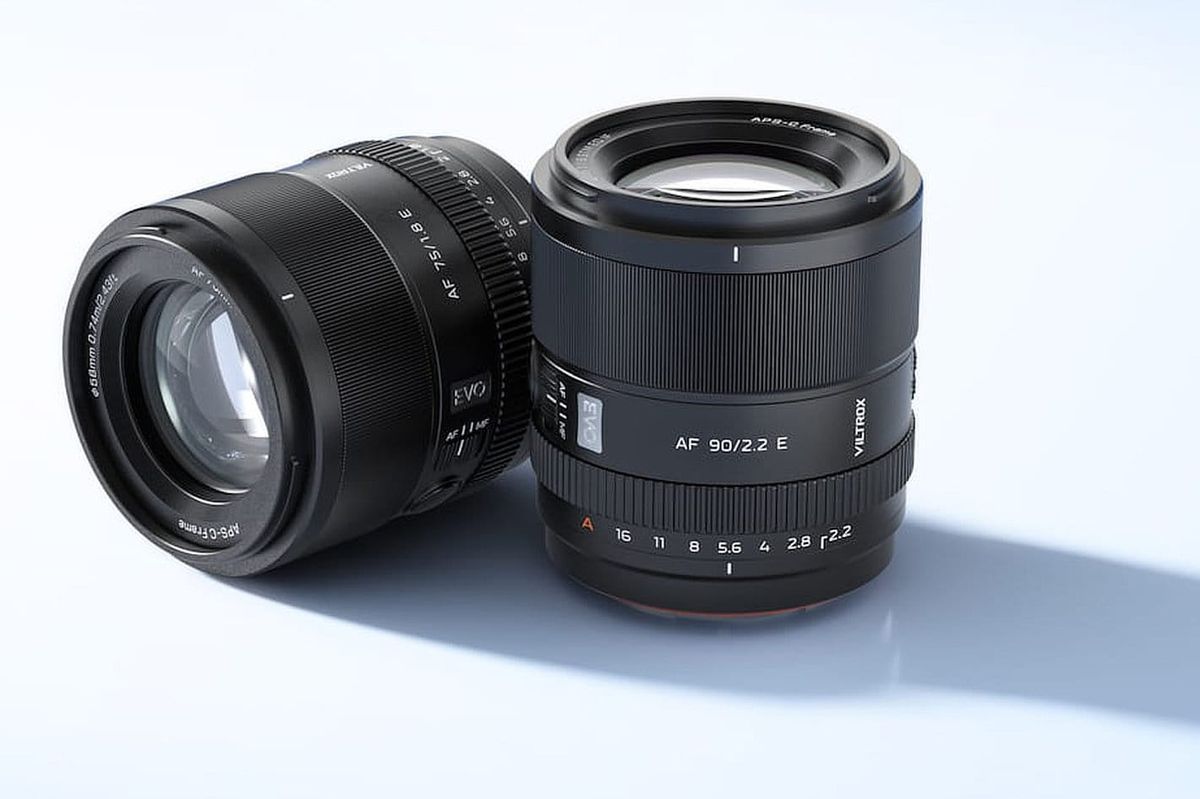
Viltrox announced two new APS-C portrait prime lenses on June 8, 2026: the AF 75mm F1.8 EVO and the AF 90mm F2.2 EVO. Both lenses are available for Sony E, Nikon Z, and Fujifilm X mounts and are priced below $400 USD. The releases expand the existing EVO lineup — which already includes 35mm, 55mm, and 85mm options — with two lenses targeting different portrait working distances.
Specifications, Pricing, and Platform Notes
The AF 75mm F1.8 EVO is priced at $329 USD (£319 GBP / €389 EUR) and delivers a 112.5mm-equivalent field of view on APS-C. Its optical formula uses 11 elements in 9 groups, incorporating two HR and two ED glass elements to reduce chromatic aberration. The lens weighs 335g (11.8oz) and accepts 58mm filters. The AF 90mm F2.2 EVO is priced at $369 USD (£359 GBP / €429 EUR) and renders a 135mm-equivalent perspective. It uses 10 elements in 8 groups with the same HR and ED element types, weighs 345g, and measures 78mm in length. Both are available immediately through the Viltrox online store and authorized retailers, with approximately 5% off list price at launch on the Viltrox site.
Both lenses share a minimum focus distance of 0.74m (29 inches), a 58mm filter thread, nine aperture blades, and a stepping motor (STM) autofocus system. Physical controls include an AF/MF switch, a customizable function button, and a clicked or de-clicked aperture ring. One platform-specific caveat: the Fujifilm X-mount versions of both lenses omit the CLICK switch, Fn button, and AF/MF switch — a meaningful difference for shooters who rely on those controls.
An early optical assessment from OpticalLimits noted that neither lens incorporates aspherical elements, which contributes to clean out-of-focus highlight discs with minimal internal texture. The review flagged vignetting as notable — at f/1.8 the 75mm produces approximately 1.7 EV of light falloff — though the Sony E-mount correction profile addresses this from maximum aperture. Video users should be aware that both lenses exhibit visible focus breathing when shifting focus across large distances.
Competitive Context
In the APS-C portrait prime segment, the EVO series sits between entry-level manual and budget AF options on one end and the higher-priced Sony, Fujifilm, and Sigma first-party or third-party offerings on the other. At 75mm, the Viltrox competes most directly with the TTArtisan 75mm f/2, which is a manual-focus-only option available at a lower price point, making the Viltrox the more capable choice for hybrid shooters who depend on autofocus. At 90mm, Fujifilm X-mount shooters have the native XF 90mm F2 R LM WR, which carries weather sealing and a faster aperture but retails well above the Viltrox's $369 price. Sigma's 56mm f/1.4 DC DN Contemporary remains a widely used alternative in the 85mm-equivalent range for APS-C, though it covers a different focal length. The EVO series positioning — above Viltrox's own AIR series, below its Pro series — means these lenses are aimed at creators who want metal construction and stronger optical performance without stepping into premium price territory.
The Signal in the Noise
The 75mm and 90mm additions close two gaps in the EVO lineup that previously left portrait-focused APS-C shooters choosing between the 55mm and 85mm options. The 75mm's 112.5mm equivalent gives run-and-gun documentary and street portrait shooters more working distance than the 55mm without committing to the tighter framing of the 85mm or 90mm. The 90mm's 135mm equivalent is a recognized portrait compression range that until now had no affordable STM-autofocus APS-C option from Viltrox.
For video producers, the STM system and de-clicked aperture ring are the practical draws. The STM in the EVO series is designed for quiet, smooth focus transitions — a meaningful distinction from the older DC motor designs in some competing lenses. The de-clicked aperture control allows for in-shot exposure adjustments without audible clicks reaching a camera's onboard microphone. The focus breathing caveat, however, is worth flagging before a production decision: shooters doing rack focuses on talking-head interviews or narrative close-ups may find it noticeable.
The Fujifilm X-mount omission of the CLICK switch, Fn button, and AF/MF switch is a practical limitation worth weighing for X-mount users who value physical lens control. Sony E and Nikon Z versions ship with the full control set. At $329 and $369 respectively, both lenses represent a lower entry cost than most first-party equivalents, which keeps them relevant for smaller production budgets building out an APS-C kit.
Resources & Reads
- ProVideoCoalition: Viltrox AF 75mm F1.8 EVO & AF 90mm F2.2 EVO announcement
- OpticalLimits: Early optical assessment of the Viltrox EVO tele lenses
- Viltrox official store: AF 75mm F1.8 EVO and AF 90mm F2.2 EVO product pages
- DPReview: APS-C portrait lens comparison coverage
- B&H Photo: Authorized retailer listings for Viltrox EVO series