What is an AI Agent and What Could It Mean for Film Production?
An AI agent takes sequences of actions toward a goal — not just answering questions but doing things. Here's what agents could mean for film production workflows.

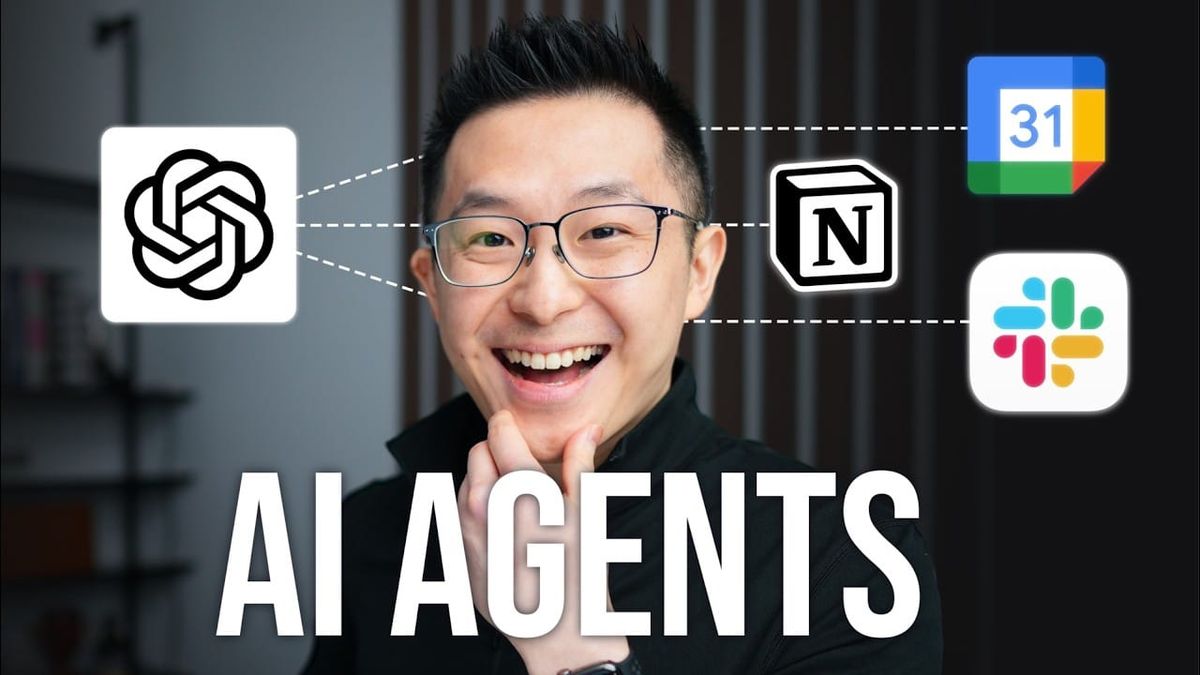
An AI agent is an AI system that doesn't just respond to individual prompts but takes sequences of actions toward a goal, using tools and making decisions autonomously along the way. Where a standard AI chatbot answers questions, an agent can access external systems, execute tasks, check its own work, and iterate until a goal is achieved — with minimal human intervention at each step.
The technology is early but developing rapidly. For film production, the implications are significant enough to be worth understanding now, even if the fully realized version is still a few years out.
How AI Agents Differ From Chatbots
The distinction is meaningful. When you ask a chatbot like ChatGPT or Claude a question, it responds to that specific input. It doesn't take action in the world, access external systems, or remember what it did five minutes ago without being told.
An AI agent has tools — the ability to search the web, read and write files, send emails, query databases, book calendar slots, run code. And it has the ability to chain actions together: search for information, use that information to make a decision, take action based on that decision, check the result, and iterate.
The agent isn't just answering — it's doing.
What Agents Could Do in Film Production
The most immediate applications in production are administrative and logistical — the high-volume, time-consuming tasks that consume significant crew hours without requiring creative judgment.
A production management agent could monitor a shooting schedule, identify conflicts between crew availability and location bookings, propose adjusted schedules, and update call sheets automatically. It could track purchase orders against the budget in real time and flag overruns before they become problems. It could monitor weather forecasts for exterior shooting days and send alerts when conditions are likely to affect the schedule.
A research agent could monitor trade publications and news sources for developments relevant to a documentary subject, compile summaries, and flag items that require the director's attention — without anyone manually checking sources throughout the day.
A post-production coordination agent could track the status of VFX deliverables across multiple vendors, send follow-up communications when deadlines are approaching, and update the post schedule in response to changes.
The Current State
Fully autonomous AI agents capable of handling complex production tasks without supervision don't yet exist in a form that's reliable enough for professional use. Current agent systems work well for narrow, well-defined tasks but struggle with the ambiguity and judgment calls that characterize real production environments.
The tools are advancing quickly. Products like Anthropic's Claude, OpenAI's operator-style assistants, and purpose-built workflow automation platforms are moving in this direction. The gap between current capabilities and what's described above is measured in months to years, not decades.
What Filmmakers Should Do Now
The practical move is to watch the space, experiment with current automation tools where they're reliable, and think carefully about which parts of your production workflow are most time-consuming and least judgment-dependent. Those are the first candidates for agent-based automation when the tools mature.
Building familiarity with AI tools now means being positioned to adopt agent-based workflows early when they become reliable enough to use professionally.