What is Generative AI and What Can It (Ethically) Do For Filmmakers?
Generative AI creates new content from patterns learned during training. Here's what it can realistically do for filmmakers — and where its limitations are significant.

Generative AI refers to artificial intelligence systems capable of creating new content — text, images, video, audio, code — rather than simply analyzing or categorizing existing content. It's the category of AI that has generated the most discussion, excitement, and concern in the creative industries over the past few years, and for good reason.
Understanding what generative AI actually is — and where its real limitations lie — is more useful than either the hype or the fear.
How Generative AI Works
Generative AI systems are trained on large datasets of existing content. Image generators are trained on millions of images. Video generators are trained on video. Language models are trained on text. Through that training, the models learn statistical relationships between elements — which visual patterns tend to appear together, which words follow which other words, which sounds accompany which images.
When you prompt a generative AI system, it produces output that statistically fits the context of your prompt based on everything it learned during training. It's not retrieving existing content from a database. It's generating new content that resembles the patterns it was trained on.
What Generative AI Can Do for Filmmakers
The practical applications in filmmaking are expanding rapidly.
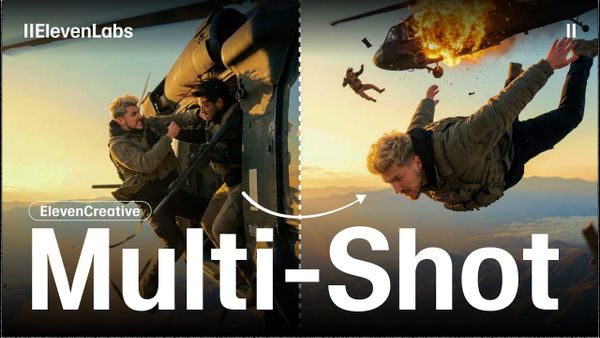
Text generation through LLMs handles script drafts, treatment writing, research, and production documentation. Image generation creates concept art, mood boards, and visual references for production design. Video generation — through tools like Runway, Sora, and Kling — can produce short clips from text prompts or transform existing footage.
Audio generation creates music, sound effects, and voice synthesis. Pre-visualization tools can produce rough animatics from script descriptions. Each of these capabilities reduces the time and cost of tasks that previously required specialized human labor.
What Generative AI Can't Do
The limitations of current generative AI are significant and worth understanding clearly.
Generative AI cannot maintain consistent character appearance across a long-form narrative. It struggles with complex physical interactions — hands, water, crowd dynamics — in ways that are immediately visible to a trained eye. It has no understanding of story, pacing, or emotional resonance — it can produce images or video that look impressive in isolation but doesn't know whether they serve the story.
It cannot replace the subjective judgment of a skilled cinematographer, editor, or director. The creative decisions that define exceptional filmmaking — when to cut, where to place the camera, how long to hold a moment — require human understanding that current AI systems don't possess.
It also carries unresolved legal and ethical questions around training data, copyright, and the use of artists' work without consent. These questions are active in courts and legislatures and will shape how generative AI tools can be used professionally.
The Honest Assessment
Generative AI is a genuinely useful tool for specific tasks in filmmaking — rapid ideation, pre-visualization, administrative acceleration, and content generation at scale. It's not a replacement for skilled human creative work, and the projects that treat it as one tend to produce results that reflect that misunderstanding.
The most effective approach is to use generative AI where it accelerates or enhances human creative work, not where it attempts to replace it.