What Is Hugging Face? A Plain-Language Explainer for Filmmakers
Hugging Face is where most open-weight AI models and LoRAs actually get hosted and shared. Here's what the platform does and why it matters.


If you've followed BRC's recent AI coverage, h3.c, H3-World, the vh5tape VHS LoRA, you've seen the same website mentioned in nearly every one of them: Hugging Face. Here's what the platform actually is, and why so much of AI filmmaking's open-weight ecosystem runs through it.
What Hugging Face Actually Does
Hugging Face is a hosting and collaboration platform for AI models, datasets, and applications, often described as "the GitHub of machine learning." It doesn't build competing AI models of its own. Instead, it's the place where researchers, companies, and independent developers upload, share, and distribute open-weight models, along with the training data and demo apps built around them.
The platform is deliberately model-agnostic and neutral, hosting models from Meta, Mistral, Google, and countless independent labs and hobbyists side by side, rather than pushing a single proprietary stack the way a company like OpenAI or Anthropic does. That neutrality is a big part of why it's become the default place open-source AI actually lands once it's released.
How It Actually Started
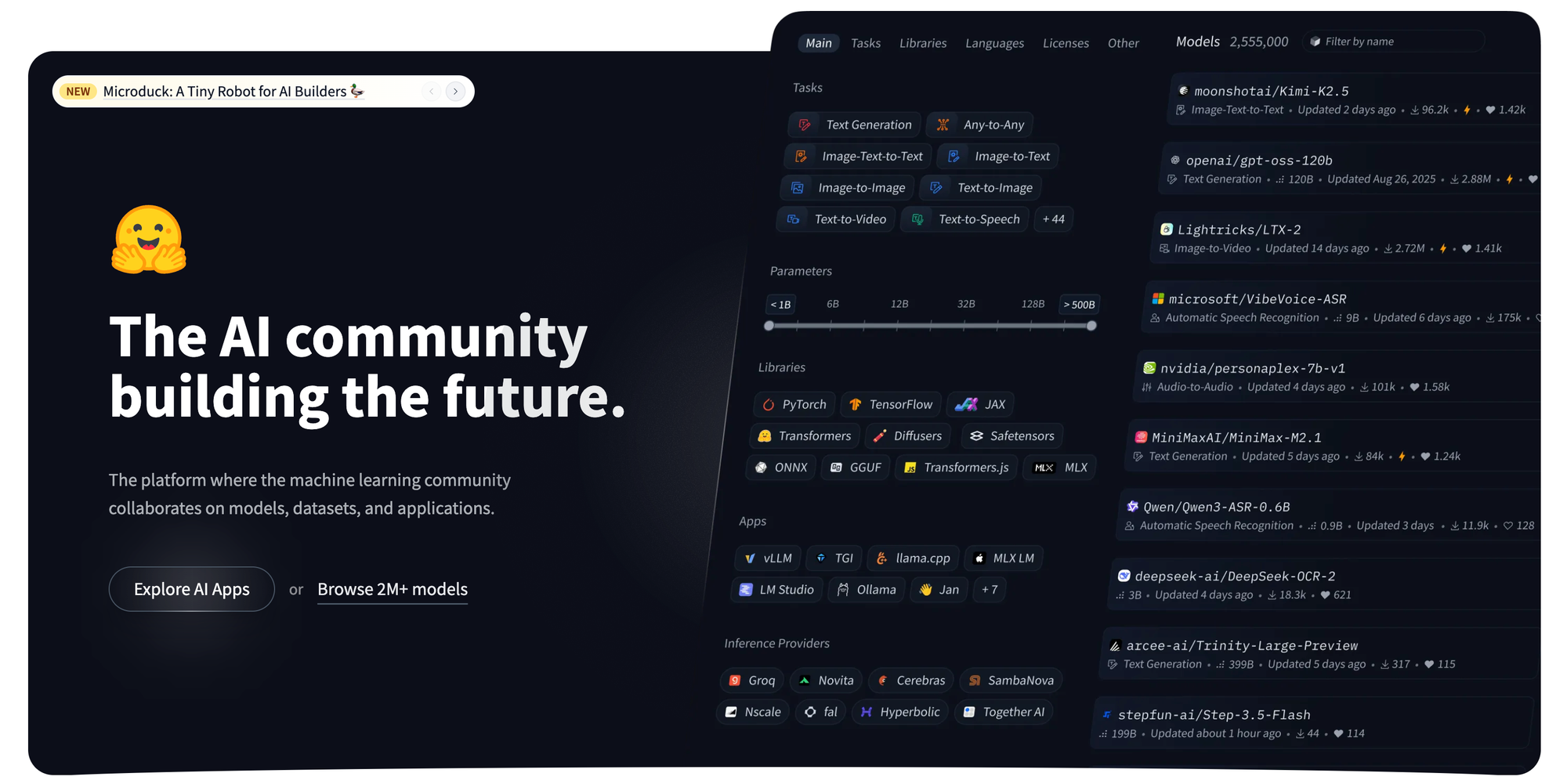
Hugging Face was founded in 2016 as a chatbot app aimed at teenagers, a "digital friend" you could text back and forth with. That consumer product never took off, but the natural language processing technology built to power it did. In 2018, the company open-sourced Transformers, the library it had built internally, and it became the industry standard for natural language processing almost overnight. The hosting platform that grew up around that library is what most people know as Hugging Face today.
What You Actually Find There
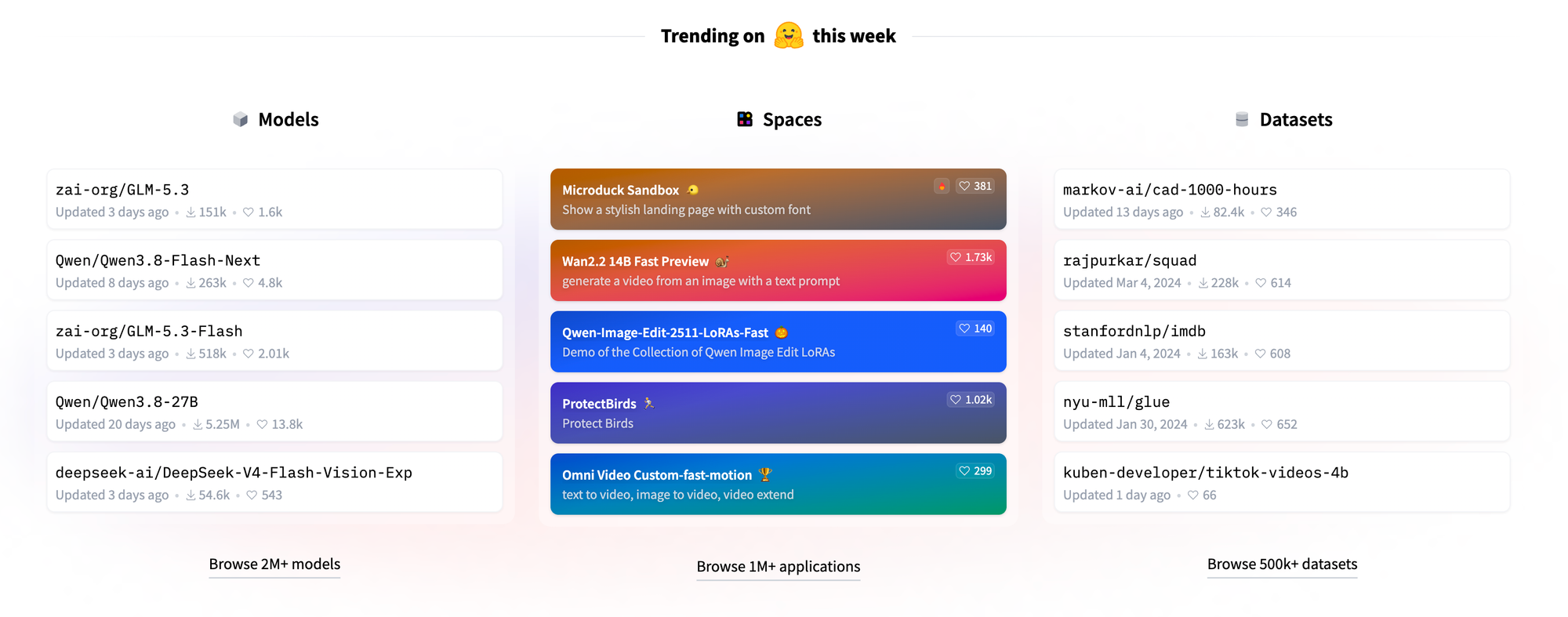
Three things matter most for anyone working with AI video or image tools. Model pages host the actual weights for a given AI model, along with documentation, usage examples, and licensing terms. Datasets are the training data researchers and creators use to build or fine-tune models. Spaces are interactive demo apps, often letting you try a model directly in your browser before downloading anything.
This is also where the LoRA ecosystem BRC has covered extensively actually lives. MiniMax open-sourced H3 on Hugging Face. The community LoRAs built on top of it, vh5tape's VHS aesthetic, H3-World's keyboard-controlled interactivity, all get published and downloaded from the same place. When a model or tool in this space gets called "open source," Hugging Face is almost always the actual delivery mechanism behind that openness.
Why This Matters More Than It Sounds
Without a platform like Hugging Face, "open weights" would mean very little practically. A research lab releasing a model's weights as a downloadable file on their own website is a much higher barrier than uploading to a platform where millions of developers already have accounts, tooling, and infrastructure built around finding and using exactly that kind of release. Hugging Face is what turns "technically available" into "actually usable by a solo creator or small studio."
Competitive Context
A quick note on timing: Nvidia just confirmed a $12.9 billion acquisition of Hugging Face, a real signal of how central this infrastructure has become to the broader AI industry, not just AI filmmaking specifically. Nvidia's CEO has publicly committed to keeping the platform open and neutral post-acquisition, whether that holds over time is worth watching, but it doesn't change what the platform actually does for creators today.
The Signal in the Noise
Understanding Hugging Face clarifies something useful about how AI tools actually reach the people using them. A model being open-weight and a model being genuinely accessible to someone without a research lab's infrastructure are two different problems, and platforms like Hugging Face are what closes that gap. When you see a Hugging Face link in one of our articles, it's usually the actual place you'd go to download or try the thing being discussed, not just a citation.
Does knowing where these models and LoRAs actually live change how you'd go about trying one yourself?
The Details
- Founded: 2016, originally a consumer chatbot app
- Pivot point: 2018, after open-sourcing the Transformers library
- What it hosts: models, datasets, and interactive demo apps ("Spaces")
- Positioning: model-agnostic and platform-neutral, hosts models from many labs and independent creators alongside each other
- Role in BRC's coverage: the actual hosting location for MiniMax H3, h3.c, H3-World, and community LoRAs like vh5tape