What is Prompt Engineering and How Do Filmmakers Use It?
Prompt engineering is the practice of crafting AI inputs to get better outputs. Here's what it involves and how filmmakers apply it across pre-production, image generation, and production planning.

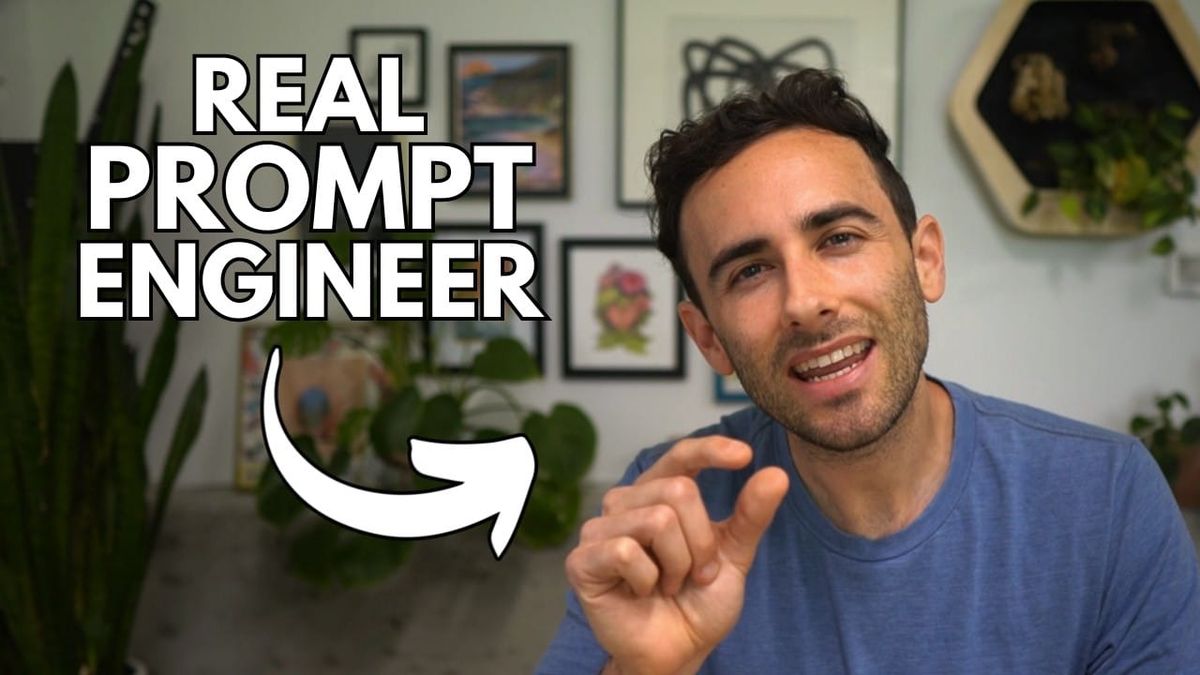
Prompt engineering is the practice of crafting and refining the inputs you give to an AI system to get more accurate, useful, and consistent outputs. It's less a technical skill than a communication skill — learning how to describe what you want in a way that the model understands and can act on.
The term sounds more specialized than it is. Anyone who has used ChatGPT, Claude, Midjourney, or Runway and experimented with how different phrasings produce different results is already doing prompt engineering informally.
Why Prompts Matter
AI models don't read your mind. They respond to what you give them, and the quality and specificity of your input directly affects the quality of the output.
A vague prompt produces generic output. A specific, well-structured prompt that provides context, constraints, and examples produces output that's much closer to what you actually need.
The difference between "write a scene" and "write a two-page scene in the style of early Coen Brothers, set in a rural diner in 1987, between a world-weary sheriff and a young drifter who clearly knows more than he's saying, subtext throughout, no on-the-nose dialogue" is not a trivial one. The second prompt gives the model enough to work with.
Core Prompt Engineering Techniques
Several techniques consistently improve AI output across different tools and use cases.
Context loading means providing the model with relevant background before making your request. For a filmmaking task, this might mean describing the project's genre, tone, target audience, and visual references before asking for anything specific. The more relevant context you provide, the more targeted the output.
Constraints narrow the output space in useful ways. Word counts, format requirements, exclusions, and stylistic parameters all help the model produce something that fits your actual needs rather than a generic interpretation of your request.
Examples are powerful. Showing the model a sample of what you want — a scene in the tone you're going for, an image in the visual style you're pursuing — gives it a concrete reference that abstract description can't match.
Iteration is part of the process. First outputs are rarely final. Asking the model to revise specific elements, try a different approach, or push a particular aspect further is how you refine toward something usable.
Filmmaking-Specific Applications
For pre-production writing, specific prompt engineering dramatically improves the quality of AI-assisted script drafts, treatments, and character work. Describing the film's influences, the character's background and contradictions, and the scene's function in the larger story produces far better output than a bare request.
For image and video generation, visual prompts benefit from specific cinematographic language. Describing the lens, the lighting quality, the camera position, the color temperature, and the emotional register of the image gives the model much more to work with than "a dramatic shot of a woman in a city."
For production planning tasks — schedules, budgets, shot lists — providing the model with specific parameters, constraints, and examples of the format you need produces documents that are actually usable rather than generic templates.
The Limits of Prompt Engineering
Better prompts produce better outputs, but they don't overcome the fundamental limitations of the underlying model. An AI that doesn't understand story can't be prompted into producing a structurally sound script. An image generator that struggles with hands won't produce perfect hands regardless of how carefully you phrase the prompt.
Prompt engineering is a tool for getting more out of AI systems, not a workaround for their core limitations.