YouTube Just Doubled What It Takes to Start Earning Money
Starting February 1, 2027, new YouTube creators will need double the watch hours or Shorts views to start earning money. Here's exactly what's changing, and what isn't.

YouTube announced sweeping changes to the YouTube Partner Program this week, and the headline number is stark: starting February 1, 2027, new applicants will need double the watch hours or double the Shorts views currently required to start monetizing a channel. It's the first significant change to YPP entry requirements since 2018.
What's Actually Changing
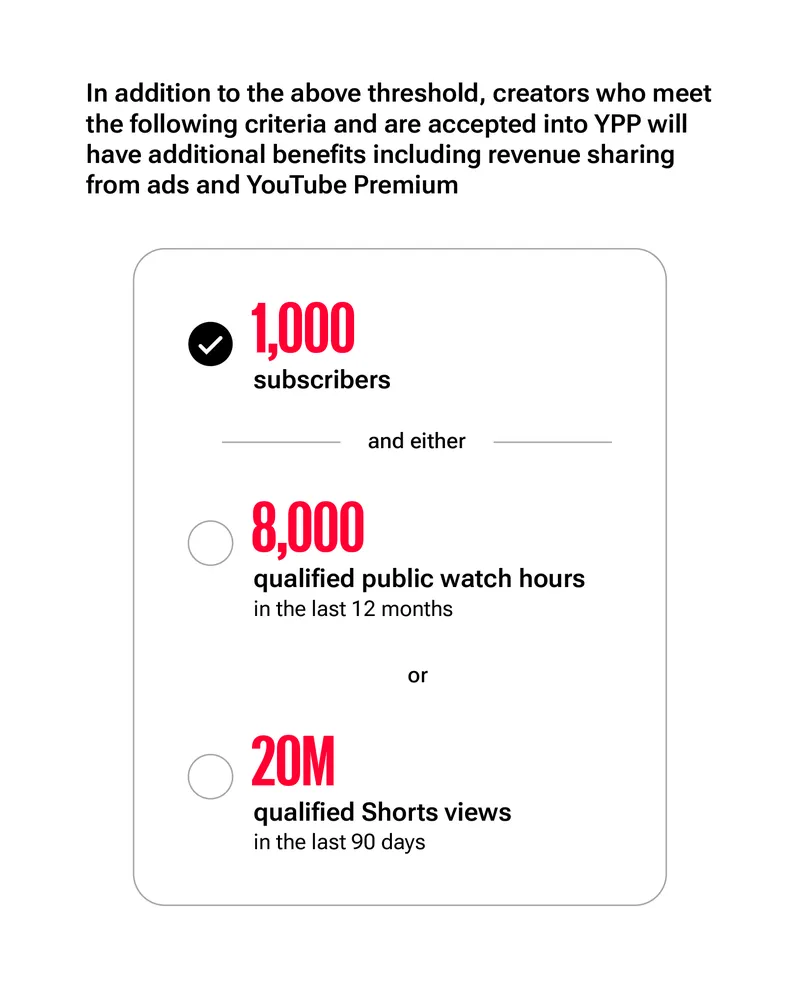
New applicants will need either 8,000 qualified watch hours in the past 365 days (up from 4,000) or 20 million qualified Shorts views in the past 90 days (up from 10 million), on top of the existing 1,000-subscriber requirement that isn't changing. Whichever path a creator takes, the bar has genuinely doubled.
Worth being precise about who this actually affects: current YPP members are explicitly grandfathered in and unaffected by the new thresholds. This is a change to the entry requirement for new applicants specifically, not a retroactive requirement for anyone already earning on the platform.
A Second, Separate Change: Ongoing Shorts Requirements
This is a distinct policy shift worth understanding on its own. Starting the same date, current YPP members will need to maintain 10 million qualified Shorts views in a rolling 90-day window specifically to keep earning ad and subscription revenue from Shorts. Dropping below that threshold pauses Shorts-specific revenue, not full YPP status or long-form earnings, and it resumes automatically once a creator crosses back over 10 million views again.
What Isn't Changing
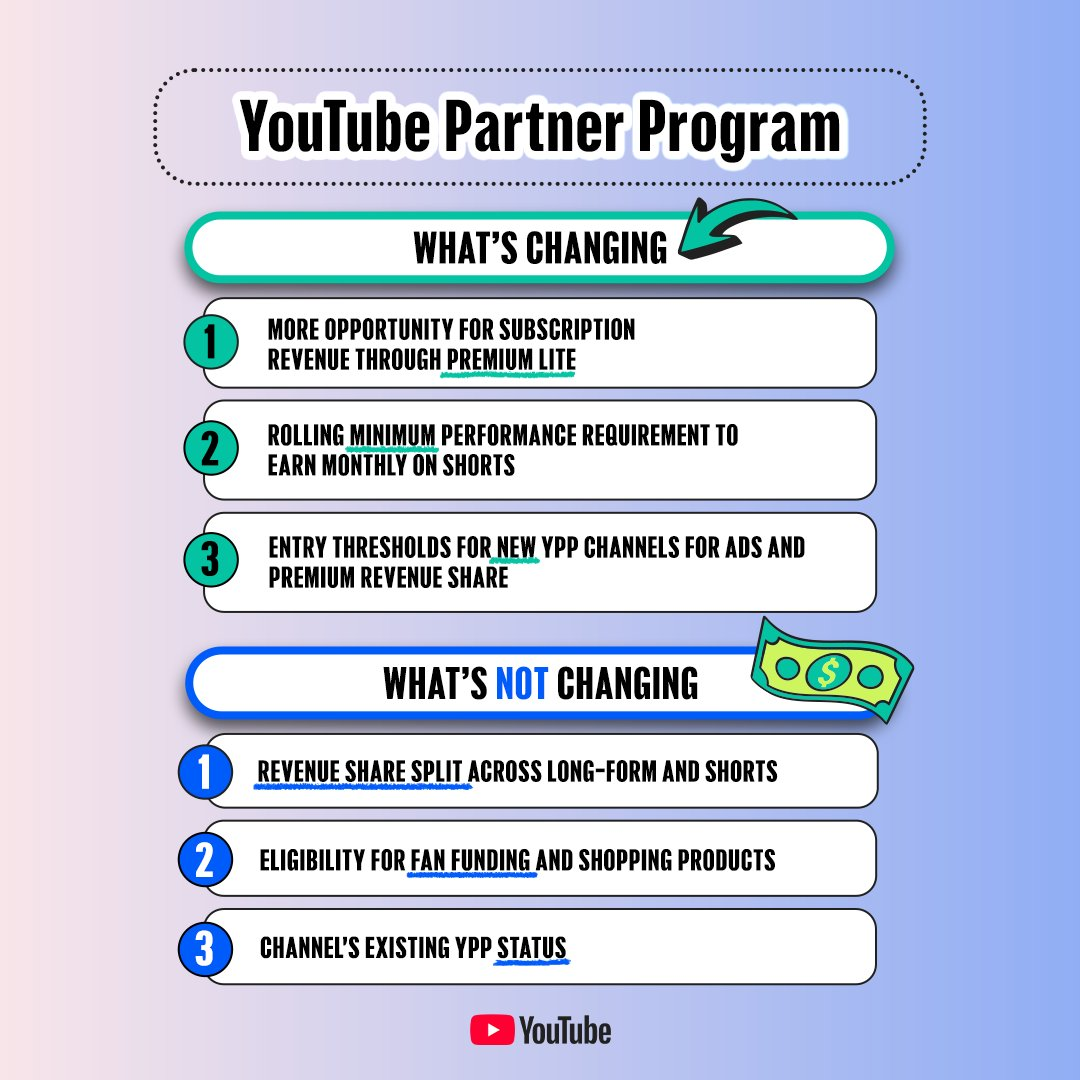
YouTube was explicit that fan funding features, Super Chats and channel memberships, along with YouTube Creator Partnerships and YouTube Shopping, have no eligibility changes at all. These products actually get their own, considerably lower entry point: 500 subscribers plus either 3,000 qualified watch hours in the past year or 3 million qualified Shorts views in the past 90 days, letting newer creators start earning through these channels well before qualifying for full YPP ad revenue sharing.
YouTube also introduced a new "active channel" definition taking effect the same day: a channel counts as active if it hits 1,000 qualified watch hours, 1 million qualified Shorts views, or simply uploads 2 long-form videos or 5 Shorts every 90 days. That's a separate, much lower bar tied to channel activity rather than monetization eligibility.
Why YouTube Says It's Doing This
YouTube's official framing points to the platform's own scale as the justification: with more than 3 million creators already in the Partner Program, over 200 billion daily Shorts views, and more than a billion hours of daily watch time, the company says it's raising thresholds to "keep pace with the growth of YouTube" and ensure YPP continues "meaningfully rewarding active creators." Notably, YouTube says it expects to pay creators more in total during 2027 than it did in 2026, positioning this less as a cost-cutting move and more as a redistribution toward creators who clear the higher bar.
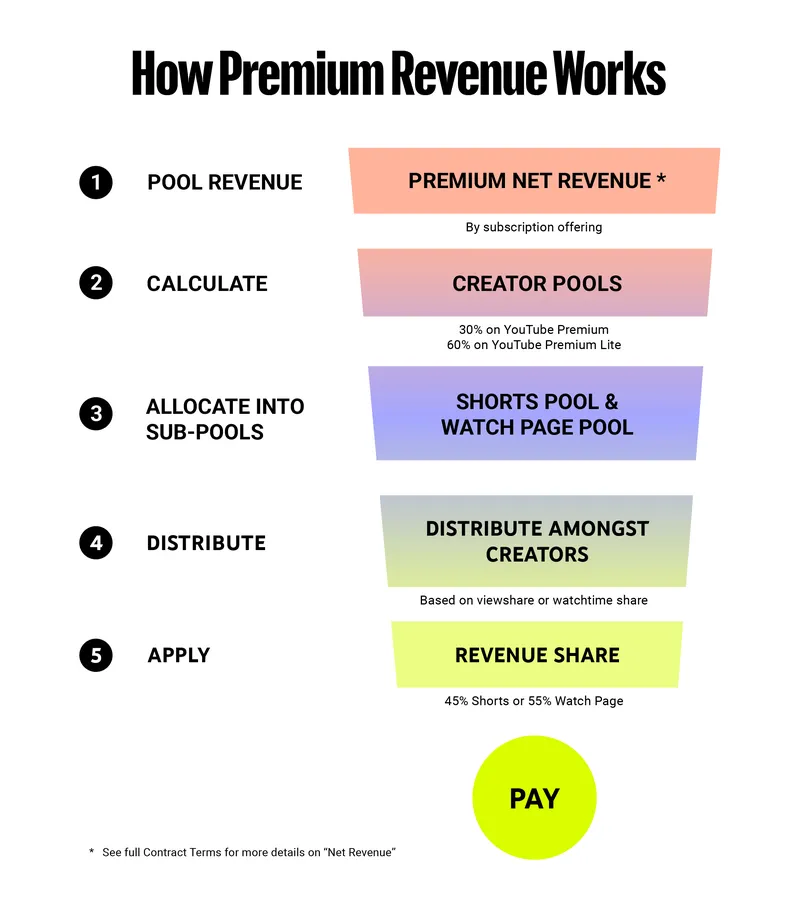
The changes arrive alongside a broader monetization update: Premium Lite is expanding to every country where Premium is already available, with creators earning a share of a dedicated revenue pool, 30% of net subscription revenue for standard Premium, 60% for Premium Lite, split 55% toward long-form content and 45% toward Shorts.
What This Actually Means for New Creators
For anyone starting a channel with monetization as a goal, particularly relevant given how much AI-assisted and AI-generated content has been entering YouTube's ecosystem, this is a real, meaningful barrier increase. Reaching 8,000 watch hours or 20 million Shorts views takes genuinely more sustained audience-building than the previous thresholds, and it raises the practical stakes on producing content that actually retains viewers rather than chasing raw upload volume.
It's also worth reading alongside YouTube's separate, ongoing crackdown on templated, low-originality AI content covered here previously. Higher entry thresholds combined with continued enforcement against inauthentic content suggests YouTube is deliberately raising the bar on both ends: harder to get in, and harder to stay in without producing content with genuine creative substance.
What Existing Creators Need to Actually Do
Even creators unaffected by the threshold increase have a real action item: YouTube is requiring everyone to review and accept updated Partner Program terms in YouTube Studio by January 31, 2027, the day before the new policy takes effect, to continue fully monetizing content without interruption. That's a deadline worth flagging regardless of whether a channel is already comfortably above the new thresholds.
The Signal in the Noise
The practical takeaway splits cleanly by where a creator currently stands. Existing YPP members: the entry threshold change doesn't affect you directly, but don't skip accepting the updated terms by the deadline, and if Shorts revenue is a meaningful part of your income, watch the new 10-million-view maintenance requirement closely. Anyone building toward monetization for the first time: the bar is genuinely, substantially higher starting February 2027, and the smarter move is treating the current, lower thresholds as a closing window rather than assuming the new requirements won't affect a channel already in progress.
Does this change how you're thinking about growing a channel toward monetization, or does it mostly confirm what building a real audience already required? Curious where you land, drop it in the comments.
Resources & Reads
- New Opportunities to Earn and Changes to the YouTube Partner Program — YouTube Official Blog
- Changes to the YouTube Partner Program — YouTube Help
- YouTube Now Requires Creators to Have Twice as Many Watch Hours to Start Earning Money — Coverage on TechCrunch
- YouTube's AI Slop Crackdown Just Revealed Its Real Scale — BRC