Higgsfield's $2 Million AI Movie Is Free to Watch and Fully Open-Sourced
Higgsfield's $2 million AI feature film is now free to watch, with every prompt and asset behind it made public.

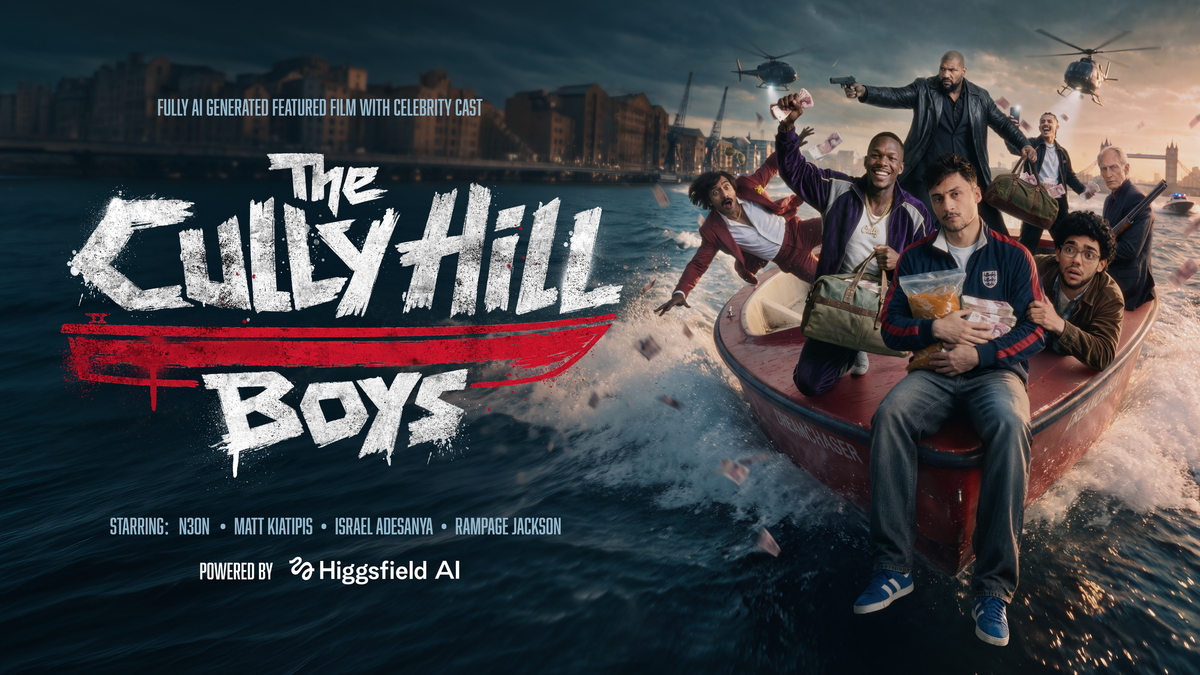
Higgsfield AI has opened the vault on its latest feature film. The Cully Hill Boys, a 110-minute AI-generated action-comedy that premiered August 5 at The Glasshouse in New York, is now free to watch and fully open-sourced, with every prompt and asset behind the $2 million production made public.
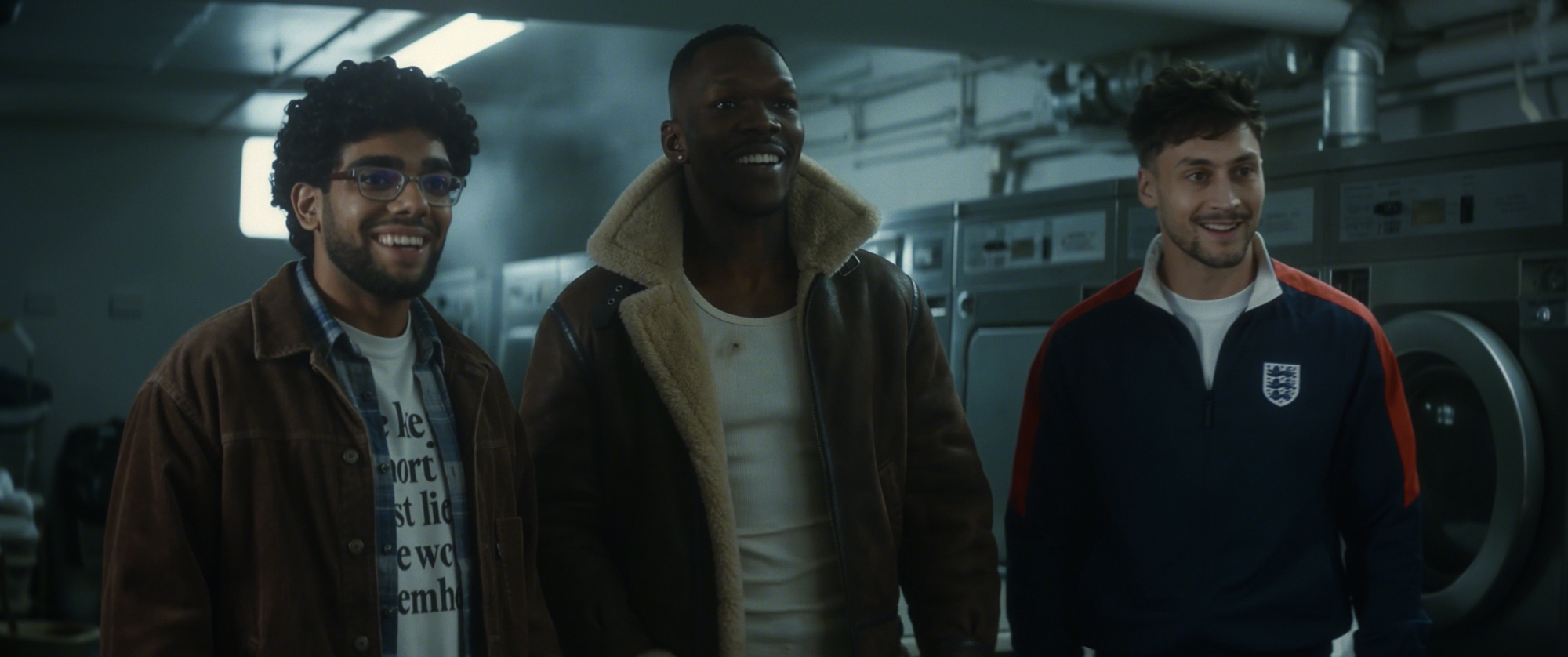
The film stars licensed AI likenesses of four real entertainers: UFC champion Israel Adesanya, MMA veteran Quinton "Rampage" Jackson, livestream creator N3on, and streetball athlete Matt Kiatipis. It follows three struggling East London rappers whose plan to shoot a music video unravels after a stolen boat full of loot lands them between rival crime syndicates.
A Licensing Model, Not Just a Movie
The bigger story isn't the film itself, it's the deal structure behind it. Higgsfield drew criticism earlier this year for "Hell Grind," a fully AI-generated feature with no human likeness rights involved. The Cully Hill Boys answers that criticism directly by licensing real people's digital personas and, according to Higgsfield, permanently deleting the source assets used to build those likenesses within a set window after production wrapped.
Screenwriter Timothy Planagan spent roughly five years writing the original script, which was a Feature Screenplay Finalist at the 2026 London Independent Screenplay competition. He told Variety his deal with Higgsfield was limited to AI adaptations and paid at rates on par with WGA scale, despite not being a guild member himself.
That detail matters more than the runtime or the budget. It's a working example of a studio building a paid licensing pipeline for both performer likeness and writer IP around generative video, rather than treating either as free training material.
Competitive Context
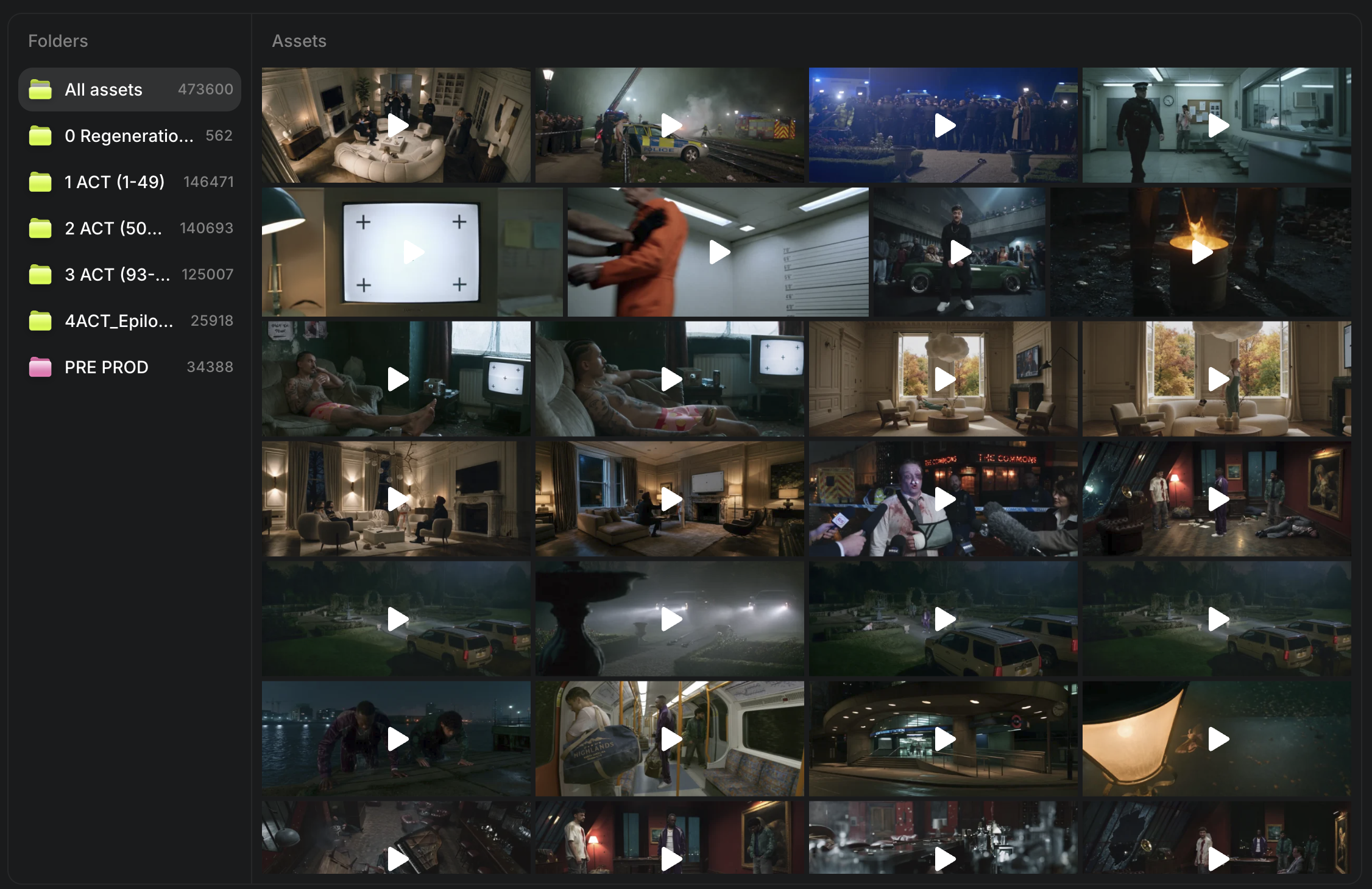
Higgsfield isn't alone in chasing feature-length AI production, but it's moving faster than most. The company built the film in four weeks with a 28-person team, including nine directors, and is positioning it as a proof of concept for its Cinema Studio platform ahead of pitches to Hollywood studios. Runway and other AI video platforms have released short-form experimental work, but a 110-minute feature with licensed celebrity likenesses and a guild-adjacent writer deal is a different scale of ambition, and a different kind of pitch to rights holders who've been wary of AI video tools.
The Signal in the Noise
Open-sourcing the prompts and assets is the part worth watching. It turns the film into a teaching tool as much as a marketing stunt, letting other filmmakers study exactly how a $2 million, feature-length AI production was assembled shot by shot. Combined with the licensing and deletion terms, Higgsfield is trying to answer the two biggest objections to AI filmmaking at once: who gets paid, and what happens to the data.
What would it take for a licensing deal like this to become the industry standard rather than the exception?