Is After Effects Dead? DaVinci Resolve's Fusion Is Coming for the Throne
One creator ditched After Effects for DaVinci Resolve's Fusion four years ago and says it's not a workaround, it's the answer. Here's his case, and what's worth knowing before you follow it.

Subscription fatigue has been building across the creative software industry for years, and After Effects sits right at the center of that frustration. It's the default motion graphics tool almost by inertia at this point, not because editors are actively choosing it over cheaper alternatives, but because studios, template marketplaces, and industry resumes all assume it's already there.
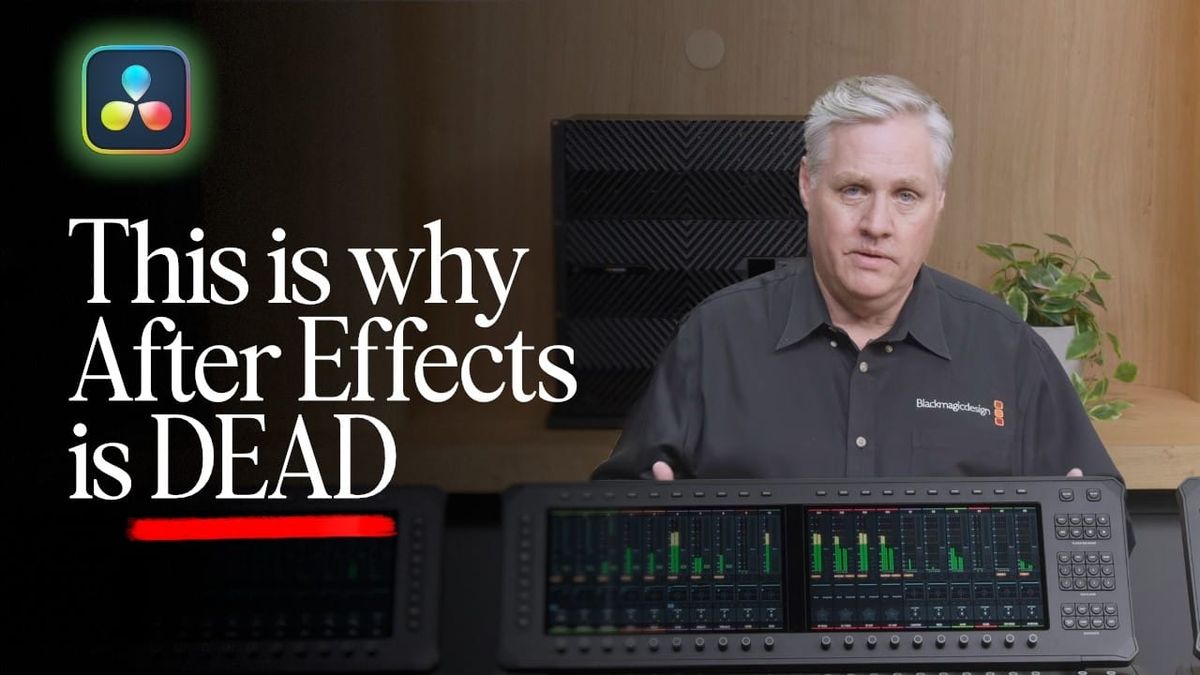
Creator Ethan Robbins made a bold case in a recent video: after four years of running his entire compositing workflow through DaVinci Resolve's Fusion page, he's fully convinced After Effects isn't the standard because it's the best tool, it's the standard because everyone else is also paying for it.
"Adobe didn't build the motion graphics industry, they rented you access to it," Robbins argues. "After Effects isn't the standard because it's the best, it's not, it's just the standard because everyone else is also paying for it. That's not a software subscription, that's a creative hostage situation."
Robbins' Case for Fusion
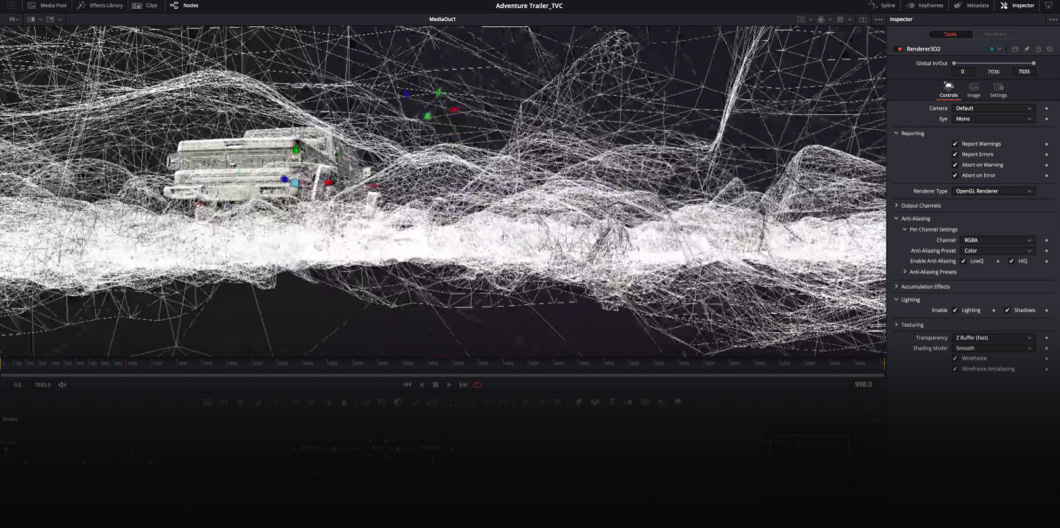
Robbins frames his argument around a quote from Blackmagic Design CEO Grant Petty, criticizing subscription software models as "virtually extortion," tools that shut down the moment a payment lapses. Robbins uses that framing to build his own case: since eliminating Adobe products from his workflow entirely in 2022, he's relied on Fusion for node-based compositing, motion graphics text tools, 3D particle systems, planar and object tracking, and rotoscoping through Fusion's Magic Mask tool.
His bottom line, delivered directly: "Fusion, if you ask me, isn't a workaround. It's the answer."
The cost comparison he draws is real and worth stating plainly. Adobe Creative Cloud runs roughly $840 a year, close to $4,200 over five years. DaVinci Resolve Studio, which includes the full Fusion page, is a one-time $295 purchase with free yearly updates, no recurring cost, ever.
Worth Knowing Before You Fully Buy the Argument
A couple of things are worth adding for context, not as a rebuttal to Robbins' experience, but because they matter if you're considering following the same path.
The Grant Petty quote Robbins builds his framing around is real, but it's not new. It traces back to an October 2018 interview with Film and Digital Times, nearly eight years old at this point, rather than a fresh statement about the current state of subscription software. That doesn't make the underlying point wrong, subscription fatigue is a genuine, ongoing conversation, but it's a quote being recirculated rather than breaking commentary.
Robbins' own conclusions about Fusion's limitations are worth taking just as seriously as his enthusiasm for it. He's upfront that node-based compositing has a real learning curve coming from After Effects' layer-based system, that Fusion's expression syntax differs meaningfully from After Effects', and that the third-party plugin ecosystem is genuinely smaller.
For anyone whose workflow depends heavily on a specific After Effects plugin or template marketplace, that gap is a real switching cost, not a minor inconvenience.
Competitive Context
Adobe's advantage isn't really about software quality at this point, it's network effects: industry-standard resume expectations, a massive plugin and template marketplace, and deep integration with Photoshop and Premiere through Dynamic Link.
Blackmagic's advantage is a genuinely capable, perpetually-licensed alternative that's closed the capability gap significantly in recent years, without closing the ecosystem gap at the same pace.
The Signal in the Noise
Robbins' four-year experiment is a legitimate, well-documented case study, not just a hot take, and the cost math genuinely favors Fusion for anyone not deeply tied into After Effects' plugin ecosystem.
Whether Fusion is "the answer" universally probably depends more on your specific workflow and how much of your work leans on third-party AE tools than on Fusion's raw capability, which by most accounts is genuinely there now.
Worth testing directly on a real project before committing either way, the free version of Resolve includes Fusion, so there's no cost barrier to finding out for yourself.