Do Filmmakers Need an Ambisonic Microphone? What Blackmagic’s New Spatial Audio Mic Is For
Blackmagic’s first microphone records 7th order spatial audio from 108 capsules over one USB-C cable, and it’s built around immersive video work.

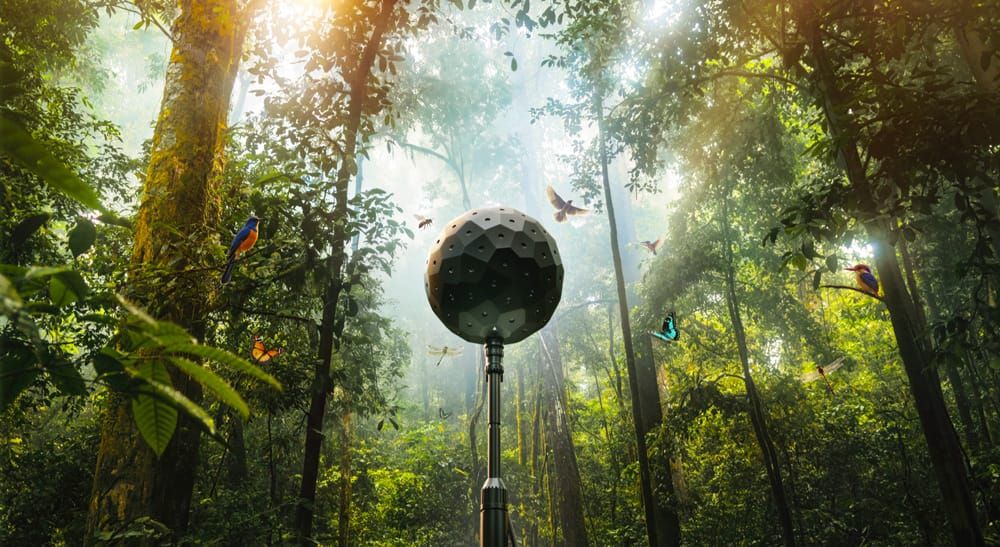
Blackmagic Design has announced its first dedicated microphone, and it records spatial audio rather than dialogue.
It is a 7th order ambisonic microphone with 108 capsules that connects over a single USB-C cable.
Whether a filmmaker needs one depends on the delivery format, and Blackmagic’s announcement is built around immersive video.
What an Ambisonic Microphone Records
Ambisonics captures the sound field around a point, including above and below, instead of tying each sound to a fixed speaker.
The mix can be decoded later for loudspeakers or head-tracked headphones.
First-order ambisonics needs four channels. Seventh order needs 64, which is what Blackmagic’s microphone outputs, as 32-bit audio.
How the Microphone Works
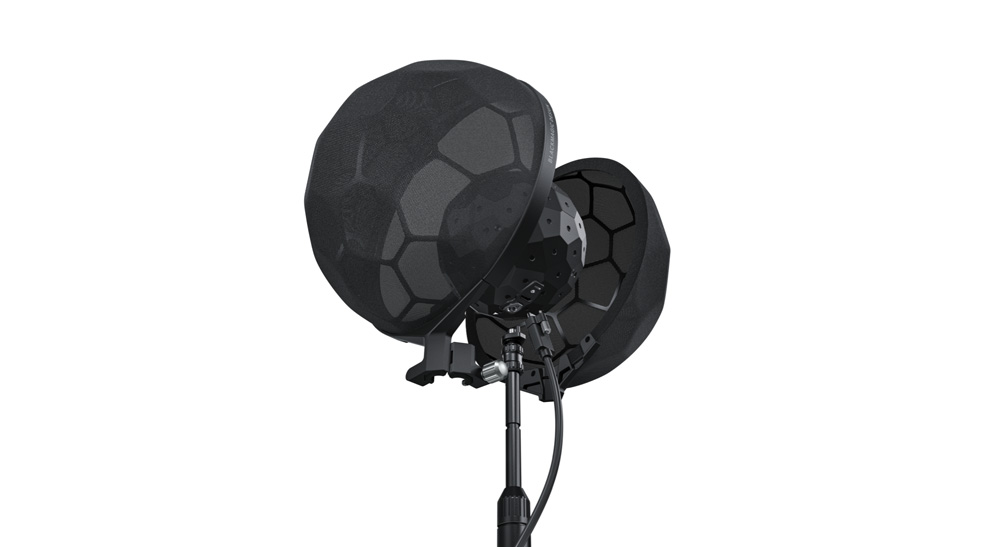
The microphone holds 108 digital MEMS capsules flush in a faceted metal body. It is small enough to hold or mount on top of a camera.
An internal processor converts all 108 capsules to 7th order ambisonics in real time, using Apple-licensed array geometry and encoding filters.
That means no breakout box and no A-format to B-format conversion step in post.
Blackmagic CEO Grant Petty said the microphone began while the company was working with Apple on the URSA Cine Immersive camera. Apple licensed the array geometry and encoding filters, and Blackmagic did the engineering and design.
A single USB-C cable carries audio and power. The microphone is class compliant, so it needs no drivers or plug-ins.
Where It Records
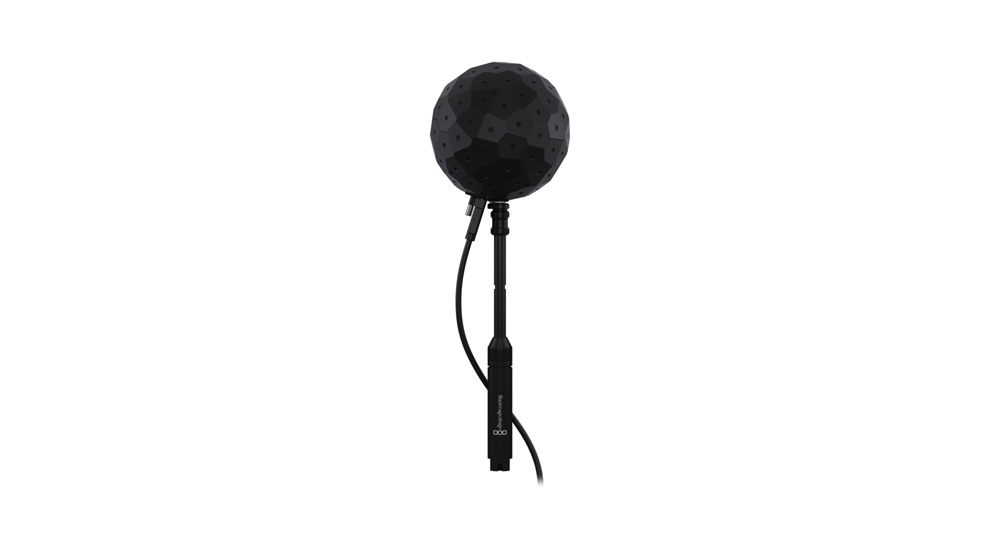
On the Blackmagic URSA Cine Immersive camera, the microphone records spatial audio directly into the camera’s immersive files, in sync with the image, for Apple Immersive content.
Connected to a computer, it records and mixes in real time in Fairlight Live. It can also record directly to an iPhone through the Blackmagic Camera app.
A separate USB to SMPTE ST 2110 converter is planned for broadcast workflows. Blackmagic hasn’t announced its price or release date, and ST 2110 use also needs IP production infrastructure.
Do Filmmakers Need One?
Blackmagic positions the microphone for immersive video and live spatial production.
The main ecosystem it targets is Apple’s immersive video and Vision Pro, a niche market.
For a project delivered in stereo or 5.1, the announcement doesn’t describe a dialogue-capture use. Standard production audio gear covers that work, as BRC’s guides to shotgun mics and field recorders explain.
What Blackmagic Hasn’t Published
Blackmagic hasn’t published dimensions, weight, self-noise, maximum SPL or frequency response.
Software that handles multichannel ambisonic audio is still required.
The published Fairlight Live manual documents first and second-order ambisonic inputs and mixing up to fifth order. How 7th order routing works, and what down-ordering is needed, hasn’t been specified.
Competitive Context
Ambisonic microphones aren’t new, but the order and channel count differ widely. The Voyage Audio Spatial Mic was a second-order model that launched in 2022 at $2,899.
A like-for-like price comparison would need matching orders, channel counts and built-in processing.
For another audio setting that changes how a recording is set up, see whether you still need to set gain with 32-bit float audio.
The Signal in the Noise
Blackmagic describes the microphone as the world’s first 7th order ambisonic microphone, and its design shows where the company is aiming: immersive capture, from camera to mix.
The microphone solves a workflow problem, because the encoding happens in the device and the recording is one cable away. It doesn’t answer the question of demand outside immersive and broadcast work.
The unpublished noise and SPL figures, and the unspecified Fairlight Live routing for 7th order, are the details to watch before buying.
Specs & Pricing
- Capsules: 108 digital MEMS microphones
- Ambisonic order: 7th order
- Output: 64 channels, 32-bit audio
- Connection: single USB-C cable for audio and power
- Price: $1,909 on Blackmagic’s US page, which includes duties, and $1,695 excluding local duties and taxes in the announcement
- Included: Blackmagic Ambisonic Microphone Mount
- Kit: adds a windshield and a locking USB-C cable, and exact kit pricing is available on Blackmagic’s website
- Availability: December 2026 per Blackmagic, and one US reseller lists a preorder with expected availability of February 2027
Resources & Reads
- Blackmagic Ambisonic Microphone
- Digital Production: Blackmagic’s first microphone goes straight for the third dimension
- Production Expert: Blackmagic Ambisonic Microphone records 7th order ambisonics from 108 capsules over USB-C
- Best shotgun mics for run and gun
- Audio basics and field recorders for beginner filmmakers
- Do you still need to set gain with 32-bit float audio?