The AI Video App Landscape, Decoded: Who Actually Builds the Models You're Using
Confused why every AI video app claims to have Seedance or Veo? Here's how the model-builder vs. wrapper-app landscape actually works.

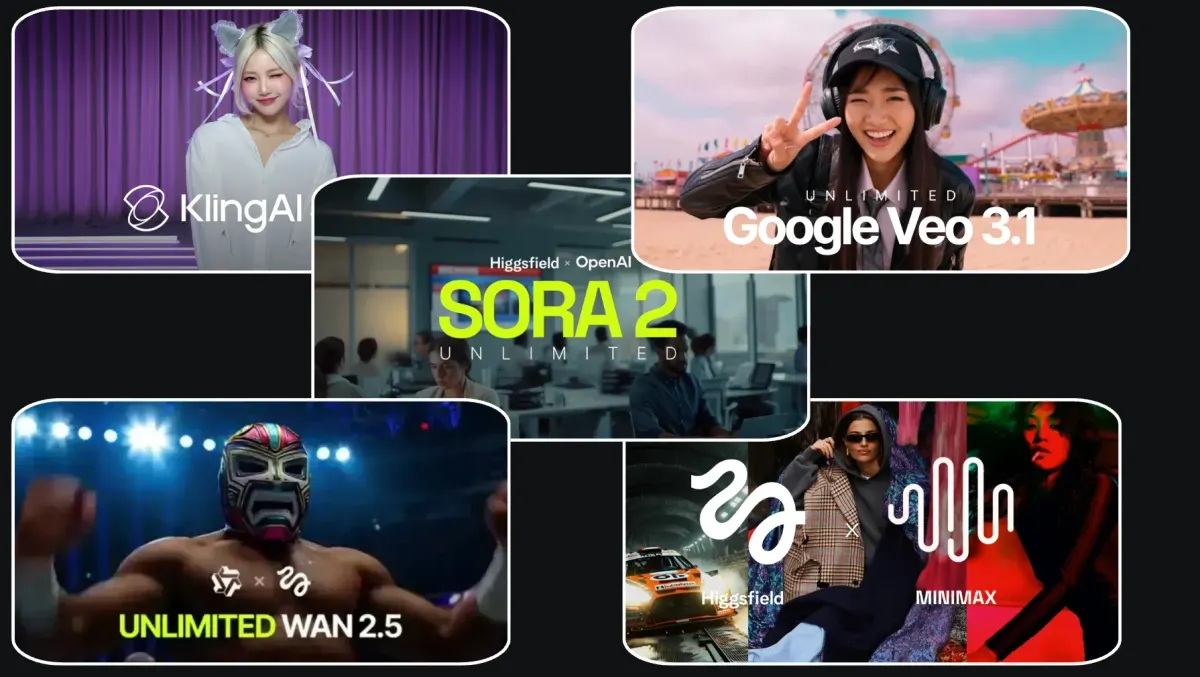
If your feed feels like a new AI video app launches every week, all somehow claiming to have "Seedance 2.5" or "Veo 3.1" or "Kling 3.0," that's because you're not actually seeing dozens of competing AI video breakthroughs. You're seeing a handful of underlying models, built by a small number of labs, getting licensed out and re-skinned across a much larger number of consumer-facing apps.
Understanding that distinction, model versus wrapper, makes the entire AI video landscape click into place.
The Model Builders: Who Actually Trains These Things
There are really only a handful of companies actually researching and training frontier video generation models right now:
ByteDance builds the Seedance family (currently on version 2.5) and the Seedream image family, developed by its in-house Seed research team.
Google DeepMind builds Veo, currently on Veo 3.1, the model most known for native synchronized dialogue and sound generation.
Kuaishou builds Kling, currently on Kling 3.0, known for multi-shot storyboard tools and strong motion quality.
Runway builds its own Gen line (currently Gen-4.5), one of the few companies here that's also a consumer-facing app in its own right, not just a model provider.
MiniMax builds Hailuo, most recently H3, with a track record specifically around motion fluidity and character consistency.
OpenAI built Sora, most recently Sora 2, though its licensing availability has been inconsistent, Higgsfield's Sora integration reportedly disappeared entirely when OpenAI pulled back Sora 2 access earlier this year.
That's the actual list of labs doing frontier video model research. Everything else you're seeing is one of these models, wearing a different interface.
The Wrapper Apps: Same Model, Different Storefront
This is where the confusion comes from. Once a lab trains a model, it can license API access to other companies, who build their own app or interface around it and market it as their own offering.
Dreamina is ByteDance's own first-party consumer app, so when you see "Dreamina Seedance 2.5," that's the same model built by the same company, just accessed through ByteDance's own consumer product rather than a third party. Dreamina typically gets ByteDance's newest models first, before anyone else has access.
Higgsfield is a pure aggregator, and doesn't build any video model of its own. It licenses 15-plus models, Veo, Kling, Seedance, Wan, and previously Sora, under one subscription, and adds its own tools on top: a cinematic camera-control interface called Cinema Studio, character consistency tooling, and lip-sync features. You're not choosing between Higgsfield's model and Runway's model; you're choosing whether to access the same underlying models through Higgsfield's workspace or someone else's.
Runway is the interesting middle case: it builds its own Gen-4.5 model, but also licenses in Kling and Veo, letting users switch between Runway's own model and competitors' models from a single dashboard.
CapCut integrates Seedance directly, since CapCut and Dreamina are both ByteDance products.
Smaller platforms like fal, kie.ai, ImagineArt, Renoise, PixVerse, and WaveSpeedAI are largely API resellers and developer-facing platforms, giving programmatic access to the same handful of models, often at different pricing structures than the consumer apps.
Why This Actually Matters When You're Picking a Tool
Once you know which underlying model you're actually generating from, a few things become clearer:
Pricing comparisons only make sense model-to-model, not app-to-app. Comparing Higgsfield's price to Dreamina's price is comparing two different markups on potentially the same model. The real comparison is Seedance-via-Dreamina versus Seedance-via-Higgsfield versus Seedance-via-Runway, not the apps as unrelated products.
Model freshness usually favors first-party apps. Dreamina typically gets new Seedance versions before Runway, Higgsfield, or other third parties do, since ByteDance controls its own release timing.
Aggregators trade convenience for reliability risk. Higgsfield's Sora 2 integration disappearing when OpenAI restricted access is the clearest example: if you build a workflow around a model accessed through an aggregator, that access can vanish based on a licensing decision you have no control over. A first-party relationship (Dreamina for Seedance, Google's own Flow/AI Studio for Veo) doesn't carry that same risk.
Terms of service vary by wrapper, not just by model. Higgsfield's terms, for instance, include a broad license allowing it to use uploaded content, including reference images and outputs, for its own model training and promotion. That's a wrapper-level policy, separate from whatever ByteDance or Google's own terms say about the same underlying model accessed directly.
The Signal in the Noise
The next time an app claims to have "the newest AI video model," the useful question isn't whether that's true, it's whose model it actually is, and whether you're better off using it there or through a different, possibly cheaper or more reliable, storefront.
Most of what feels like an explosion of new AI video technology is really a small set of labs iterating quickly, with an ecosystem of resellers racing to integrate each release first.