Canon's C80 Is Still One of the Best Values in Full-Frame Cinema
Canon's C80 shares its sensor with the much pricier C400. Here's why it's still one of the best values in full-frame cinema.


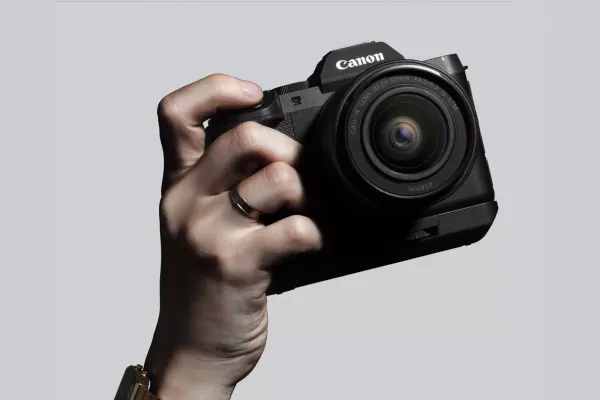
Canon's EOS C80 has been out since late 2024, long enough that it's no longer news, but it's still one of the more overlooked ways to get a genuinely flagship-grade cinema sensor without flagship pricing. The core pitch hasn't changed since launch: it borrows its sensor almost entirely from Canon's much pricier C400, in a body built around the more compact, run-and-gun C70.
The Sensor Is the Real Story
The C80 uses a 6K full-frame back-illuminated stacked CMOS sensor, the same sensor found in the C400, which launched a few months earlier at roughly $8,000. That's not a marketing exaggeration, Canon's own materials confirm the C80 delivers the same triple base ISO (800, 3200, 12,800) and up to 16 stops of dynamic range as its pricier sibling. The C80 does lose some ground to justify the lower price: it caps out at 6K30 rather than the C400's 6K60, and drops some of the C400's connectivity options, a real tradeoff, but a narrow one relative to the price gap.
Where It Actually Sits in Canon's Lineup

Canon positions the C80 explicitly as a middle ground: the C70's compact, lightweight body combined with most of the C400's image quality. It replaces neither camera outright. The C70 remains available and still sells for around $4,500, appealing to buyers who don't need the full-frame sensor or triple base ISO. The C400 remains Canon's higher tier for productions that need 6K60 and additional I/O. The C80 exists specifically for shooters who want the C400's sensor without its price or bulk.
What Else the C80 Brings
Beyond the sensor, the C80 carries Canon's Dual Pixel CMOS AF II autofocus, a 12G-SDI output alongside HDMI, a Multi-function shoe that powers and communicates with compatible accessories without cables, and a motorized ND filter wheel for on-the-fly exposure control.
It records internally in 12-bit Cinema RAW Light up to 6K30, alongside XF-AVC and XF-HEVC S formats, and includes built-in Frame.io Camera-to-Cloud support for direct production workflows. Canon has also continued supporting it well past launch, an August 2026 firmware update added a new Cinema Exposure Mode, a real signal that Canon isn't treating this as a one-and-done release.
Competitive Context

At roughly $5,500, the C80 sits in a genuinely crowded tier alongside cameras like Sony's FX5 and Blackmagic's PYXIS 6K, all competing for filmmakers who want real cinema-camera capability without stepping into six-figure rental territory.
What differentiates the C80 within that group is largely Canon's autofocus reputation and RF lens ecosystem, plus the specific value proposition of inheriting a flagship sensor at a mid-tier price, rather than any single spec that clearly outclasses its competitors.
The Signal in the Noise

Cameras like the C80 rarely generate viral launch attention the way flagship announcements do, but they tend to have real staying power precisely because they solve a specific, ongoing problem: getting genuinely high-end image quality without genuinely high-end pricing. Nearly two years after launch and still receiving firmware updates, that's exactly the role the C80 continues to fill in Canon's lineup.
Does inheriting a flagship sensor at a lower price change how you think about buying into a camera system, versus waiting for the true flagship model itself?
The Details
- Canon EOS C80: launched September 2024, priced around $5,500
- Sensor: 6K full-frame back-illuminated stacked CMOS, shared with the C400
- Dynamic range: up to 16 stops
- Triple base ISO: 800, 3200, 12,800
- Internal recording: 12-bit Cinema RAW Light up to 6K30, XF-AVC, XF-HEVC S
- Autofocus: Dual Pixel CMOS AF II
- Connectivity: 12G-SDI, HDMI, Wi-Fi, Ethernet, Frame.io Camera-to-Cloud built in
- Related models: Canon EOS C70 (~$4,500, compact, non-full-frame), Canon EOS C400 (~$8,000, same sensor, 6K60 capable)
- Recent firmware: August 2026 update added Cinema Exposure Mode