Curren Sheldon Makes the Case for Shooting at f/5.6
Oscar-nominated cinematographer Curren Sheldon argues that shooting wide open is overused shorthand that often hurts films more than it helps. His latest video lays out the alternatives.

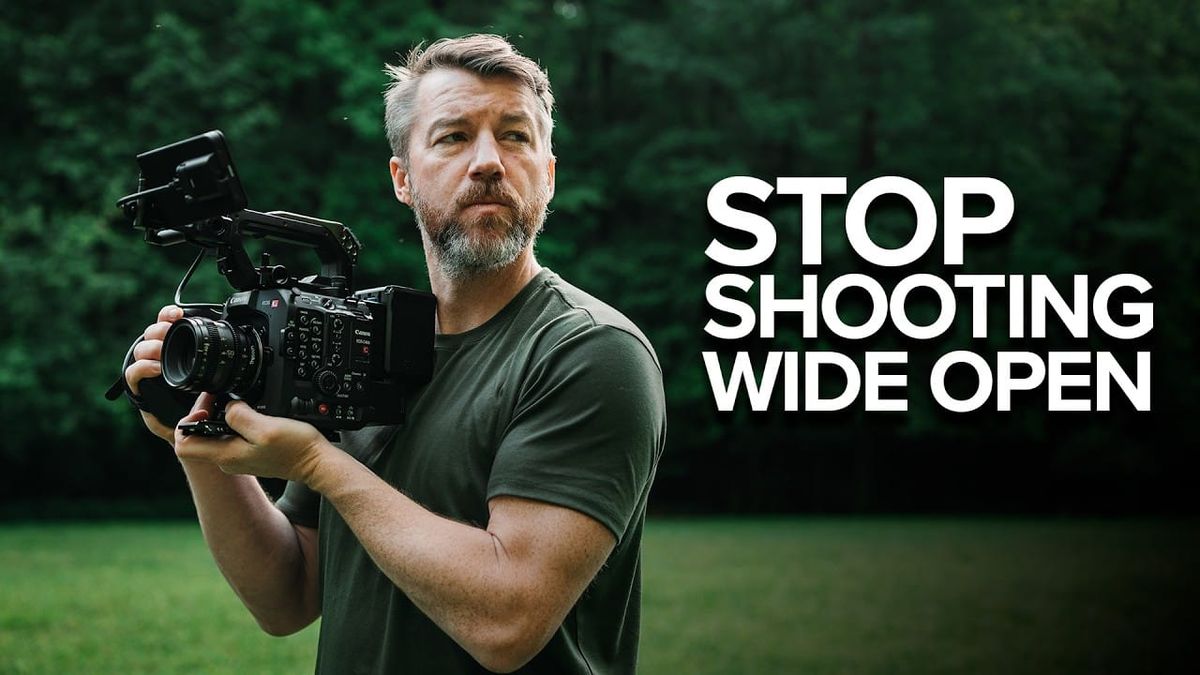
Oscar-nominated filmmaker and cinematographer Curren Sheldon posted a new video on June 8th making a direct argument against ultra-shallow depth of field as a default cinematic tool. The video, titled "How To Get a Cinematic Image at f5.6," walks through the specific techniques Sheldon uses across his documentary and narrative work to build visual interest without relying on bokeh.
What Sheldon Is Actually Teaching
Sheldon's core position is that shooting wide open — particularly at f/1.2 or f/1.4 — has become a reflex rather than a deliberate choice. He argues it frequently undermines the work, blurring out backgrounds that took time and money to construct and disorienting audiences during extended viewing.
"For years shallow depth of field has been the shorthand for a cinematic image, but in my opinion it is actually making a lot of our movies look cheap," Sheldon says at the video's open. He calls out modern blockbusters by name, referencing Wicked as an example of productions with elaborate sets "blown out to blurry oblivion because everything's shot at f/1.4."
In place of shallow focus, Sheldon identifies eight practical techniques: deliberate composition using rule of thirds and natural leading lines; lighting separation where the subject is the brightest element in frame; golden hour natural light; physical proximity to the subject; tracking movement with the camera; foreground elements combined with longer focal lengths; and natural framing using doorways, windows, and structural elements.
He backs each technique with examples from his own films. For his documentary Recovery Boys, he used a 24-105mm f/4 lens on a Super 35mm camera and relied on physical proximity rather than bokeh to convey emotion during a graduation speech segment. For King Coal, he shot a wide cinematic shot of a coal barge at f/11 using Canon's budget 600mm fixed f/11 lens on a Super 35 sensor. His features Country Brawlers and Beat Down appear to illustrate motion and framing principles.
Competitive Context
Sheldon's video pushes back directly against the direction of mainstream gear culture, which has trended heavily toward full-frame sensors and fast prime lenses — f/1.2 glass from Sigma, Viltrox, and Voigtlander has become cheaper and more accessible, and camera manufacturers have marketed full-frame sensors partly on the strength of background separation.
The argument also runs counter to how cinematic aesthetics are often taught in online video education, where shallow depth of field is treated as a fundamental marker of production quality. Sheldon names Terrence Malick as a counter-reference — a director whose work is widely studied and relies on deep staging and environmental texture rather than selective focus.
For filmmakers shooting with slower kit lenses or budget glass, this reframe is practically useful. The f/11 Canon 600mm shot from King Coal is a direct demonstration that a lens most photographers dismiss as a compromise can produce results that hold up in a feature documentary.
The Signal in the Noise
This is a techniques video, not a gear video, which makes it relatively rare in the YouTube filmmaking space. Sheldon is drawing on credited feature documentary work — his films have screened at major festivals and earned an Academy Award nomination — so the advice is grounded in professional practice, not theory.
The Robert Capa quote Sheldon pulls midway through — "If your photos aren't good enough, you're not close enough" — is a clean summation of the physical proximity argument and one of the more memorable moments in the video. It reframes proximity as an active creative decision rather than a last resort.
For cinematographers already working at a professional level, most of this is foundational. But the framing around f/5.6 and f/11 as intentional choices — rather than compromises — is a useful corrective to the gear conversation that dominates most filmmaking content. If you're newer to the craft, this video is worth the full runtime.
Specs & Pricing
This is an educational video, not a gear release. No pricing applies. Sheldon's films Recovery Boys, King Coal, Country Brawlers, and Beat Down are referenced throughout as practical examples of the techniques discussed.