How David Fincher Opens a Movie — and What Every Filmmaker Can Learn From It
David Fincher's opening sequences are teaching tools. Here's how he uses prologues, nonlinear structure, and planted details to hook audiences from the first frame — and what every filmmaker can learn from it.

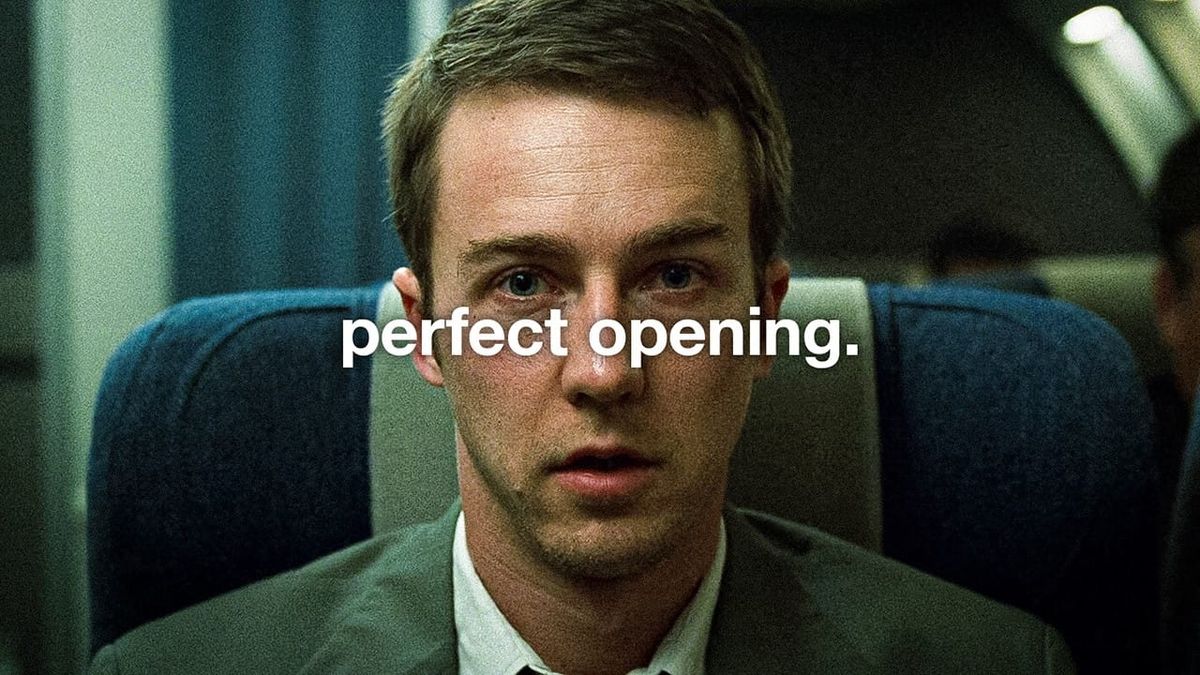
David Fincher spends as much attention on the first 15 minutes of a film as on the entire rest of it. That's not a rumor about his perfectionism — it's a structural philosophy with specific, learnable techniques behind it.
A close read of how Fincher opens Fight Club, Zodiac, The Girl with the Dragon Tattoo, and The Killer reveals a consistent set of tools that apply well beyond his specific films.
The Problem With Exposition
Exposition is the part of a film where the audience learns what they need to know to follow the story. Most films treat it as a necessary tax — a slow, front-loaded period of information delivery before the story can start moving.
Fincher treats it as part of the story. The distinction sounds simple. The execution is not.
The core principle: "Exposition is tricky: you need to give the audience enough information to follow along, but you shouldn't overwhelm them." Every director knows this. What Fincher does differently is refuse to separate the exposition from the tension. Information and stakes arrive simultaneously rather than sequentially.
The Prologue as a Structural Device
Fight Club opens with a gun in the narrator's mouth, the detonation timer running, and a voice-over that reframes the entire story we're about to see as a flashback explaining how we got here. The audience is dropped into maximum stakes before they know who any of these people are or what the stakes mean — and then the film rewinds to show them.
That structure does several things at once. It establishes that something serious is going to happen, which creates a forward momentum even during the scenes that establish character and context. It plants questions — who is this person, what is the Narrator, what went wrong — that the audience actively wants answered rather than passively receiving. And it puts every scene that follows in a dramatic context: we know the story ends here, which means every detail we learn is colored by that knowledge.
The technical term Fincher's approach borrows from is Hitchcock's "bomb under the table" — the idea that suspense comes not from surprise but from the audience knowing something the characters don't. In Fight Club, the audience knows where things are heading even when the characters don't.
Nonlinear Structure as Information Management
The nonlinear flashback structure Fincher uses isn't just a stylistic choice. It's a tool for controlling what the audience knows and when they know it.
A chronological story gives the audience information in the order events happened. A nonlinear story gives the director control over the information sequence independent of the event sequence. Fincher uses that control to create a specific kind of dramatic irony: the audience is always slightly ahead of where they think they are, because they've been given information from later in the timeline that they haven't fully processed yet.
That technique requires setup in the opening. Fight Club's prologue earns the nonlinear structure by establishing that the story is being told in retrospect — the narrator is reflecting back. The structure is motivated by the premise rather than imposed on it.
Planting Details That Pay Off Later
Fincher's openings are dense with information that appears irrelevant on first viewing and significant on second. This is the "narrative seed" technique — visual and dialogue details in the first act that the audience doesn't register as important until they pay off in the third.
The practical skill required to execute this is knowing your ending before you write your beginning. As the video puts it: "Endings are manifested in the resolution and the resolution is conceived in the beginning." You can only plant seeds for a payoff you already know is coming. Directors who don't know their endings yet can't plant seeds in their openings because they don't know what those seeds need to grow into.
Fincher's reputation for meticulous storyboarding and pre-production isn't separate from this — it's what makes the technique possible. The opening of a Fincher film is dense with intention because the entire film has been mapped before the opening is shot.
The Pitch That Got Fight Club Made
The production detail worth knowing: Fincher, screenwriter Jim Uhls, and Chuck Palahniuk pitched Fight Club to the studio with a complete package — script, storyboards, and cast commitments from Brad Pitt and Edward Norton — at a $50 million budget. The pitch left the studio with almost no creative uncertainty to anchor doubts to.
That's not just a Hollywood anecdote. It's an argument for the relationship between directorial vision and the ability to get difficult projects made. A director who can show a studio exactly what the film will look like, who's in it, and what it will cost eliminates the ambiguity that kills projects in development. Fincher's perfectionism in pre-production is also his negotiating leverage.
What the Collaborators Add
Fincher's openings work partly because of who he works with. Sound designer Ren Klyce and composers Trent Reznor and Atticus Ross contribute to the specific texture of how Fincher films feel from the first frame — the sound design and score are part of the information delivery system, not just atmosphere.
The Fight Club opening uses sound as a disorienting tool that puts the audience slightly off-balance before the first line of dialogue. The Girl with the Dragon Tattoo's title sequence sets a tone that tells the audience exactly what kind of film this is going to be. Neither is incidental.
The Lessons That Transfer
Not every filmmaker works at Fincher's scale or with his collaborators. The techniques transfer anyway.
Starting a short film or a low-budget feature at a moment of maximum stakes, then rewinding to explain how you got there, costs nothing and produces the same structural effect. Knowing your ending before you write your opening is a discipline available to any writer. Planting details in act one that pay off in act three is a craft skill that gets better with practice.
The specific Fincher version of these techniques involves 40 takes, meticulous storyboarding, and a sound design budget that most indie productions can't access. The underlying principles are more democratic than the execution.
The Signal in the Noise
The most transferable insight from Fincher's approach to openings is the refusal to treat exposition as a problem to be solved before the story can start. Exposition handled well is story. The audience learning who these people are and what's at stake should feel like watching a film, not reading a brief.
The question worth asking of any opening sequence you're writing or cutting: does the audience want the information they're receiving, or are they waiting for the story to start? If it's the latter, the opening isn't working yet.
Resources & Reads
- David Fincher's filmography on Letterboxd for reference viewing: https://letterboxd.com/director/david-fincher/
- The commentary track on the Fight Club Criterion release covers Fincher's approach to the opening in detail
- Chuck Palahniuk's novel Fight Club for comparison against the adaptation choices