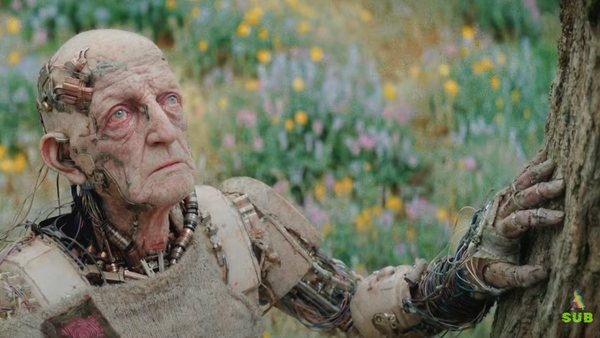
These Filmmakers Created a Backrooms Horror Film in 3 Hours Using an iPhone and Blender
Filmmakers Green Room shot a Backrooms horror short in three hours using an iPhone 15 LiDAR scan, Blender, and a rotated anamorphic lens. Here's how the workflow actually came together.

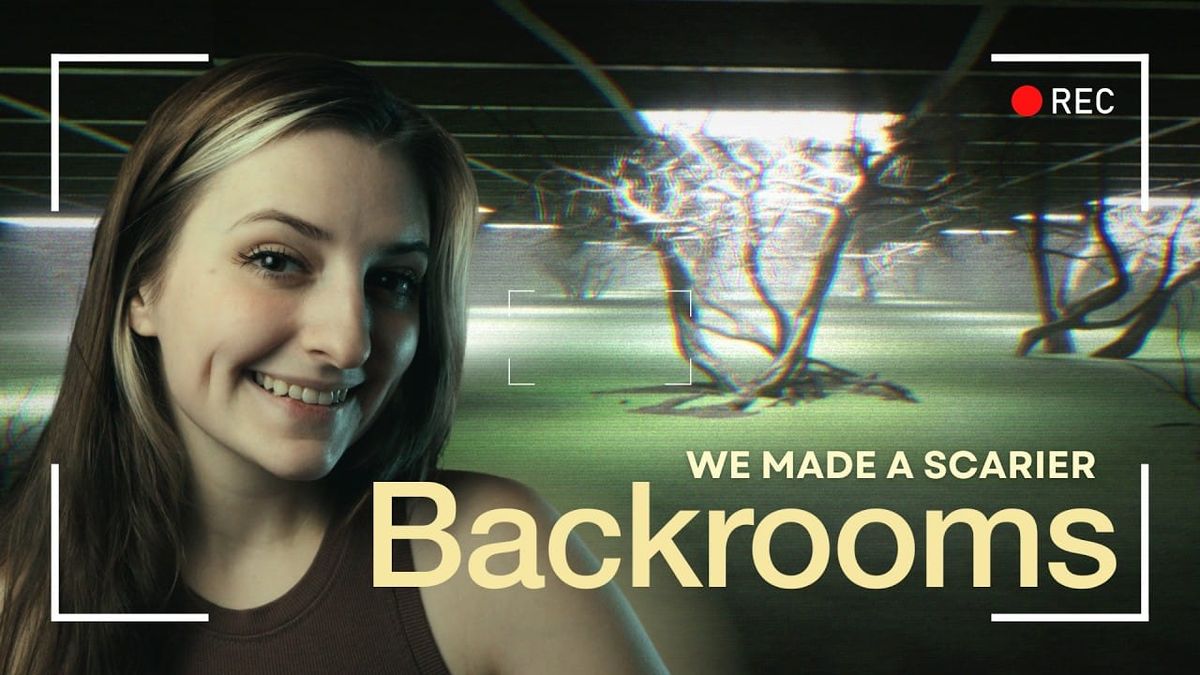
A crew from Filmmakers Green Room set themselves a punishing brief: shoot a Backrooms-inspired horror short in three hours, then build the digital environments in post. The result is a practical case study in what's actually possible when budget and time collapse into the same problem.
Making "Static" Work on a Micro-Budget
The short, titled "Static," leans into the Backrooms aesthetic — liminal spaces, unsettling geometry, the feeling of being somewhere that shouldn't exist — but builds its environments digitally rather than hunting for the real thing.
The key tool is Omniscient, a free 3D scanning app that uses the iPhone 15's LiDAR sensor to capture real-world spaces and export them into Blender. That workflow is what makes the visual concept viable on a micro-budget: instead of building environments from scratch or renting a location that matches the brief, the crew scanned what they had access to and let Blender do the rest.
Camera gear was a Pixus 6K paired with Blazer Remi anamorphic lenses. The aspect ratio choice is worth noting on its own. Rather than shooting standard widescreen, the crew rotated the anamorphic lens 90 degrees to achieve a 1:1 open-gate format — a technique sometimes called "vertiscope" — borrowed from the same approach used in "Project Hail Mary" to achieve tall IMAX-friendly framing. Applied here to a three-hour indie horror shoot, it gives the footage an unsettling verticality that fits the Backrooms look without any additional cost.
Audio went through DJI Mini Mics, a deliberate choice to skip the need for a dedicated boom operator and keep the crew count down.
The video doesn't pretend the shoot was clean. As the narrator puts it: "In independent filmmaking you really don't get everything you want — you kind of just make do with what the sun or the clouds or the weather conditions in the environment you're in dictate your look." That's the actual lesson here, less about the specific tools and more about the decision-making framework that turns constraints into creative choices rather than dead ends.
Competitive Context
The Backrooms as a visual genre owes most of its mainstream traction to Kane Parsons, whose found-footage series set the aesthetic template that dozens of independent creators have since built on. What Filmmakers Green Room adds to that conversation is a workflow — specifically the LiDAR-to-Blender pipeline — that makes the digital environment side of the equation accessible without a dedicated VFX team or a Unreal Engine learning curve.
The Omniscient app sits in a growing category of tools that use smartphone LiDAR sensors to democratize 3D scanning. Apple's iPhone Pro line has shipped with LiDAR since 2020, which means a significant portion of independent filmmakers already have the hardware in their pocket. The workflow demonstrated here is one of the more concrete examples of that hardware doing real production work rather than serving as a novelty.
The Signal in the Noise
The three-hour shoot time is the headline, but the more transferable takeaway is the scanning pipeline. LiDAR-to-Blender as a replacement for location scouting and set building is a workflow that applies well beyond Backrooms-style horror — architectural interiors, industrial spaces, confined environments of any kind all become potential digital assets with a fifteen-minute scan.
For independent filmmakers specifically, the combination of a free scanning app, open-source 3D software, and hardware most people already own is about as low a barrier as this kind of work has ever had. Whether the final output matches your creative vision is still a craft question, but the tools are no longer the bottleneck.
Resources & Reads
Filmmakers Green Room's full video walks through the complete workflow from scan to final render, including the Blender compositing setup and the anamorphic lens rotation technique in detail.