Six Principles for Editing a 10-Minute Documentary That Actually Works
Documentary editor Mark Johansson's six principles for editing a 10-minute film: start with a bad first cut, cut to one message, and choose visuals over interview dialogue every time.

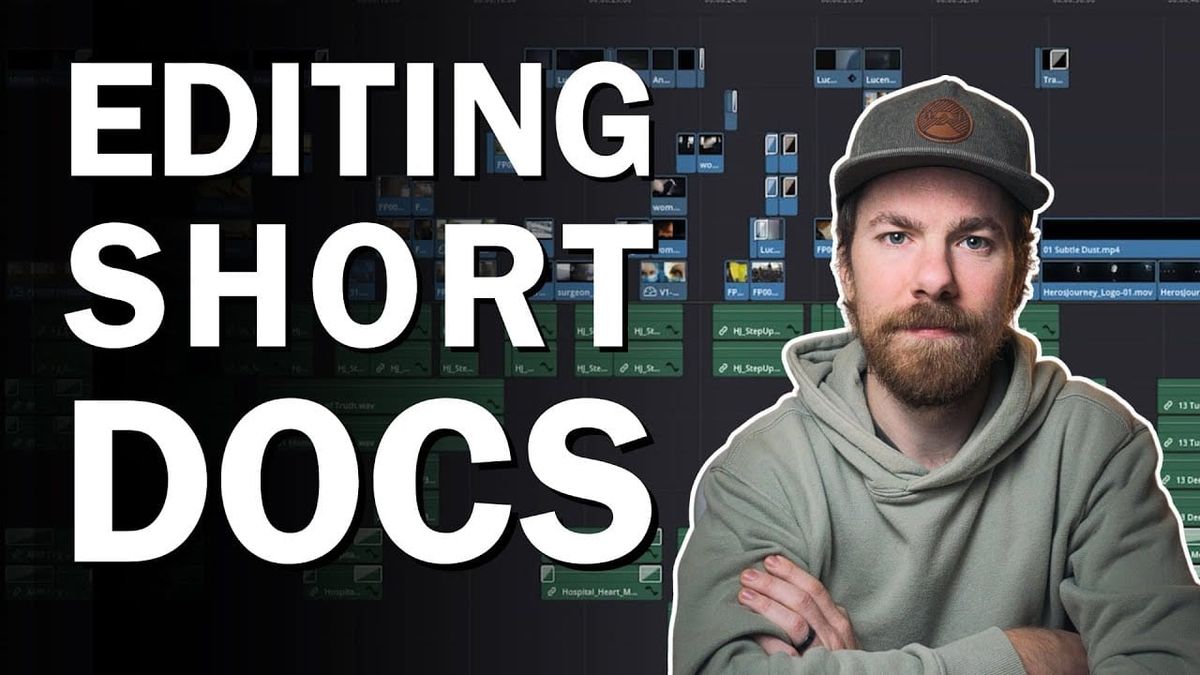
Documentary editor Mark Johansson has spent eight years helping filmmakers turn hours of raw footage into tight, emotionally resonant films. His framework for editing a 10-minute documentary cuts against most of the instincts first-time documentary editors bring to the timeline.
1. Make a Bad First Cut on Purpose
The biggest obstacle most editors face isn't technical — it's the blank timeline. Johansson calls the solution a "Version Zero": a rough, intentionally bad first cut built purely to create momentum.
As he explains: "The hardest part about making a documentary is going from having nothing to creating just something... creatively it's so much easier to take something bad that already exists and figure out how to refine that into something great."
The Version Zero isn't meant to be screened. It's meant to break the paralysis of the empty project. Get something in the timeline — in any order, at any quality — and then start shaping it. The refinement phase is easier than the creation phase, but you can't refine nothing.
2. Identify the One Core Message
A 10-minute documentary can do one thing well. It cannot do three things adequately. Johansson's principle is to identify the single goal of the film — one emotion, one argument, one question — and cut anything that doesn't serve it directly.
This is harder than it sounds in practice because most documentary footage contains interesting material that doesn't belong in this specific film. The discipline is recognizing that cutting good material in service of a more focused film is the right call, not a loss.
3. Define a Specific Audience
"When you try to please everyone with your film you end up cramming a bunch into 10 minutes and what ends up happening is you dilute the good stuff."
Johansson's argument is that trying to make a documentary work for everyone produces a documentary that resonates with no one. A film about trauma recovery through mountain biking — his case study The Deborah Effect — isn't for all documentary audiences. It's for people who connect with either trauma recovery or mountain biking or both. Cutting for that specific audience produces a tighter, more resonant film than trying to explain mountain biking culture to someone who doesn't care about it before getting to the recovery story.
4. Frontload the Gold
The first 30 seconds determine whether most viewers keep watching. Johansson's rule: start with the most compelling material in the film, not with context or background.
Chronological structure is the enemy of a strong opening. The instinct to set up who the subject is before showing why they matter produces openings that lose audiences before the story has started. The better approach is to open with the most emotionally charged or narratively compelling moment in the film — the hook — and build context around it after the audience is already invested.
5. Use Contrast to Maintain Engagement
Sustained emotion or sustained pace produces numbness. Johansson's principle is to alternate between opposing elements — fast and slow pacing, heavy and light emotional tones, intimate and wide visual scales — to keep the audience actively engaged rather than settling into a passive state.
This applies at both the sequence level and the structural level. A film that builds tension continuously without release becomes exhausting. A film with no tension becomes boring. The contrast between the two states is what creates the feeling of movement through a story.
6. Choose Visuals Over Dialogue Every Time
Johansson's most direct principle: "Anytime you have a chance to give the audience emotion or progress your story using visuals rather than interview dialogue you should choose visuals 100% of the time."
Interview dialogue is efficient for conveying information but inefficient for conveying emotion. A subject describing how they felt in a moment is weaker than footage of the moment itself. B-roll that advances the narrative is more valuable than an interview answer that states what the B-roll would show. The discipline is building sequences that use interview audio as a track under visual storytelling rather than using visuals as wallpaper under interviews.
His case study Slow-Mo, an NYT Op-Doc, demonstrates this principle at short-form scale — a film that communicates its emotional core primarily through image rather than explanation.
Competitive Context
Most documentary editing guides focus on feature-length or long-form work, where different structural principles apply — three-act structures, archival-heavy sequences, extended character development. The 10-minute format has its own logic that doesn't scale down from feature work. Johansson's framework is specifically built for short-form non-fiction, where every minute counts and setup time is a luxury the format doesn't allow.
The Signal in the Noise
The Version Zero principle is the most immediately applicable of the six, because it addresses the problem that stops most documentary projects before the editing phase gets serious. Perfectionism at the blank timeline stage kills more short films than any technical problem. Giving yourself explicit permission to make something bad first removes the creative friction that makes starting feel impossible.
The "visuals over dialogue" principle is the one most editors understand in theory and violate in practice. Interview dialogue is easier to organize than visual sequences, and the temptation to let a subject explain what the film should be showing is persistent. Johansson's 100% rule is a useful corrective: every time you're about to let someone describe something on camera, ask whether you have footage that shows it instead.
Resources & Reads
- Mark Johansson's full video: https://www.youtube.com/watch?v=Au1IB_sHlWE
- The Deborah Effect (referenced case study): search on Vimeo
- Slow-Mo NYT Op-Doc (referenced case study): https://www.nytimes.com/video/opinion