Gemini Can Now Search Through Video Instead of Just Watching It
Gemini's new agentic video understanding scans only what's relevant to a query instead of every frame, cutting costs while improving accuracy.

Google DeepMind rolled out "agentic video understanding" across Gemini's latest Flash-tier models, and it changes something practical for anyone dealing with long-form footage: instead of processing a video frame by frame at a fixed rate regardless of content, Gemini now decides what's actually worth watching, at what speed, and through which channel, visual frames, audio, or transcript, before answering a question about it.
What Actually Changed
Until now, Gemini processed video the way most multimodal models still do, ingesting the file at a fixed frame rate, one frame per second by default, from start to finish, regardless of what's actually happening on screen. That works fine for a short clip. It gets expensive and lossy fast on anything long, a 90-minute interview or a multi-hour dailies session either burns through a massive token budget or forces you to sacrifice detail just to keep costs manageable.
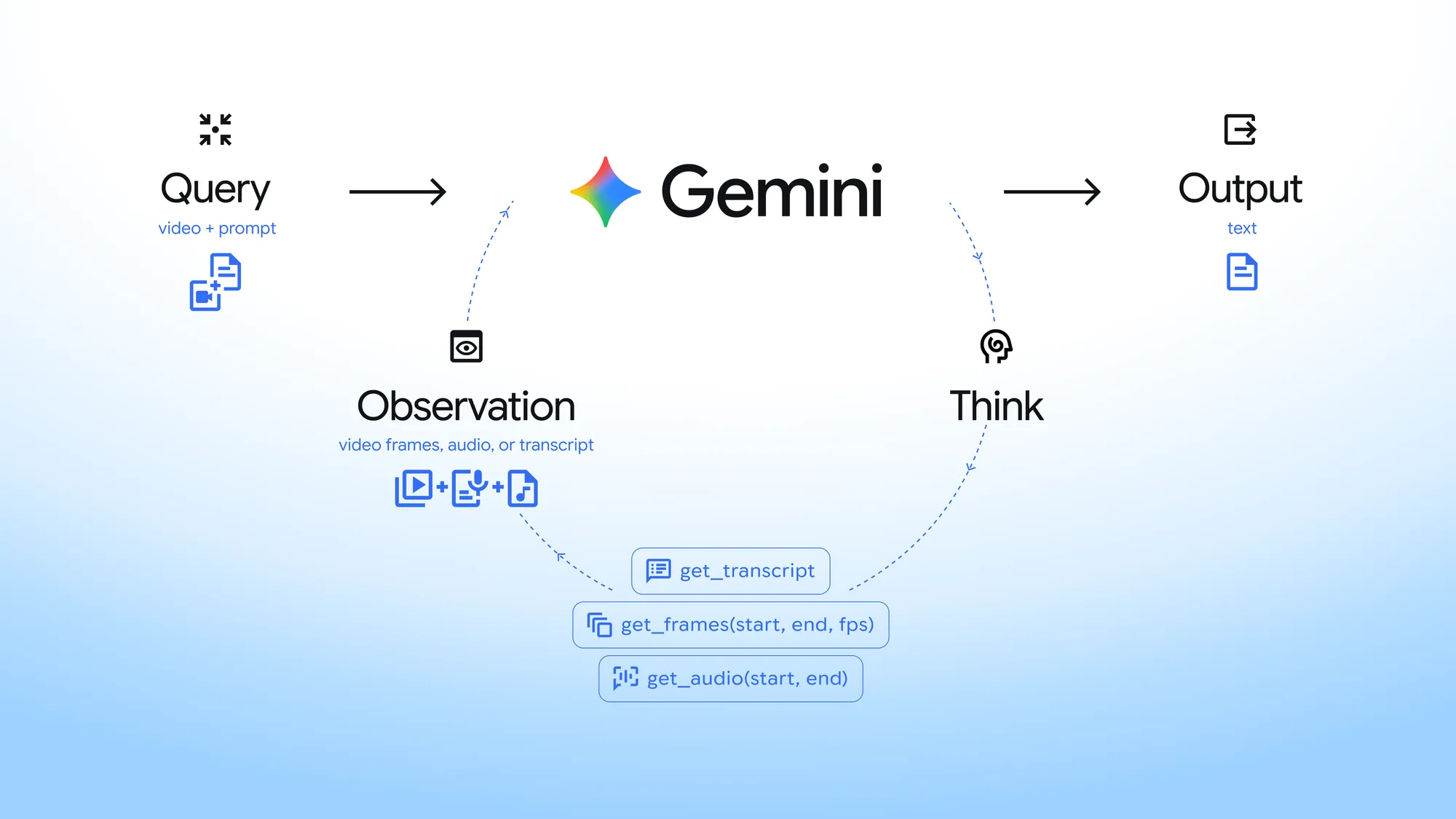
Agentic video understanding replaces that with what Google describes as an internal agentic loop: the model invokes a tool to load a relevant slice of video, inspects it, and decides whether it needs to look elsewhere or rewatch a specific moment at a higher frame rate. Google's officechai.com coverage put it well: Gemini now behaves more like an investigator than a stenographer, fetching only the segments and signals actually needed to answer a query rather than transcribing everything indiscriminately.
The Numbers Behind the Claim
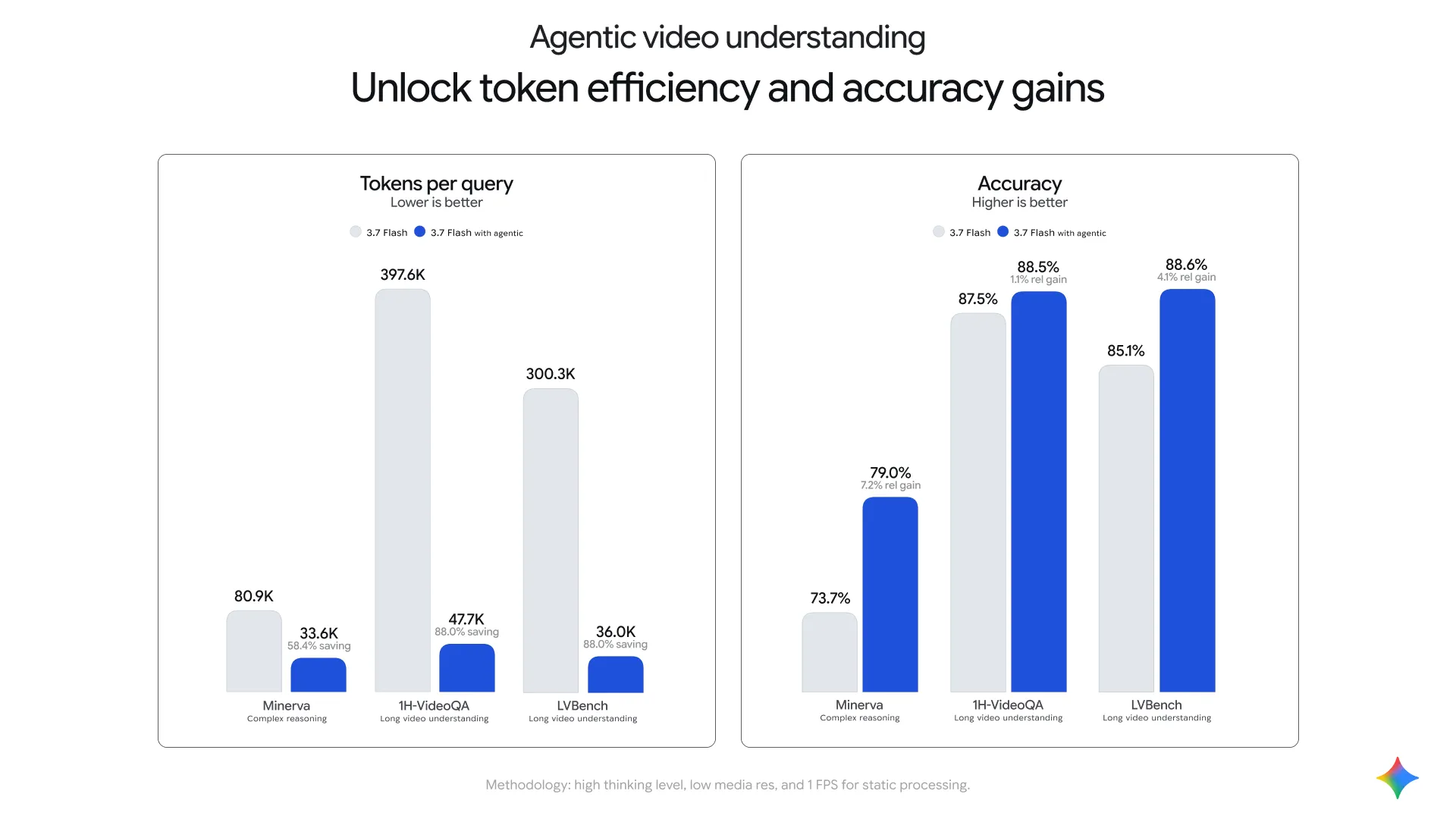
Google reports the new approach cuts token consumption by up to 88% and costs by up to 66%, while simultaneously improving accuracy, a genuinely unusual combination, since cost-cutting measures in AI typically trade off against quality rather than improving it alongside savings. The company frames this as the video-analysis counterpart to "agentic vision," a similar approach already applied to image understanding.
Where This Is Actually Useful for Filmmakers
The practical value here sits squarely in post-production and research workflows rather than generation. Searching a long interview for the exact moment a subject mentioned a specific topic, reviewing hours of dailies for a particular shot or reaction, pulling continuity notes across a multi-hour shoot, or doing documentary research across archival footage are all tasks that benefit directly from a model that can selectively scan rather than brute-force process everything at once.
Sub-second moment retrieval and more accurate anomaly detection are both capabilities Google specifically calls out as unlocked by this approach.
Availability
The feature is live today for Gemini 3.7 Flash, 3.6 Flash, and 3.5 Flash-Lite, accessible through the Gemini API in Google AI Studio and the Gemini Enterprise Agent Platform, for both uploaded video files and YouTube videos. Google says it will reach the consumer Gemini app "soon," with YouTube's "Ask YouTube" feature getting the capability in the coming months. Developers can enable it now by setting API configuration to "agentic" mode.
Competitive Context
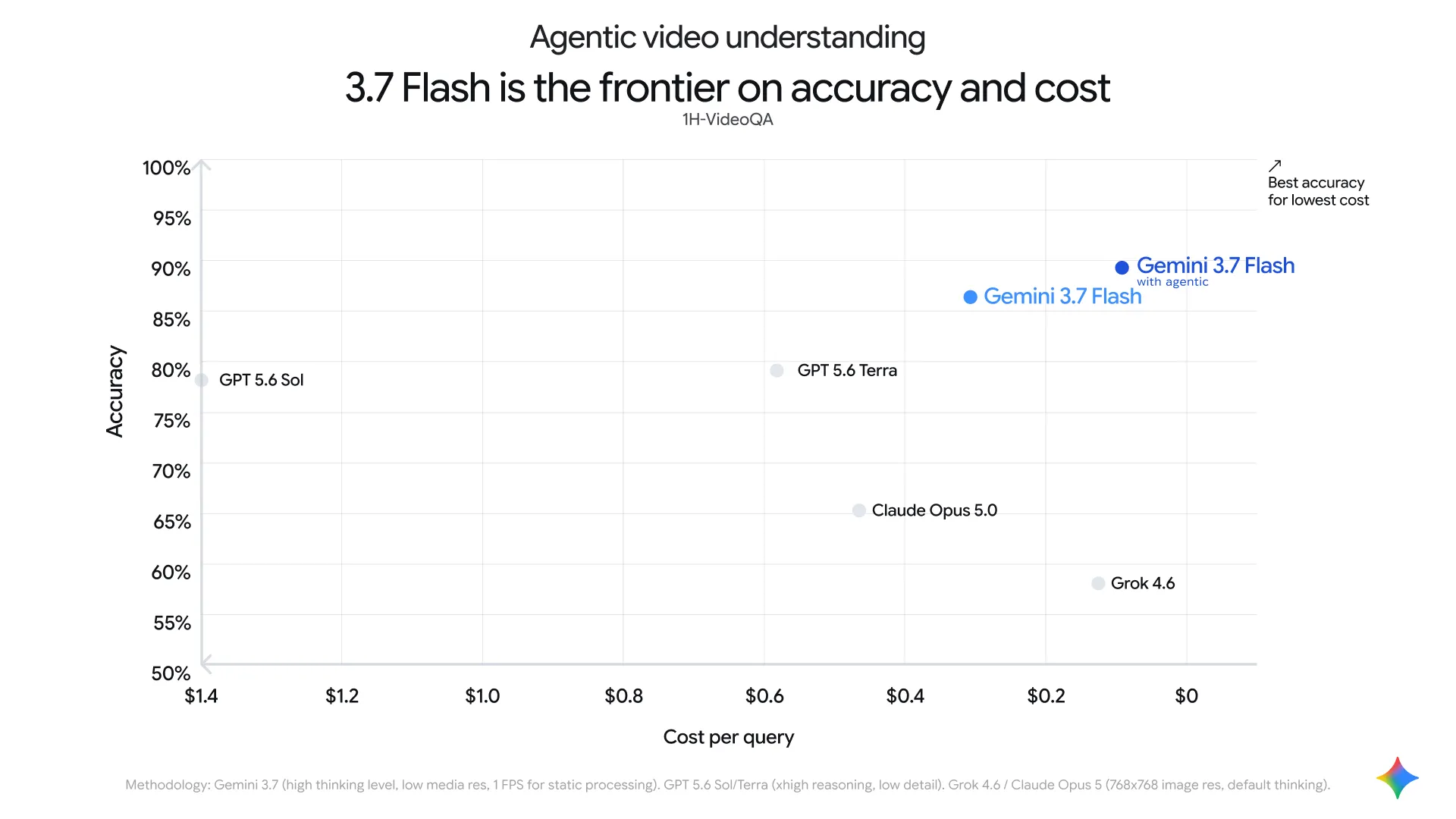
Video understanding has generally lagged behind video generation in the amount of public attention it gets, generation tools produce visible, shareable output; comprehension tools mostly work invisibly inside a workflow.
But comprehension is arguably the more immediately useful capability for people already working with existing footage rather than creating new footage from scratch, and Google's specific focus on cost and token efficiency here suggests real engineering effort aimed at making this practical to use at scale, not just a research demo.
The Signal in the Noise
This is a quieter kind of AI news than a flashy new generation model, but it addresses a genuinely different, arguably more common problem: not "how do I create footage," but "how do I find the thing I already have."
For anyone sitting on hours of interview footage, archival material, or dailies, a search tool that actually understands content rather than requiring manual scrubbing or basic keyword transcription search is a real, practical time-saver.
Would a tool like this change how you approach reviewing footage from a long shoot, or does manual review still feel necessary for anything creative decisions depend on?
The Details
- Feature: agentic video understanding, Google DeepMind / Gemini
- Available models: Gemini 3.7 Flash, 3.6 Flash, 3.5 Flash-Lite
- Access: Gemini API in Google AI Studio, Gemini Enterprise Agent Platform; enabled via "agentic" API configuration
- Input: uploaded video files and YouTube videos
- Claimed improvements: up to 88% reduction in token usage, up to 66% reduction in cost, improved accuracy
- Coming soon: consumer Gemini app; YouTube's "Ask YouTube" feature (timeline: "coming months")