Could This Slim Godox Panel Replace Your COB Light?
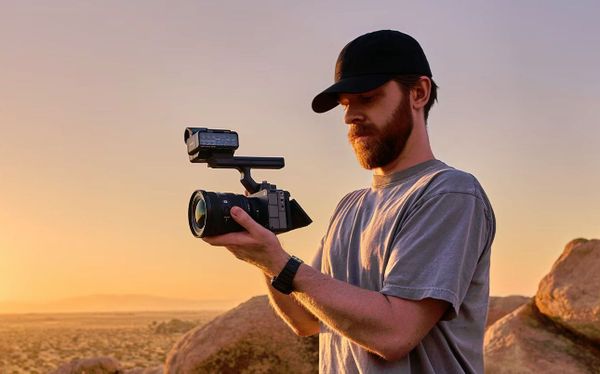
Filmmaker Keaton Nye tests the Godox LiteWafer UP150R — a panel light less than an inch thick that claims to match COB fixture output. Here's whether the optical design actually delivers in production conditions.

The pitch for the Godox LiteWafer UP150R is genuinely interesting: a panel light less than an inch thick that Godox claims delivers roughly double the output of comparable panel fixtures — around 20,400 lux at one meter. That's a number you'd expect from a 500W COB fixture, not a slim LED panel you can pack flat. Whether that claim holds up in real production conditions is what filmmaker Keaton Nye set out to test.
His short answer: it mostly does, with caveats worth knowing before you buy.
Why the optical design is the real story
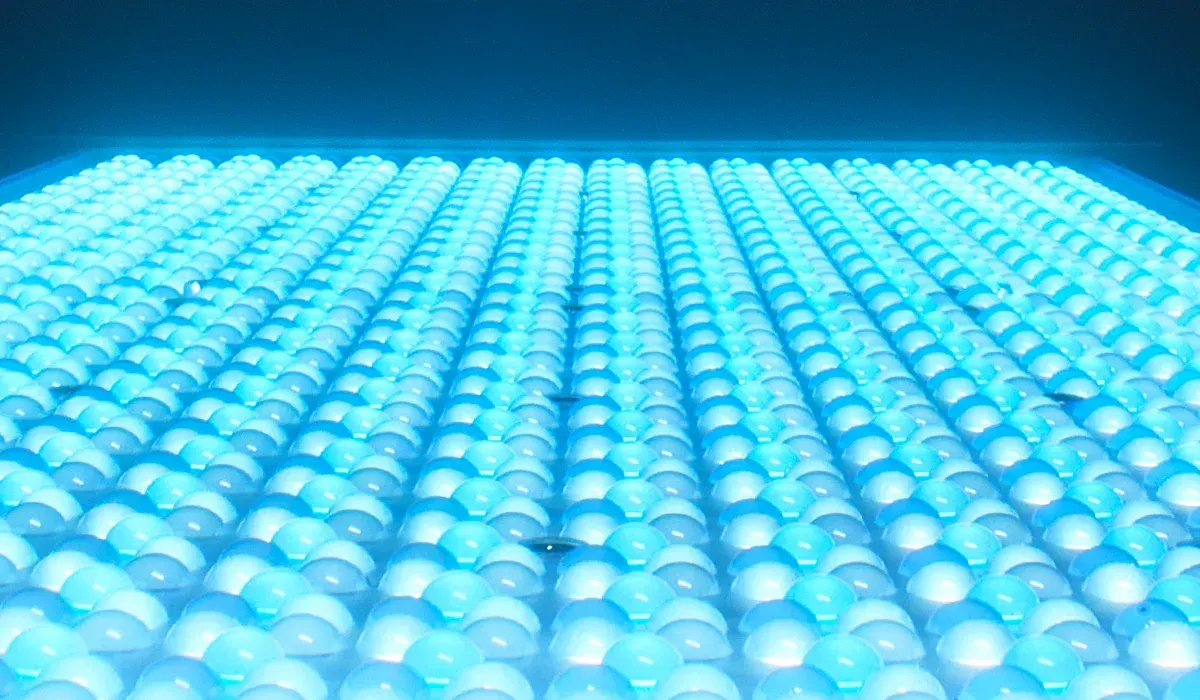
Most LED panels spread light across a large surface area using a diffuse array — which produces soft, even illumination but limits raw output. The UP150R takes a different approach: individual optical lenses sit over each LED, concentrating the light into a tighter initial throw rather than scattering it. The result is meaningfully more output than a standard panel of the same wattage — Godox claims up to four times the brightness boost compared to standard panel configurations using the same LED chips.
The tradeoff is that the initial throw is tighter, which means the light requires more distance or a modifier to spread the way a standard panel does out of the box. In a softbox configuration — which is how Nye primarily tested it — that tighter source gets diffused into soft, workable light that outperformed the Jinbei B500 COB fixture he used as a comparison reference. For interview and commercial work, that's the relevant test, and the UP150R held up well.
As Nye put it: "The brightness on this light surprised me, the build quality surprised me, both in a positive way and the color accuracy is where I think that it should be."
The specs that actually matter for production
The color accuracy numbers are broadcast-grade: CRI 97 and TLCI 98, with a color temperature range of 1,800K–10,000K covering everything from warm tungsten to extreme cool daylight. Full HSI, RGBW, and GEL modes alongside 14 built-in lighting effects give you practical simulation options (campfire, lightning, TV flicker) without needing a separate effect unit. Green/magenta adjustment runs the full -100 to +100 range, which matters when matching to other sources on set.
Control options are genuinely flexible: external ballast (included), NFC tap-to-pair with the Godox Light App for phone control, and DMX/RDM via a separately available adapter cable for studio-grade workflows. The NFC pairing is worth noting specifically — when a light is positioned high on a stand or in a corner, being able to tap-and-connect immediately rather than hunting through Bluetooth menus is a real on-set quality-of-life improvement.
What the build quality means practically
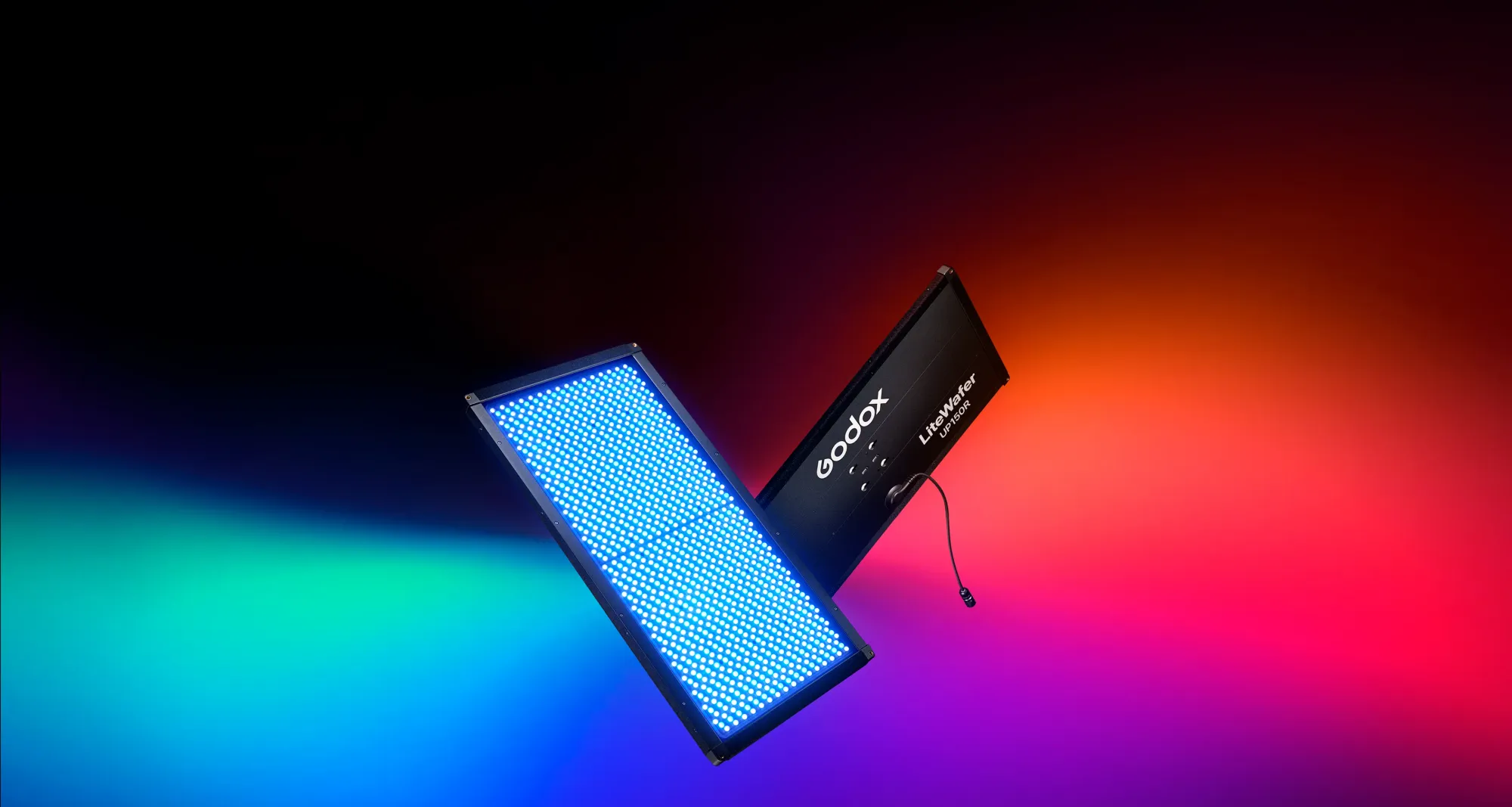
The aluminum construction is legitimate — multiple reviewers have called out the build quality as above what you'd expect at this price point. The flip side: at approximately 7 lbs for the light body alone, the UP150R is not a run-and-gun panel. It's heavy enough that it demands a solid light stand rather than a basic one. Jake Hicks' review noted the supplied bracket had stability concerns and recommended the separately available universal swivel holder instead — worth knowing if you're rigging it high.
Rigging multiple units
One of the more practical sections of Nye's review covers running multiple UP150R units — specifically, the external ballast management challenge that comes with it. Each light's external controller needs to live somewhere when you're running two or three units, which adds rigging complexity that a single-box COB doesn't have. Nye's solution involves clamping the ballasts to a stand crossbar, which works cleanly but is the kind of workflow detail that matters on a real set and isn't obvious from the spec sheet.
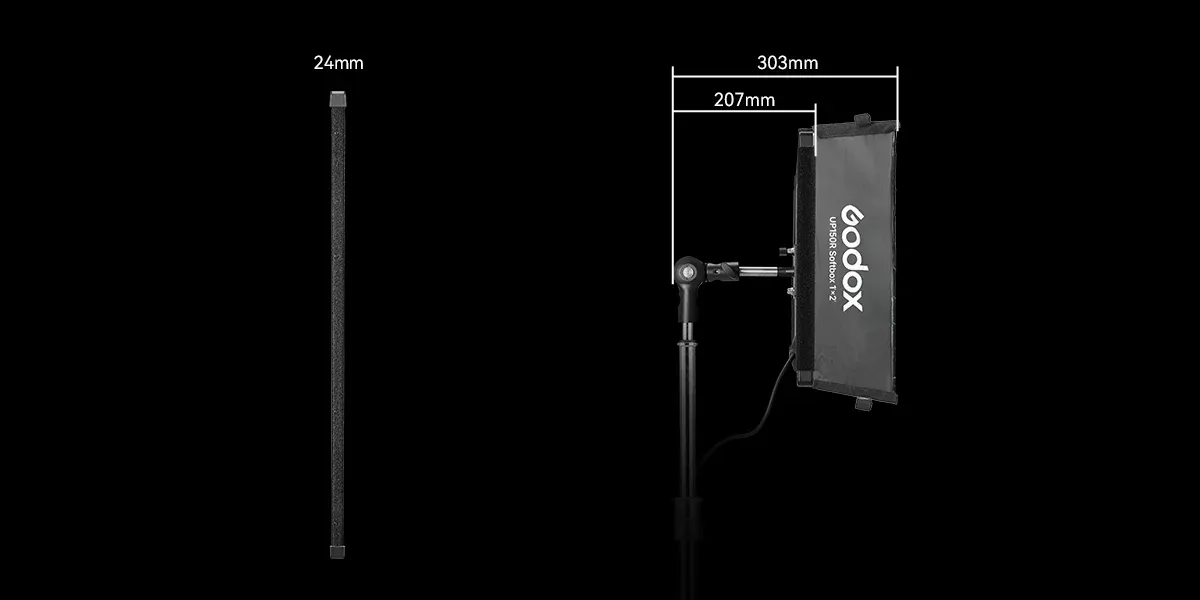
Kit options: the single-light kit ($699) includes a 1x2 softbox. Two-light kits come in 2x2 or 1x4 softbox configurations with a shared ballast — the more economical choice if you're planning to run multiple units from the start.
Competitive Context
At $699 for the single-light kit, the UP150R competes against the Nanlite PavoSlim 120C (similar form factor, lower output), the Aladdin Bi-Flex2 (excellent color rendering benchmark in the category), and larger COB fixtures if raw output is the priority. What differentiates the UP150R in that field is the combination of slim profile, broadcast-grade color accuracy, and output that actually competes with COB alternatives in softbox configurations — not just panel-to-panel.
The Signal in the Noise
If you're shopping for an interview or commercial lighting solution and you've been choosing between the portability of a panel and the output of a COB, the UP150R is a genuine option rather than a compromise. The optical lens design closes that gap more than most panel lights manage. The weight is the main practical trade-off, and the ballast management is a real workflow consideration on multi-light setups — both worth knowing before the day of the shoot rather than after.
Key Specs:
- Power: 150W
- Output: 20,400 lux @ 1m (5600K)
- Color temperature: 1,800K–10,000K
- Color accuracy: CRI ≈97, TLCI ≈98
- Color modes: HSI, RGBW, GEL
- Effects: 14 built-in
- Dimming: 0–100%, four dimming curves
- Control: External ballast, Godox Light App (NFC), DMX/RDM (adapter sold separately)
- Build: Reinforced aluminum, ~7 lbs (light body only)
- Dimensions: 354 x 24 x 680mm (approx. 14" x 1" x 27")
- Mounting: 5/8" baby pin (included); universal swivel holder sold separately
- Single-light kit: $699 (includes 1x2 softbox, controller, bag)
- Two-light kit: Available in 2x2 and 1x4 softbox configurations with shared ballast