Del Toro Warns of Cinema Illiteracy at BFI Fellowship Event
Guillermo del Toro warned an industry crowd in Hollywood that 'we are on the verge of cinema illiteracy' during a BFI America dinner celebrating his BFI Fellowship. The speech continued a pattern of deliberate, sustained warnings about AI and the erosion of creative craft.

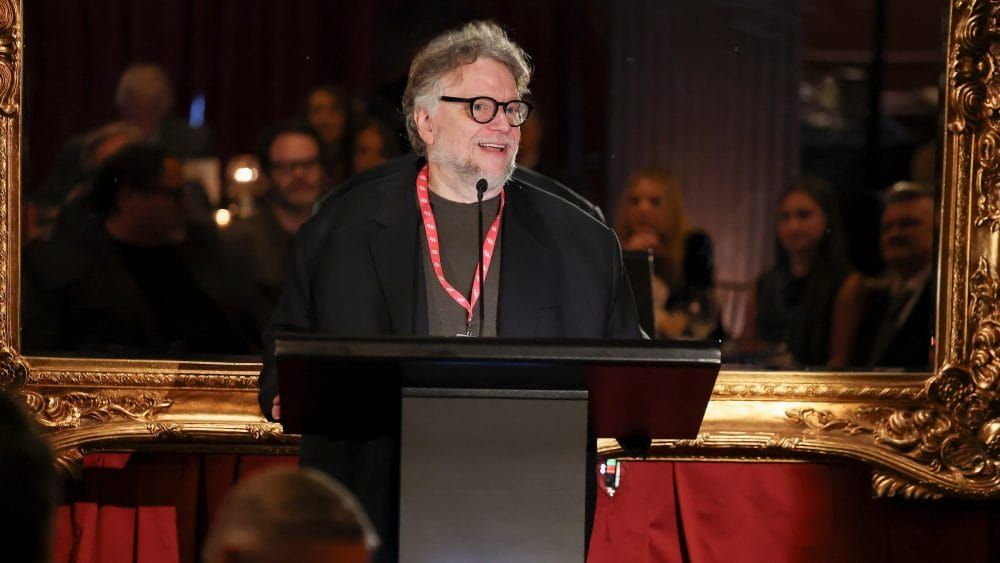
Guillermo del Toro used a BFI America industry dinner in Hollywood on June 16 to deliver a stark warning about artificial intelligence and the future of cinema, telling the assembled crowd: "We are on the verge of image illiteracy. We are on the verge of cinema illiteracy."
The dinner was held to celebrate del Toro receiving the BFI Fellowship, the British Film Institute's highest honor, which was formally awarded at a Chair's Dinner in London on May 6.
A Deliberate Campaign, Not a One-Off Comment
Del Toro's AI warnings have now appeared across multiple public appearances spanning two months and two continents.
At Cannes in May, following a screening of a new 4K restoration of Pan's Labyrinth, del Toro lamented living in a time when people insist "art can be done with a f—king app."
At the BFI Southbank sessions earlier in May, he made similar arguments to audiences of aspiring filmmakers.
At the Hollywood dinner, del Toro also announced he is entering a "giving back" phase of his career, intending to work with organizations like the BFI to teach and advocate for film. He said he plans to teach classes specifically on the genius of early Alfred Hitchcock.
His connection to the BFI runs deep. As a teenager in Guadalajara, del Toro wrote letters to the organization requesting 16mm prints of Carol Reed films and other classics for his local cinema club. As a young projectionist in Mexico, he sourced prints from the BFI National Archive, including for Mexico's first screening of Michael Powell's Peeping Tom.
He has now pledged to donate one-third of his personal papers and archives to the BFI.
What the BFI Fellowship Actually Is
The BFI Fellowship has been awarded since 1983 to individuals recognized for outstanding contribution to film or television culture.
Previous recipients include Christopher Nolan, Martin Scorsese, Spike Lee, Tilda Swinton, Tom Cruise, and Orson Welles.
Del Toro, one third of the self-nicknamed "Tres Amigos" alongside Alfonso Cuarón and Alejandro González Iñárritu, was characteristically direct about the distinction: "I am the first of the Tres Amigos to get it, which gives me great bragging rights."
The London Chair's Dinner on May 6 drew supporters including J.J. Abrams, Rian Johnson, John Waters, Edgar Wright, J.A. Bayona, and Simon Pegg. Video tributes came from Steven Spielberg, Jason Reitman, Kazuo Ishiguro, Oscar Isaac, and Alejandro G. Iñárritu, among others.
The Hollywood BFI America dinner on June 16 drew Netflix's Bela Bajaria and Dan Lin, Warner Bros. Pictures' Pam Abdy, former Paramount chief Sherry Lansing, and filmmakers Jon Favreau, Michael Mann, and Bill Hader.
Netflix co-CEO Ted Sarandos introduced del Toro at the Hollywood dinner. Sarandos recalled their first meeting during development on the animated Trollhunters series: "I went into the meeting thinking, 'Why is this master filmmaker steering what I thought was a cartoon for us?' And then I watched Guillermo create a universe in front of my eyes."
Competitive Context
Del Toro is not alone in making this argument publicly, but his platform and timing make the statement carry unusual weight.
His comments arrive as AI video generation tools are moving from novelty to pipeline-adjacent status in Hollywood pre-production, VFX, and concept visualization. His framing specifically — that we are losing the capacity to read images, not just make them — is a sharper and less common critique than the standard "AI takes jobs" argument.
The argument positions image literacy as a prerequisite for meaningful filmmaking, and suggests that a generation trained on AI-generated imagery may lack the visual foundation to evaluate or push against it.
On the other side of this debate, studios and streaming platforms continue to expand AI tooling in production pipelines. Del Toro's own home at Netflix has not been exempt from that trend, which makes his continued willingness to use that platform to advocate against AI image culture notable.
The Signal in the Noise
Del Toro is not presenting new data or proposing specific policy. What he is doing is using sustained public access — Cannes, BFI Southbank, a room full of studio chiefs and directors in Hollywood — to establish a consistent cultural argument.
For working directors and cinematographers, the "image illiteracy" framing is worth sitting with. The argument is not that AI images are bad-looking. It is that the ability to critically engage with images — to understand composition, light, visual grammar — erodes when audiences and creators alike stop making the effort to learn it.
Del Toro's decision to donate a third of his archive to the BFI, teach classes on Hitchcock, and deliver masterclasses to BFI Film Academy students suggests he is putting structured effort behind the rhetoric.
His next project also reflects the argument in practice. The Buried Giant is a stop-motion film for adults, made without concession to a family audience, adapting a formally difficult Kazuo Ishiguro novel. It is the kind of project that requires exactly the craft literacy he is arguing is disappearing.
What's Next: The Buried Giant
During his May BFI career Q&A at BFI Southbank, del Toro teased his next production: a stop-motion adaptation of Kazuo Ishiguro's 2015 novel The Buried Giant, in development at Netflix.
Del Toro described it as a "fascinatingly difficult stop-motion movie for adults" made "without any concession to a family audience."
The script was adapted with Dennis Kelly, the writer behind Matilda the Musical. ShadowMachine, the animation studio behind del Toro's Pinocchio, is backing the project.
Ron Perlman has joined the cast in an undisclosed role — the first confirmed casting for the film.
Del Toro was candid about the scale of the undertaking: "It's gonna take us years. And it's incredibly difficult."
Resources & Reads
- Variety — Del Toro BFI America dinner coverage (primary source)
- BFI — Official BFI Fellowship announcement for Guillermo del Toro
- BFI — BFI Fellowships history and past recipients
- Deadline — London BFI Chair's Dinner ceremony coverage
- Variety — Del Toro at Cannes on AI and Pan's Labyrinth 4K restoration