Idris Elba and Google Launch a Free AI Filmmaking Program for Creators in Africa
Idris Elba’s Akuna Group and Google.org have launched a free AI filmmaking program, built with Curious Refuge, for creators in five African countries. Applications close November 15.

Idris Elba’s Akuna Group has launched a free AI filmmaking program for creators in five African countries, funded by Google.org and built with AI film education company Curious Refuge. The program, called “From Script to Screen With AI,” takes participants from training through mentorship and pitching to funded film production.
It’s open to creators living in Ghana, Kenya, Nigeria, Sierra Leone and South Africa. Applications are open now through November 15.
What the Program Includes
“From Script to Screen With AI” is run by Akuna Learning, the education arm of Elba’s Akuna Group. Google.org is providing $1 million in funding, and Curious Refuge developed the curriculum and will deliver the online training.
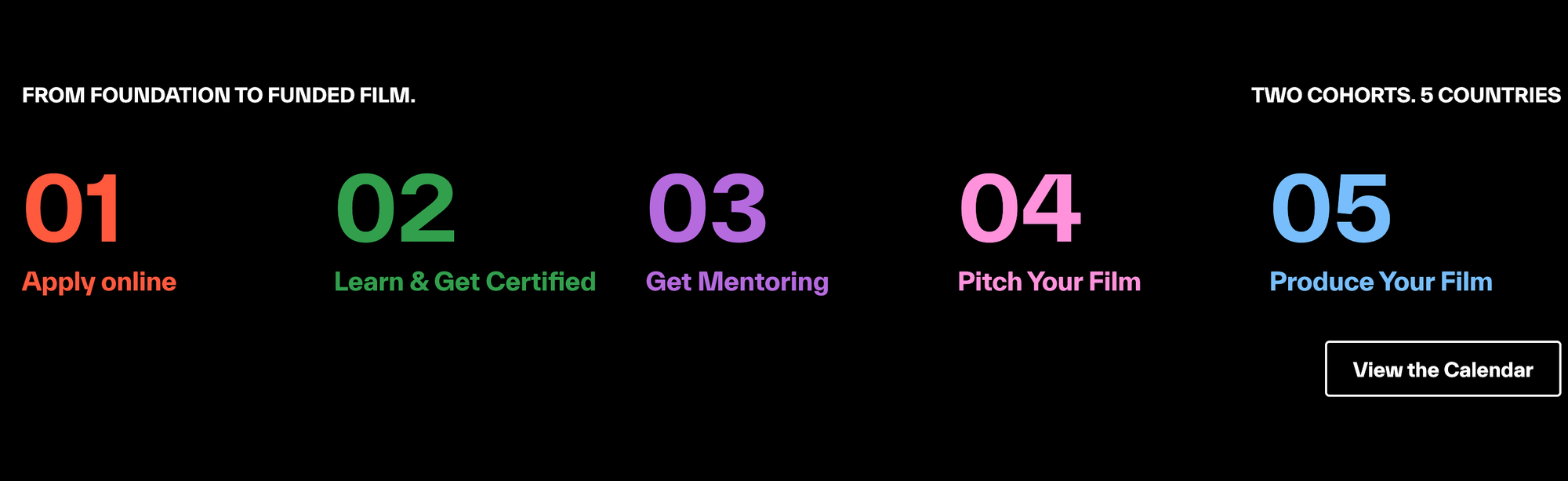
The program is free to apply for and free to attend for those selected. It runs for about a year, from October 2026 to October 2027, and covers five stages:
- Applications and selection (October 2026–January 2027): One open call across all five countries, with review panels in each country.
- Training and certification (February–April 2027): Twelve weeks of online training from Curious Refuge, with weekly facilitation from Akuna and in-person meetups in each country.
- Mentoring (April–June 2027): Graduates submit film ideas, and shortlisted teams spend four weeks working with mentors and subject experts.
- Pitching (June–July 2027): Teams pitch their projects to panels from Akuna, Google and the wider industry, and selected projects receive funding.
- Production (July–October 2027): Funded teams make their films with creative and technical support, then take them to festivals and showcases.
After the foundation course, participants can specialize in fiction, documentary, animation, advertising or screenwriting.
Who Can Apply
Applicants must be at least 18 and physically living in one of the five eligible countries. They need a laptop, reliable internet and steady power, and they must be able to commit to the February-to-April academy and later stages if selected.
No AI experience, film school degree or industry background is required, though applicants are asked to include existing creative work. Akuna says women are strongly encouraged to apply. Applications are submitted through AkunaLearning.com.
Who Owns the Work

Akuna says creators will keep control of their work, and that neither the program nor its partners will claim ownership of the films made through it. That’s a notable commitment, given ongoing concerns about how AI companies and platforms treat creators’ work.
“Creators need a route from the classroom to the screen, and this programme carries them all the way,” said Khaled Gad, CEO of The Akuna Group.
Competitive Context
AI filmmaking education has grown quickly, with Curious Refuge among the best-known programs for creators learning AI video tools. This program extends that training to markets where access to film schools and production funding is limited.
It also reflects how widely AI filmmaking is spreading internationally. In China, iQIYI just opened an AI film studio that pairs live-action shooting with AI post-production, covered in iQIYI’s New AI Film Studio Keeps the Actors and Generates Everything Else.
The Signal in the Noise

Most AI filmmaking news is about tools and models. This program is about access: free training, mentorship and production funding for creators who might not otherwise get any of the three.
Its structure is also more complete than many courses, carrying participants from learning to a finished, funded film with a festival push at the end. Results will show by October 2027, when the films are set to be showcased.
Could programs like this open filmmaking to more creators, or do they mostly build demand for AI tools? Share your take in the comments.