Is the Sony a7 IV Still Worth Buying in 2026?
The Sony a7 IV is still Amazon’s best-selling full-frame camera five years after launch. Think Media calls it one of Sony’s best values, and at $1,998, here’s who should still buy it.

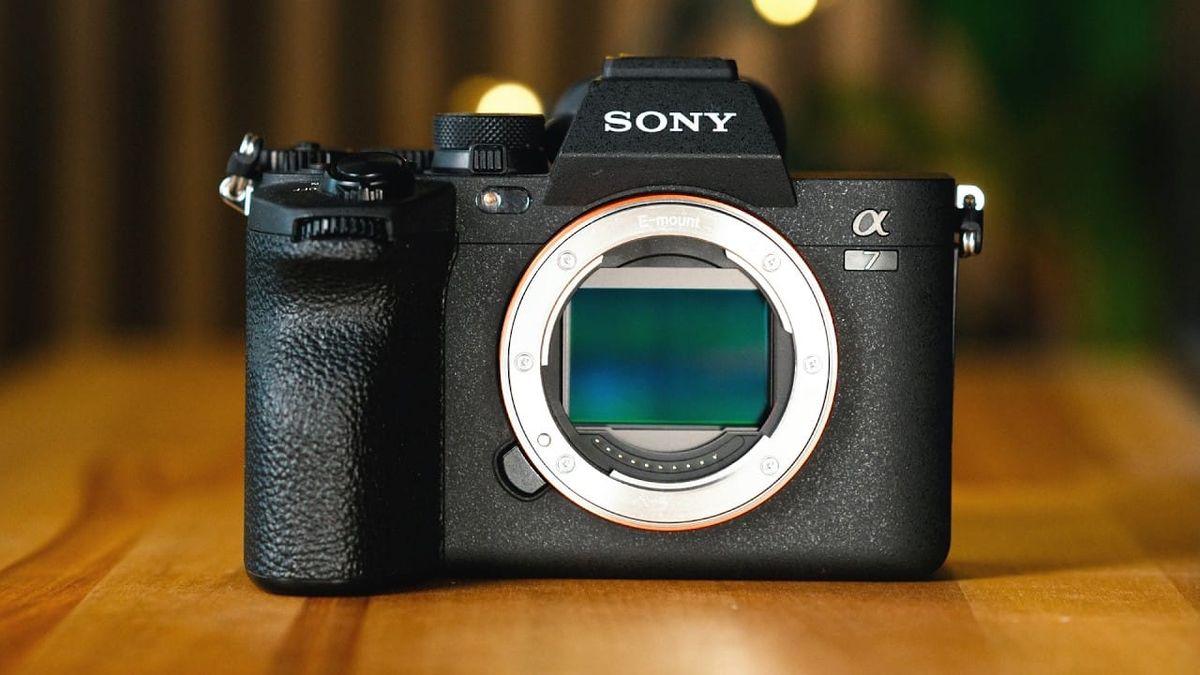
The Sony a7 IV launched in late 2021, and it’s still Amazon’s best-selling full-frame camera, according to YMCinema. Sony has since released its successor, the a7 V, but the older model keeps selling, helped by a price that has dropped below $2,000.
Think Media, one of YouTube’s biggest channels for content creators, revisited the a7 IV to answer the question many buyers are still asking: is it worth it, or should you buy something newer? Its verdict holds up well, with a few caveats worth adding now that the a7 V is out.
Why Think Media Still Rates It
Think Media’s review frames the a7 IV as a do-everything hybrid camera. “If you want a camera that can pretty much do everything related to photography and video work, this camera is over three years old and is still one of the best options around,” the channel says.
The review also compares its video performance to Sony’s flagship A1 Mark II, and says it was surprised by how well the a7 IV held up against a camera that costs several times as much. For creators and small production teams, that’s the core of its appeal: client-ready footage without flagship pricing.
What You Get
The a7 IV uses a 33MP full-frame sensor, up from the 24MP sensor in the a7 III, which gives it more room for cropping and high-resolution stills than most video-first cameras. Its autofocus uses 759 phase-detect points with reliable subject tracking.
For video, it records internally in 10-bit 4:2:2, with S-Log3 for grading and S-Cinetone for a finished look straight out of camera. 4K up to 30fps is oversampled from 7K across the full sensor width, which produces sharp, detailed footage.
Think Media also highlights the practical features that make it easy to work with: a fully articulating screen, a centered viewfinder, no 30-minute recording limit and two card slots. Both slots accept SD cards, and one also takes CFexpress Type A, so you can record backup or overflow copies.
Where It Shows Its Age
The biggest limitation for video is 4K60. Think Media notes that 4K at 60fps uses an APS-C (Super 35) crop, which narrows your field of view and makes wide shots harder.
Live streamers should also know that USB-C streaming tops out at usable quality in 1080p. Think Media found that 4K streaming over USB is limited to 15fps, so 4K streams need an HDMI capture card.
It also lacks features that newer cameras have made common at this price, including internal RAW video, open gate recording and 4K120, covered in What Is Open Gate? Why Filmmakers Want It, and Which Cameras Have It.
What’s Changed Since the Review
Think Media’s review was published in March 2025, when the a7 IV typically sold for around $2,198 after discounts and the a7 V was still a rumor. Two things have changed since then.
First, the price has dropped further. The a7 IV now sells for $1,998 at B&H, down from its $2,498 regular price, making it a stronger value than when Think Media reviewed it.
Second, the a7 V launched in December 2025 at $2,899. It uses a faster, partially stacked 33MP sensor and adds full-width 4K60, 4K120 with an APS-C crop, bursts up to 30fps and stronger stabilization, which fixes the a7 IV’s biggest video limitation for about $900 more.
Who Should Buy It
The a7 IV makes the most sense for hybrid shooters who split time between photos and video, such as wedding, event, portrait and YouTube creators. Its stills, autofocus, 10-bit video and mature lens system cover a lot of ground for under $2,000.
It’s also a strong choice for anyone already invested in Sony E-mount lenses, or as a dependable B-camera alongside Sony’s FX line. The used market is deep, which can bring the price down further.
If you mostly shoot video and want full-width 4K60, RAW or open gate, newer cameras offer more for similar money. If you shoot fast action or need 4K120, the a7 V is the better Sony choice.
Competitive Context
Within Sony’s lineup, the a7 IV sits below the a7 V and alongside the compact a7C II and the cinema-focused FX30, which Think Media also compares against. Outside Sony, its main rivals are hybrid full-frame bodies like the Nikon Z6III, Canon’s R-series and Panasonic’s Lumix S5 II.
The Nikon Z6III starts at $1,999.95 and offers internal 6K N-RAW, and the video-focused Nikon ZR costs $2,199.95, covered in Nikon ZR vs. Z6III: Nikon Makes Its Own Case for the Cinema Body. Canon’s R8 Mark II sells for $1,899, covered in Canon EOS R8 Mark II Video Review and Specs.
The Signal in the Noise
Think Media’s conclusion still stands: the a7 IV is one of the best-value hybrid cameras you can buy, and at $1,998 it’s an even better deal than when that review was made. It delivers the 10-bit 4K quality most client and creator work needs without the cost of a flagship body.
The a7 V and newer rivals have raised the bar for video-first shooters, especially on 4K60 and RAW. For everyone else, the a7 IV remains a safe, proven buy.
Are you still shooting on an a7 IV, or did you move on to something newer? Share what you’re using in the comments.
Specs & Pricing
- Price: $1,998 at B&H; $1,999.99 at Sony’s U.S. store (regular $2,498)
- Sensor: 33MP full frame
- Video: 4K up to 30fps oversampled from 7K (full width); 4K60 with APS-C/Super 35 crop; 10-bit 4:2:2; S-Log3, S-Cinetone
- Recording limit: None
- Autofocus: 759 phase-detect points
- Card slots: Dual (SD + CFexpress Type A/SD)
- USB streaming: 1080p; 4K limited to 15fps
- Competitor pricing: Sony a7 V $2,899 (launch); Nikon Z6III $1,999.95; Nikon ZR $2,199.95; Canon R8 Mark II $1,899