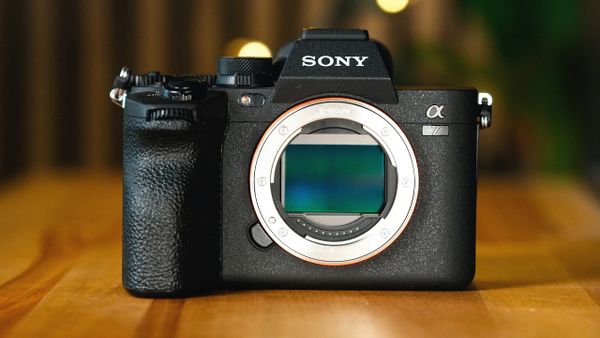
What Is Open Gate? Why Filmmakers Want It, and Which Cameras Have It
Open gate records a camera’s full sensor instead of a 16:9 crop, so one take can become widescreen, vertical and square versions. Here’s how it works and which cameras have it.

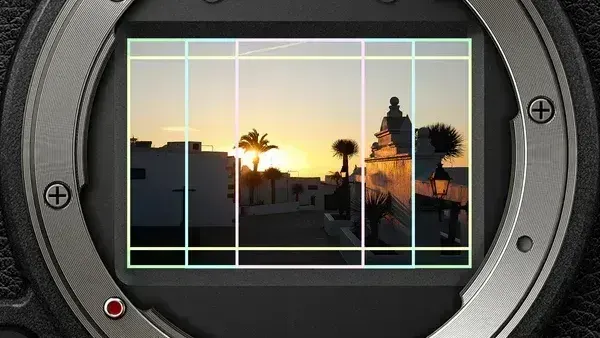
Open gate has become one of the most requested features on new cameras, and it now shows up on spec sheets from pocket-size action cams to $80,000 cinema systems. The term sounds technical, but the idea is simple: record the camera’s whole sensor instead of cropping it.
Here’s what open gate is, why it’s useful, what it costs you and which current cameras offer it.
What Open Gate Means
Most cameras record video by cropping the sensor to a 16:9 frame. On a full-frame sensor, which has a 3:2 shape, that crop throws away a band of image at the top and bottom.
Open gate skips the crop and records the sensor’s full, or nearly full, image area. On full-frame cameras, that usually means a 3:2 frame. On Micro Four Thirds cameras, it’s a 4:3 frame.
The term comes from film, where “open gate” meant exposing the full area of the film frame rather than masking it to a specific aspect ratio.
Why Filmmakers Want It
One shoot, every format. The taller frame gives you room to crop a 16:9 widescreen version, a 9:16 vertical version and a 1:1 square version from the same take. Panasonic describes this as shooting once instead of reshooting with the camera turned sideways for vertical.
Room to reframe. The extra image above and below gives you more room to fix headroom, straighten a horizon or recompose a shot in post.
Anamorphic shooting. A taller sensor area suits anamorphic lenses, which squeeze a wide image horizontally. Micro Four Thirds cameras with 4:3 open gate have long been popular with anamorphic shooters, and Canon’s C50 includes de-squeeze previews for 1.3x through 2x anamorphic lenses.
Punch-ins and digital moves. Higher-resolution open gate files leave more room for crops, digital zooms and stabilization in post without dropping below your delivery resolution.
The Tradeoffs
Open gate isn’t free. Recording more of the sensor means larger files, more storage and heavier processing in the edit. Some cameras also limit frame rates, codecs or features like in-camera stabilization in open gate modes.
Framing takes more thought too. If you plan to deliver both horizontal and vertical versions, you need to keep the important action inside both crops, which usually means turning on frame guides and composing a little more centrally.
If you only ever deliver 16:9, open gate may cost you more in storage than it gives back.
Which Cameras Have Open Gate
Open gate has spread quickly across price ranges. Here are current examples:
- Canon EOS C50: 7K open gate (6960 x 4640) in native 3:2, up to 60p, in 12-bit Cinema RAW Light. Covered in Sony FX5 vs. Canon C50.
- Panasonic Lumix: Open gate is available on the S9, S5II, S5IIX, S1RII, S1II, S1IIE, S1H and S1 full-frame models, and on the G9II, GH6, GH7 and GH5II Micro Four Thirds models, according to Panasonic.
- Sony FX5: Sony’s new full-frame Cinema Line camera includes open gate recording. It ships November 20 in Japan and mid-November in the U.S., covered in The Complete Sony FX5 Guide.
- Sigma fp2: 6K open gate in a compact full-frame body, priced at $2,199. Covered in Sigma fp2: 6K Open Gate and ProRes RAW.
- GoPro Mission 1 Pro ILS: 8K open gate at up to 30fps on a 1-inch sensor, for $699.99. Covered in The GoPro Mission 1 Pro ILS Complete Guide.
- Sony RIALTO 65: At the top end, Sony’s new 65mm extension for the VENICE 2 records 9.6K open gate at 1.5:1, priced at $80,000.
Not every video-focused camera has it. Nikon’s ZR, for example, doesn’t offer an open gate mode, which DPReview listed as one of its drawbacks.
Competitive Context
Open gate started as a high-end cinema feature, but social video pushed it down-market. Once creators needed vertical versions of everything they shot, the ability to record the full sensor became a selling point for mirrorless cameras and action cams.
Camera makers now treat it as a differentiator, and its absence is starting to get called out in reviews. For a side-by-side look at how current cinema cameras compare, see Sony FX5 vs. the Competition: Canon, Blackmagic and RED.
The Signal in the Noise
If you deliver to multiple platforms, shoot anamorphic or like having room to reframe, open gate is one of the most useful features you can look for in a new camera. It turns one take into several deliverables.
If you shoot strictly for 16:9 and are tight on storage, it’s a nice-to-have rather than a must. Either way, it’s worth checking a camera’s open gate frame rates, codecs and crop factors before buying, since those details vary widely by model.
Do you shoot open gate on every project, or only when you know you’ll need vertical? Share how you use it in the comments.
Specs & Pricing
- Canon EOS C50: 7K open gate, 3:2, up to 60p, 12-bit Cinema RAW Light; exact pricing available on Canon’s website
- Panasonic Lumix S and G series: Open gate on 12 models, including the S1II, S5II, S9 and GH7; exact pricing available on Panasonic’s website
- Sony FX5: Open gate; $4,898 body only
- Sigma fp2: 6K open gate; $2,199
- GoPro Mission 1 Pro ILS: 8K open gate up to 30fps; $699.99
- Sony RIALTO 65: 9.6K open gate, 1.5:1; $80,000 (VENICE 2 extension)