Sony FX5 vs. the Competition: How Does It Stack Up Against Canon, Blackmagic, and RED?
The Sony FX5 just launched at $4,898. Here's how it stacks up against the Canon EOS C50, Blackmagic Cinema Camera 6K Full Frame, and RED Komodo-X — what it wins, what it loses, and which camera you should actually buy.

The Sony FX5 landed today at $4,898 with a spec sheet that would have been VENICE-exclusive eighteen months ago. But the cinema camera market in 2026 is more competitive than it's ever been, and $4,898 buys a lot of camera from multiple manufacturers. Here's how the FX5 compares to its closest competition — what it wins, what it loses, and which camera you should actually be buying.
The field: who's competing at this price point
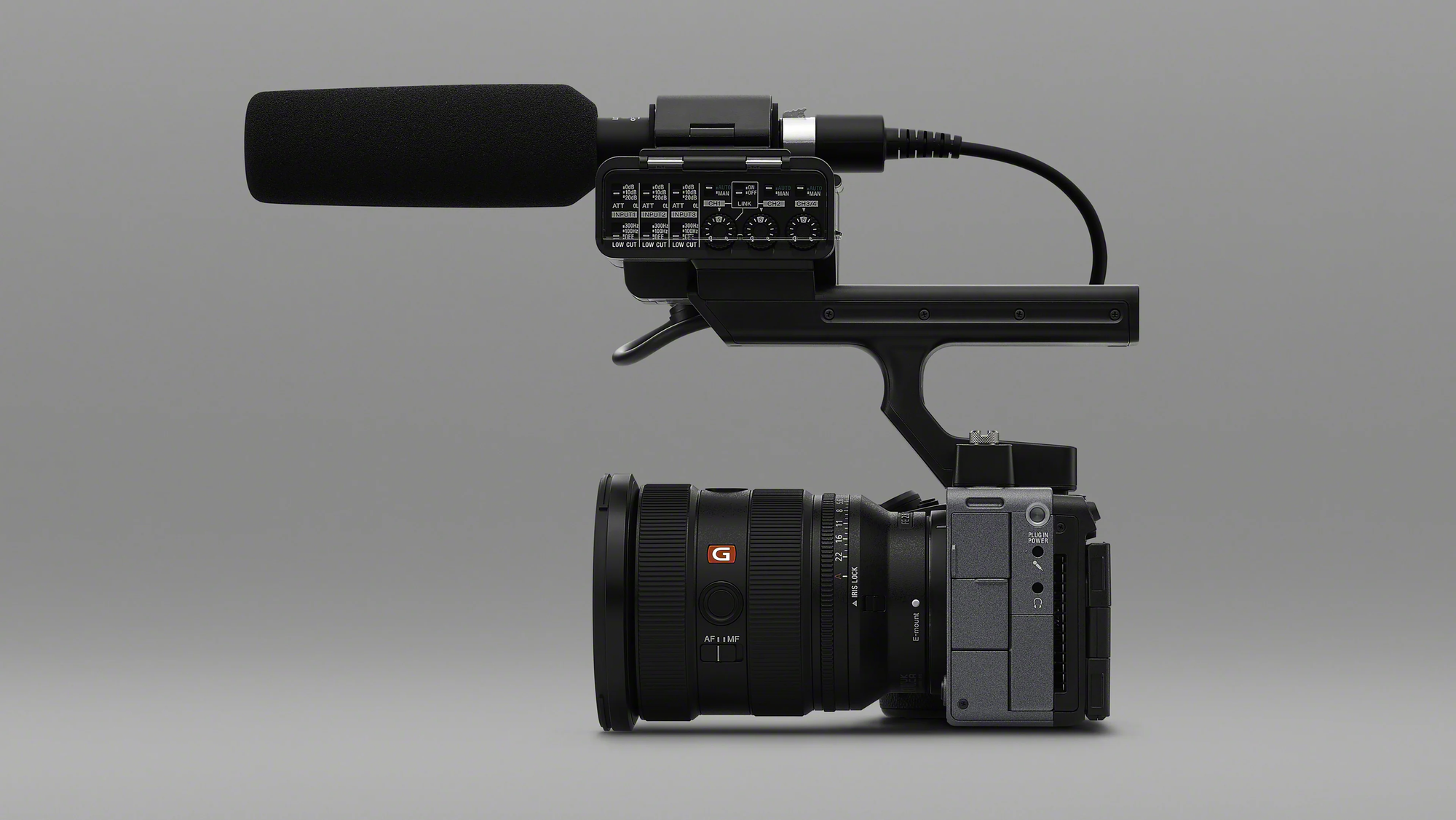
Four cameras sit closest to the FX5 in feature set, use case, or price:
- Canon EOS C50 — $3,899 body with handle, full-frame, Cinema RAW Light, RF mount
- Blackmagic Cinema Camera 6K Full Frame — ~$2,995, L-mount, BRAW, 6K open gate
- Blackmagic PYXIS 6K — ~$3,295, L or EF mount, same sensor as the CC 6K FF in a box form factor
- RED Komodo-X — $6,995, Super 35, global shutter, REDCODE RAW
One notable absence from this comparison: the Sony FX6. With the FX5 now sitting at $4,898, the FX6 at approximately $5,999 is close enough in price that FX5 buyers will inevitably look at it — but the FX5 clearly supersedes it on codec (X-OCN RAW vs. no RAW on the FX6), open gate, and dynamic range, making the FX6 a harder purchase to justify new. That's a separate conversation worth having once real-world FX5 tests are in.
Sony FX5 vs. Canon EOS C50 ($3,899)
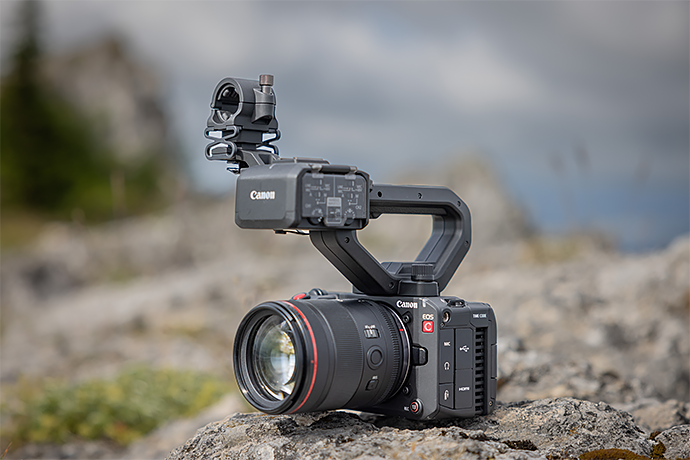
The C50 is Canon's full-frame cinema body, announced in September 2025 as the successor to the R5 C. It's a genuinely capable camera: 32.3MP full-frame sensor, Cinema RAW Light internal recording, Dual Pixel CMOS AF II (the best autofocus in Canon's cinema lineup), DCI 4K up to 120fps, 7K open gate, RF mount, 670g body. At $3,899 body with handle, it's $999 cheaper than the FX5 at launch.
Where the FX5 wins: Triple base ISO (800/4000/12,800) versus the C50's dual native ISOs, 16+ stops of dynamic range versus C50's approximately 14+ stops, X-OCN 16-bit linear RAW versus Cinema RAW Light (a meaningfully different file with more post latitude), IBIS with roll correction versus no IBIS on the C50, and a more complete monitoring suite (false color, waveform, vector scope built in). The FX5's Ethernet/LAN port for networking workflows also has no equivalent on the C50.
Where the C50 wins: Dual Pixel CMOS AF II is widely considered the best autofocus in cinema cameras — Sony's AI tracking on the FX5 is excellent, but Canon's AF system has a longer proven track record in demanding focus situations. The C50's 40fps continuous shooting makes it a hybrid photo option; the FX5 is video-only. RF mount has arguably the strongest current lens ecosystem after E-mount. And $999 is real money.
The verdict: If autofocus is the most critical variable for your work, or if you already have RF glass, the C50 is worth the cost savings. If low-light performance, dynamic range, and codec latitude matter more — the FX5 is the better cinema tool.
Sony FX5 vs. Blackmagic Cinema Camera 6K Full Frame (~$2,995)
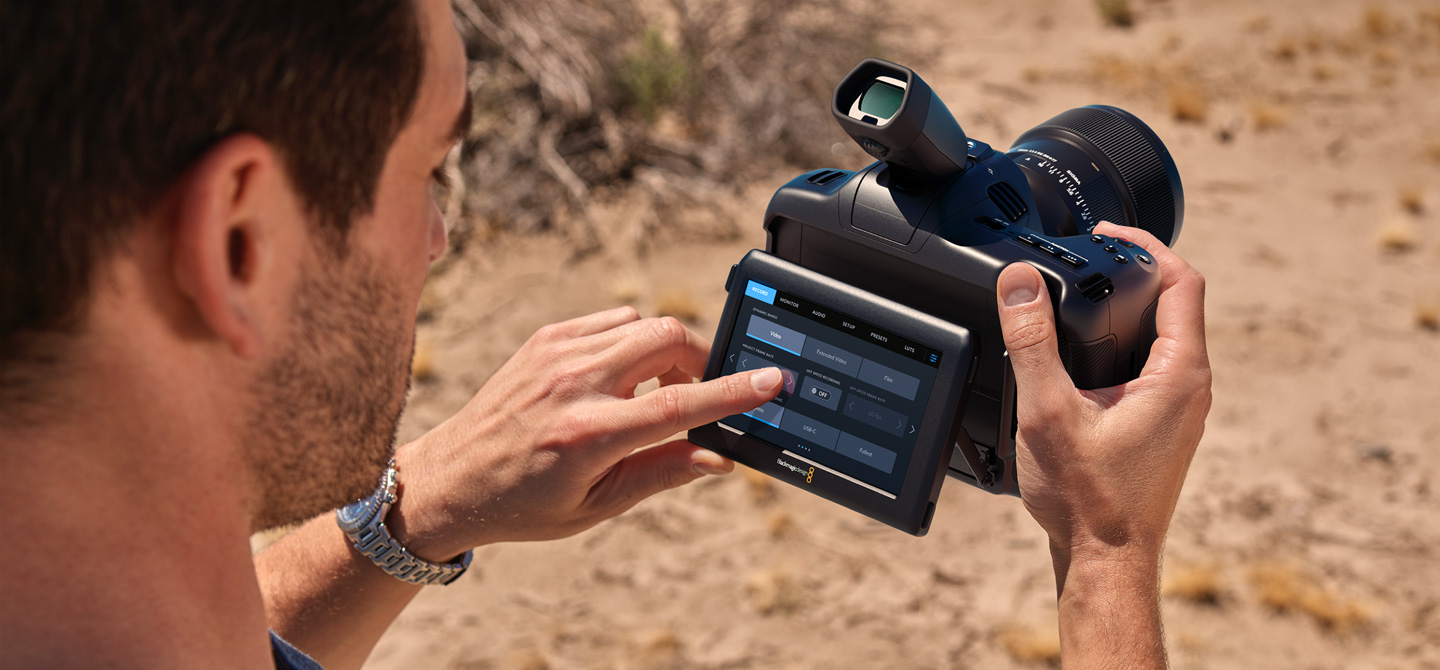
The Blackmagic Cinema Camera 6K Full Frame is the value proposition camera in this comparison. At roughly $2,995 for the L-mount version, it's nearly $1,900 cheaper than the FX5, yet it offers a full-frame 6K sensor, open gate recording, BRAW internal, and Blackmagic's excellent color science. The PYXIS 6K is essentially the same sensor in a box form factor at ~$3,295 with EF or L mount options.
Where the FX5 wins: The gap is substantial. 16+ stops of dynamic range versus 13 stops on the Blackmagic. Triple base ISO (800/4000/12,800) versus dual native 400/3200. AI-powered subject tracking autofocus versus Blackmagic's famously unreliable autofocus (the Cinema Camera 6K FF requires manual focus or lens-specific AF compatibility). IBIS with roll correction versus no stabilization. X-OCN 16-bit RAW versus 12-bit BRAW (12-bit is professional-grade, but the gap exists). 5K open gate at 3:2 versus 6K open gate — actually a small Blackmagic advantage here. Professional monitoring tools (false color, waveform, vector scope) built in versus limited on the Blackmagic. Better weather sealing, more professional I/O.
Where Blackmagic wins: Price. At $2,995, the Cinema Camera 6K FF is the most affordable full-frame cinema camera with RAW internal recording available. BRAW workflow is beloved for its color science and post efficiency. The 13-stop dynamic range is perfectly usable for most professional work. And if you're shooting in controlled lighting where autofocus matters less, the image quality output of the two cameras is closer than the price gap implies.
The verdict: The Blackmagic Cinema Camera 6K FF is the right call if budget is genuinely constrained and you can work without reliable autofocus. The FX5 is the right call for almost every other scenario — the low-light advantage, autofocus, and stabilization gaps are real and production-relevant.
Sony FX5 vs. RED Komodo-X ($6,995)
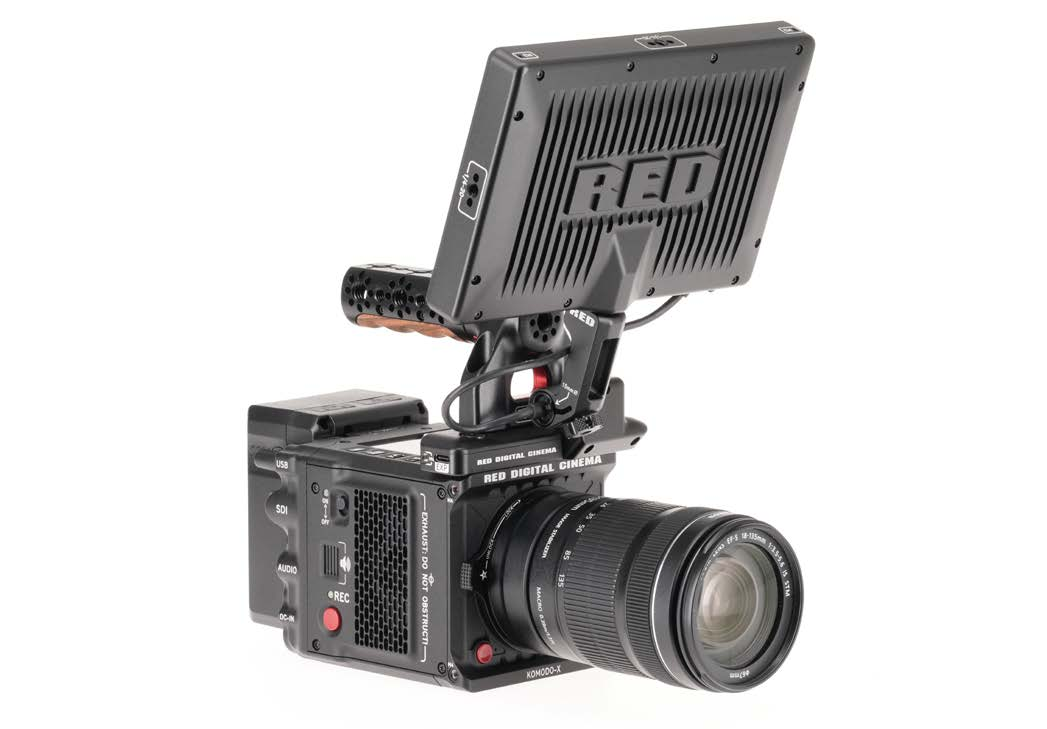
The Komodo-X is a different kind of comparison. At $6,995 — $2,097 more than the FX5 — it's built around a Super 35 sensor with a global shutter, REDCODE RAW, and a form factor designed for drones, gimbals, and specialty rigging. It's not competing for the same jobs as the FX5 in most cases.
Where the FX5 wins: Full-frame sensor versus Super 35 (meaningful for depth of field rendering and low light at equivalent apertures). Triple base ISO versus Komodo-X's dual native ISOs. AI autofocus subject tracking versus Komodo-X's contrast-detect AF that requires careful lens selection. IBIS with roll correction versus no stabilization. Significantly better price. Ethernet/LAN, native XLR audio via optional handle, a real monitoring suite. The FX5 is the more complete production tool for most narrative and documentary work.
Where the Komodo-X wins: Global shutter — the Komodo-X's global shutter eliminates rolling shutter artifacts entirely, which matters specifically for fast motion, action, VFX plates, and anything with rapid camera movement. REDCODE RAW is the industry-standard format for visual effects pipelines. The Komodo-X's compact, modular form factor makes it better suited for specialty rigging, drone work, and small-footprint shoots where the FX5's size is a liability. And R3D files have a color science that a specific segment of professional colorists strongly prefers.
The verdict: If you need global shutter for action or VFX work, or if your post pipeline is built around R3D, the Komodo-X earns its premium. For most narrative, documentary, and commercial work, the FX5 is the more capable and substantially cheaper tool.
The honest summary: who should buy what
| Sony FX5 | Canon C50 | BM CC 6K FF | RED Komodo-X | |
|---|---|---|---|---|
| Price | $4,898 | $3,899 | ~$2,995 | $6,995 |
| Sensor | Full-frame | Full-frame | Full-frame | Super 35 |
| Internal RAW | X-OCN 16-bit | Cinema RAW Light | BRAW 12-bit | REDCODE RAW |
| Dynamic range | 16+ stops | ~14+ stops | 13 stops | ~16 stops |
| Autofocus | AI subject tracking | Dual Pixel CMOS AF II | Poor | Contrast-detect |
| IBIS | Yes (roll correction) | No | No | No |
| Global shutter | No | No | No | Yes |
| Open gate | 5K 3:2 | 7K | 6K | No |
| Weight | 750g | 670g | ~900g | 900g |
Buy the FX5 if: You're building or already own an E-mount lens collection, low-light performance and dynamic range are priorities, you need reliable subject-tracking autofocus for run-and-gun or documentary work, and you want the closest thing to VENICE image quality in a compact cinema body under $5,000.
Buy the Canon C50 if: Autofocus in unpredictable situations is your primary concern, you're already invested in RF glass, or the $999 saving is meaningful to your budget without sacrificing too much on codec and low light.
Buy the Blackmagic Cinema Camera 6K FF if: Budget is genuinely constrained, you're comfortable with manual focus, and you're shooting in controlled conditions where the dynamic range gap matters less.
Buy the RED Komodo-X if: You need global shutter for action or VFX plates, your post pipeline is built around R3D, or you need a compact modular body for specialty rigging and drone work.