The Complete Sony FX5 Guide: Specs, Buying Guide, and How It Stacks Up
Everything you need to decide on the Sony FX5: full specs, what to budget for, and how it actually compares to its closest competitors.


Sony's FX5 has been one of BRC's most-covered cameras this year, and if you're actually trying to decide whether to buy one, the research is scattered across nine separate articles by now. This guide pulls all of it into one place, organized around the actual decisions a buyer needs to make: is this camera right for you, what does it really cost once you factor in everything around the body, and would a competitor serve you better for less.
Is the FX5 Actually the Right Camera for You?
The FX5 story started as a rumor in June: open gate recording, a new global shutter sensor, a slightly larger body than the FX3. Most of it held up. Sony made it official on July 22, 2026, and the final spec sheet answers the first real buying question, what does this camera actually do that justifies its price.
The core pitch: a 16.6MP full-frame fully stacked Exmor RS sensor, 5K open gate capture at 3:2, internal 16-bit X-OCN RAW (a codec exclusive to Sony's much pricier VENICE line until now), and triple base ISO (800, 4,000, 12,800) for genuine flexibility across lighting conditions. It's priced at $4,898 body-only, or $5,500 bundled with the XLR handle unit, and ships in a 750g body closer to the FX3's footprint than a full production camera.
Worth knowing before you buy: the FX5 has no photo mode, no internal ND filters, and no external SSD recording support. If any of those matter to your workflow, this isn't the right camera, full stop, and Sony appears to be leaving that hybrid lane open for a future FX3 update instead. Read the full breakdown: Sony's FX5 Brings Internal RAW, Open Gate 5K, and Three Base ISOs to the Cinema Line, or see how the rumor stacked up against reality in our original coverage.
What You'll Actually Need to Budget For
The body price is only part of the real cost of ownership. Three areas consistently catch buyers off guard:
Lenses. The FX5's E-mount opens up one of the deepest full-frame lens ecosystems available, but that also means the real question is which lenses actually suit this sensor and this kind of work, not just which ones fit. Full breakdown: The Best Lenses for the Sony FX5.
Memory cards. This is the one that surprises the most buyers. The FX5's top RAW and Open Gate modes specifically require CFexpress Type A cards carrying a VPG400 certification, not just any fast card, and that requirement can add hundreds of dollars to your actual budget beyond what most people plan for. Full breakdown, including which cards genuinely qualify and which real-world performers outperform their own certification: The Best Memory Cards for the Sony FX5.
Rigs and support. Third-party rig support arrived unusually fast for this camera, Tilta, SmallRig, Kondor Blue, and Bright Tangerine all shipped dedicated systems within days of launch, which means real choice depending on whether you shoot handheld, on a gimbal, or build out a full cinema rig. Full breakdown: The Best Cages and Rigs for the Sony FX5.
Is the FX5 the Right Camera, or Should You Buy Something Else?
This is the question that actually determines whether the FX5 is worth it, because it isn't the only option in its price range, and in some comparisons, it isn't even the cheaper one.
FX5 vs. FX3 — Sony's own closest sibling, and the comparison most existing FX3 owners actually need. The FX5 adds a stacked sensor, true 5K, and internal RAW, but the FX3 remains a genuinely capable, lower-cost tool if you don't need the extra resolution or RAW headroom. Read the full comparison.
FX5 vs. Blackmagic PYXIS 6K — the clearest budget alternative, at roughly $1,900 less. The tradeoff comes down to Sony's mature, reliable autofocus against Blackmagic's RAW-native workflow and lower price. Read the full comparison.
FX5 vs. Panasonic S1 II — the sharpest value question in this whole guide. The S1 II costs about $1,700 less and actually beats the FX5 on resolution, internal RAW format, and stabilization. The FX5's case rests entirely on its cinema-first design and autofocus tuning, not raw specs. Read the full comparison.
FX5 vs. Canon C50 — the closest price match in the group, within a few hundred dollars depending on configuration. This one comes down to ecosystem and lens investment more than value, Canon's higher resolution and trusted autofocus against Sony's faster sensor readout. Read the full comparison.
The Signal in the Noise
Across all four comparisons, a consistent pattern shows up: the FX5 rarely wins on pure spec-for-dollar value against its competitors. What it sells instead is ecosystem maturity, Sony's autofocus reliability, and a genuine on-ramp into the broader Cinema Line for anyone planning to grow into VENICE or Burano later. If you're choosing purely on specs and price, at least one competitor in this guide likely beats it. If you're choosing based on autofocus you can trust without a second set of hands, or where your lens investment already sits, the FX5's premium starts making real sense.
Which matters more to your buying decision: winning the spec sheet, or the ecosystem you're already invested in?
The Details
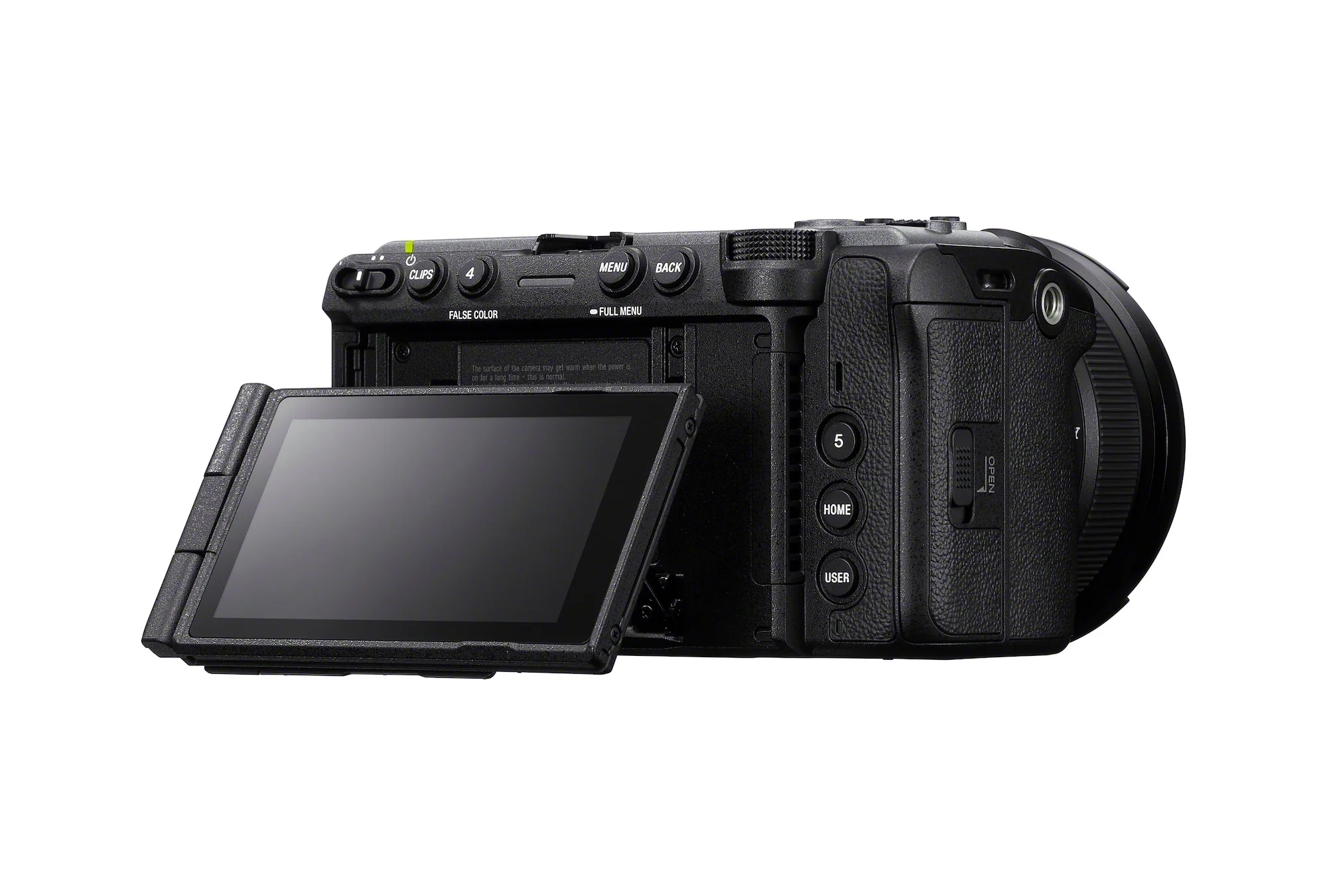
- Sony FX5: $4,898 body-only, $5,500 with XLR handle unit
- Sensor: 16.6MP full-frame fully stacked Exmor RS CMOS
- Recording: 5K open gate (3:2), internal 16-bit X-OCN RAW
- Dynamic range: 15+ stops native, 16+ with Dual Gain
- Storage: dual CFexpress Type A / SDXC (VPG400 required for top RAW modes)
- Missing: photo mode, internal ND, external SSD recording
- Closest competitors by price: Blackmagic PYXIS 6K (~$1,900 less), Panasonic S1 II (~$1,700 less), Canon C50 (within a few hundred dollars)
Resources & Reads
- Sony FX5 Rumored to Get Open Gate Recording
- Sony's FX5 Brings Internal RAW, Open Gate 5K, and Three Base ISOs to the Cinema Line
- The Best Lenses for the Sony FX5
- The Best Memory Cards for the Sony FX5
- The Best Cages and Rigs for the Sony FX5
- Sony FX5 vs. FX3
- Sony FX5 vs. Blackmagic PYXIS 6K
- Sony FX5 vs. Panasonic S1 II
- Sony FX5 vs. Canon C50