Kling 4.0 Leak Points to 2-Minute AI Videos and 10-Keyframe Control
Leaked Kling 4.0 settings point to 120-second generations, 10-keyframe control, and a new Flash model. Here's what's known, and what isn't.

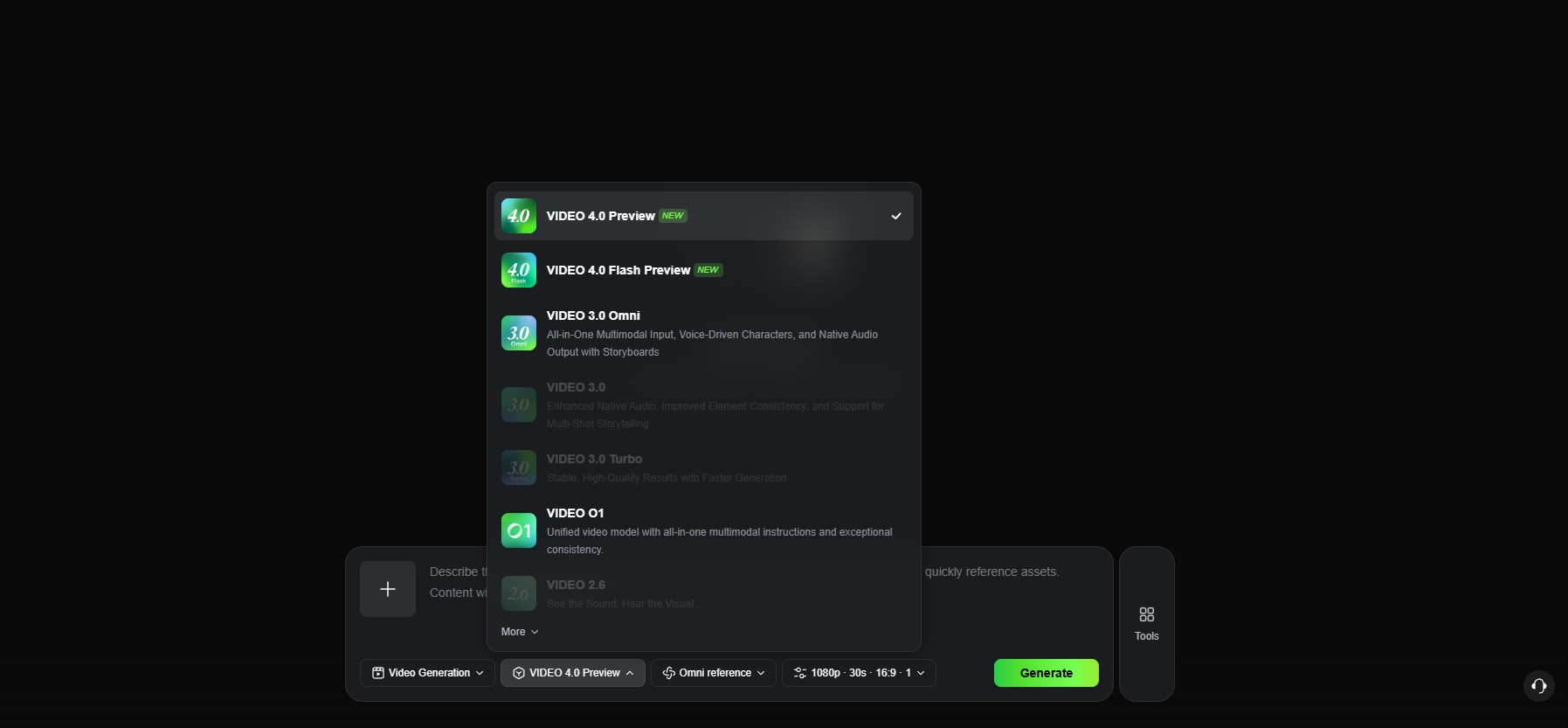
Kling 4.0 appears to be close. Leaked interface screenshots show "VIDEO 4.0 Preview" and "VIDEO 4.0 Flash Preview" labeled as new models inside Kling's model picker, alongside preliminary settings that point to much longer generations and far more control than Kling 3.0.
Kuaishou, the company behind Kling, hasn't announced anything officially. Every detail below comes from leaked settings, and as AI creator Esteban Diba put it when sharing them, "These are preliminary settings and may still change before release."
Where the Leak Came From
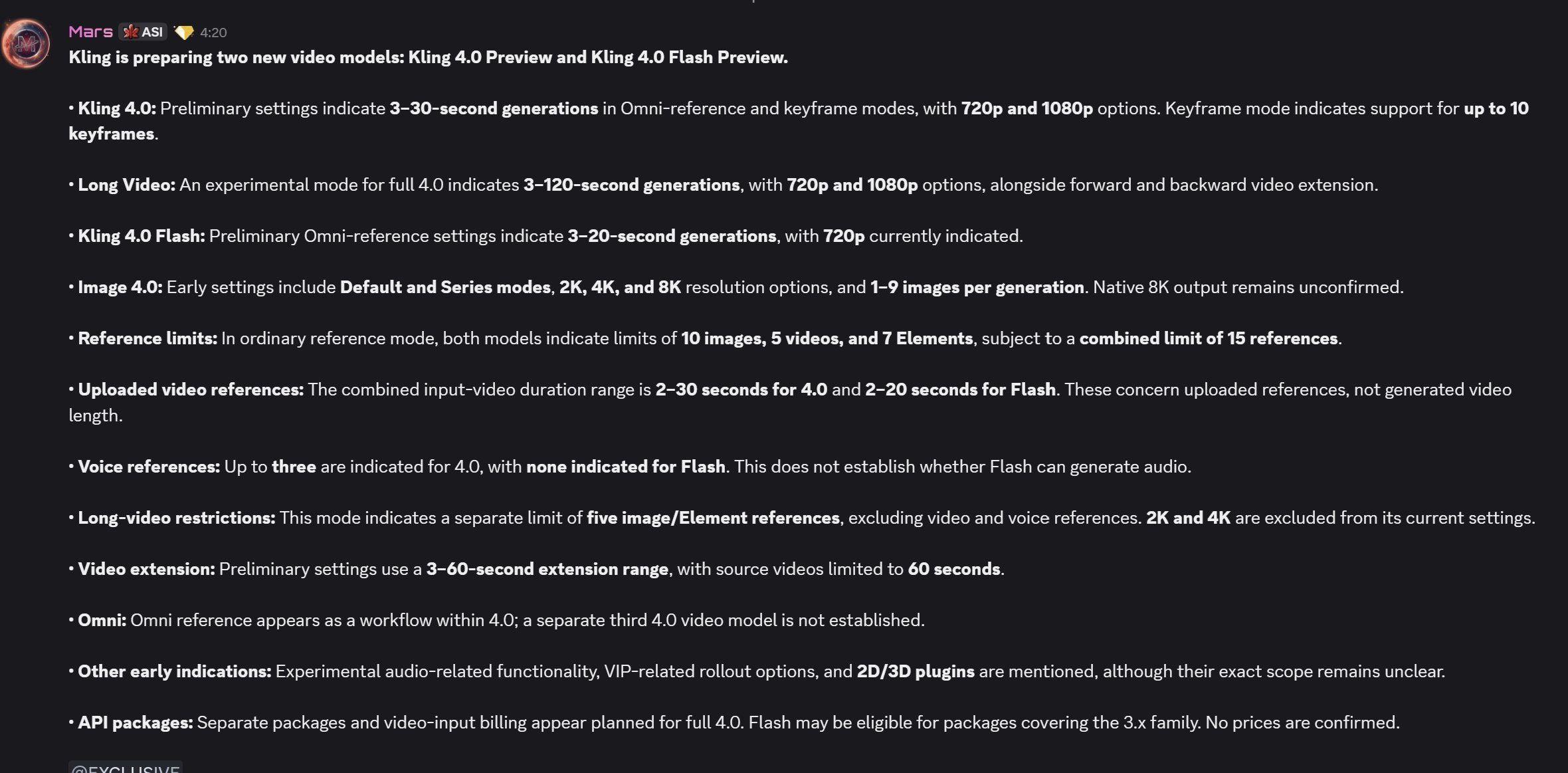
The details surfaced in a breakdown shared in an AI-focused Discord community, then spread widely after Diba posted screenshots on X. The screenshots show Kling's own interface, including the new 4.0 models listed above the current Kling 3.0 Omni and Kling O1 options.
Interface screenshots make this more credible than a typical rumor. But preview settings are exactly the kind of thing that changes before launch, so treat the specifics as a strong signal of direction rather than final specs.
Up to 30 Seconds, or 120 in Long Video Mode
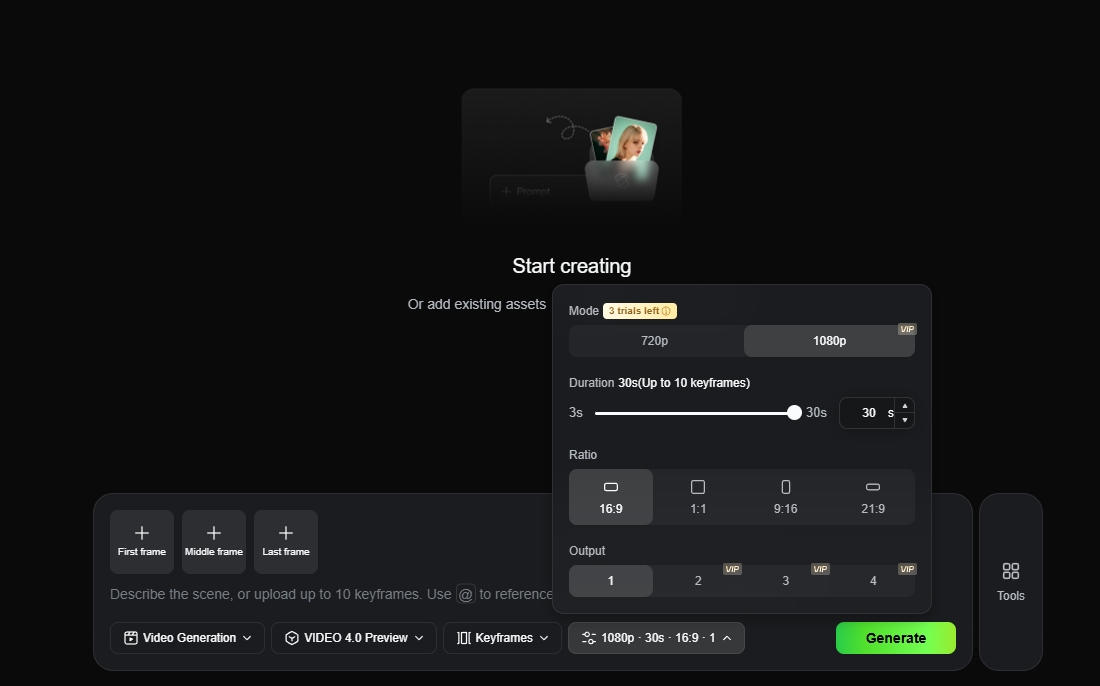
The standard Kling 4.0 model reportedly supports generations from 3 to 30 seconds, at 720p or 1080p.
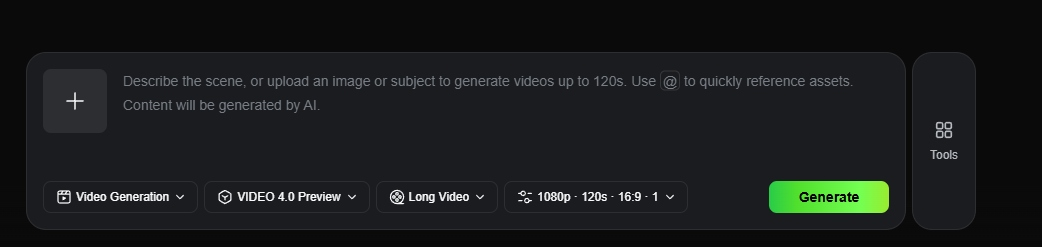
The bigger headline is an experimental Long Video mode. Leaked settings indicate generations of 3 to 120 seconds, also at 720p or 1080p, along with the ability to extend a video both forward and backward.
That's a major jump. Most leading AI video models still top out around 10 to 15 seconds per generation, which forces creators to stitch many short clips together.
Up to 10 Keyframes
For filmmakers, the most interesting detail may be keyframe control. Kling 4.0's keyframe mode reportedly supports up to 10 keyframes in a single generation, with first-, middle-, and last-frame slots visible in the leaked interface.
More keyframes means more control over how a shot unfolds. Instead of describing a whole sequence in a prompt and hoping it lands, you could pin down specific moments and let the model fill in the motion between them.
Much More Reference Control
The leak also points to expanded reference options. In standard reference mode, both 4.0 models reportedly accept up to 10 images, 5 videos, and 7 Elements, with a combined limit of 15 references.
Kling 4.0 also reportedly supports up to three voice references. The Flash model shows no voice references, though that alone doesn't confirm whether Flash can generate audio.
Long Video mode appears more limited, capped at five image or Element references, without video or voice references.
Kling 4.0 Flash
Alongside the full model, a lighter Kling 4.0 Flash appears to be in the works. Leaked settings show 3 to 20 second generations at 720p.
Like other "Flash" models across the industry, it's likely aimed at faster, cheaper generation, though no pricing has leaked for either model.
Image 4.0, Too
The leak also mentions an Image 4.0 model with Default and Series modes, 1 to 9 images per generation, and 2K, 4K, and 8K resolution options. Whether 8K is true native output remains unconfirmed.
There are also early signs of experimental audio features and 2D/3D plugins, though their scope isn't clear yet.
One Detail Worth Watching: Resolution
Kling 3.0 already supports native 4K video output. The leaked Kling 4.0 settings list only 720p and 1080p.
That may simply reflect early preview settings, or it may mean 4K arrives later. Either way, it's worth knowing that the leaked 4.0 specs aren't a straight upgrade across the board.
Competitive Context
Longer generations are quickly becoming the next battleground in AI video. fal's H3 Max Director already offers continuous generation sessions up to 15 minutes, and tools like Google Vids now let users extend scenes while keeping them consistent.
A native 120-second mode with forward and backward extension would put Kling firmly in that race, while 10-keyframe control would give it one of the more director-friendly workflows among major models.
The Signal in the Noise
If these settings hold, Kling 4.0's biggest improvements aren't about image quality. They're about length and control, which have been two of the biggest practical limits on using AI video for real sequences rather than isolated shots.
Keyframes and longer takes both move AI video closer to how filmmakers actually work: planning specific moments and sustaining them over time. Until Kuaishou makes it official, though, the specifics remain a preview, not a promise.
Would longer generations or more keyframe control matter more to how you'd actually use AI video?
The Details
- Status: unannounced; details from leaked interface screenshots and preliminary settings
- Kling 4.0: 3–30 seconds, 720p/1080p, up to 10 keyframes, up to 3 voice references
- Long Video mode (experimental): 3–120 seconds, 720p/1080p, forward and backward extension, up to 5 image/Element references
- Kling 4.0 Flash: 3–20 seconds, 720p
- References (standard mode): up to 10 images, 5 videos, 7 Elements; 15 combined
- Video extension: 3–60 second extension range, source videos up to 60 seconds
- Image 4.0: 2K, 4K, 8K options (native 8K unconfirmed), 1–9 images per generation
- Other signals: experimental audio features, 2D/3D plugins
- Pricing: not leaked
- Note: Kling 3.0 already supports native 4K; leaked 4.0 settings list up to 1080p