What Is a World Model, and Why Is Every AI Video Company Building One?
A world model is AI that simulates how an environment looks and changes. Here's what that means, and why every AI video company is building one.

If you've followed AI video news lately, you've probably noticed a new phrase showing up everywhere: world model. Runway, World Labs, MiniMax, Alibaba, and Black Forest Labs have all released or shown one in just the past few weeks.
Here's what the term actually means, how it differs from the AI video tools you may already use, and why so many companies are racing to build one.
What Is a World Model?
A world model is an AI system that learns how an environment looks and how it changes over time, well enough to predict what happens next.
That last part is the key. A world model doesn't just produce a picture or a clip. It builds an internal sense of a space, its objects, its physics, and its lighting, and then simulates how that space should respond when something changes, like the camera moving, a character acting, or a user giving a command.
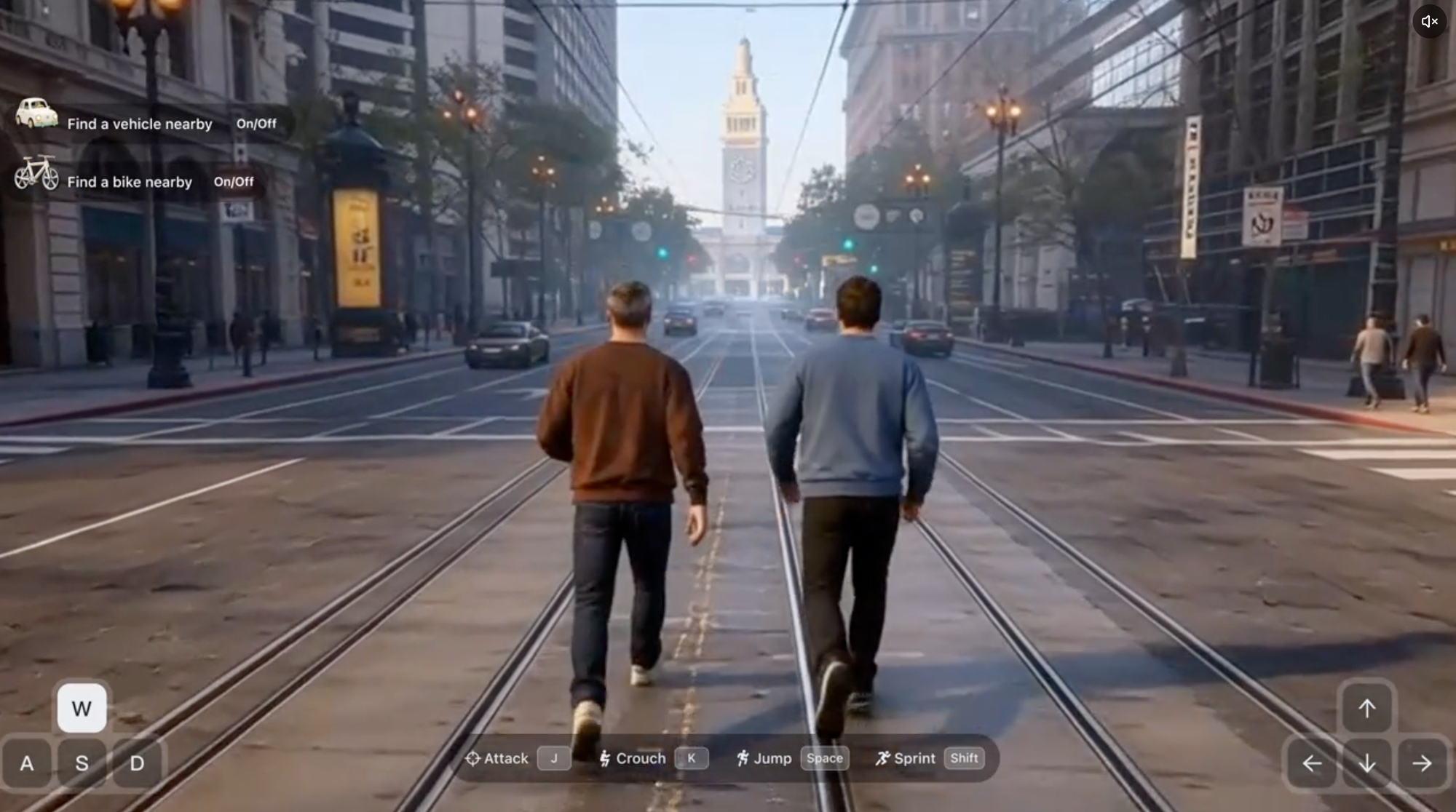
In practice, that often means you can move through a generated scene, interact with it, or steer it in real time, rather than just watching a finished clip play back.
How Is That Different From an AI Video Generator?
A typical AI video generator works like a request and a result. You write a prompt, the model produces a clip of fixed length, and if you want something different, you generate again.
A world model works more like a simulation. It keeps the scene going, holds onto what's already there, and responds to new input as it arrives. There's no preset ending. The world continues as long as the session runs.
The two are closely related. Many world models are built on top of video generation models, because a model trained to predict the next frame of video has already learned a lot about how the world looks and moves. The difference is less about the underlying technology and more about how it's used: a clip you watch versus a world you can act in.
The Main Types of World Models
"World model" covers a few different approaches. Most recent releases fall into one of three groups.
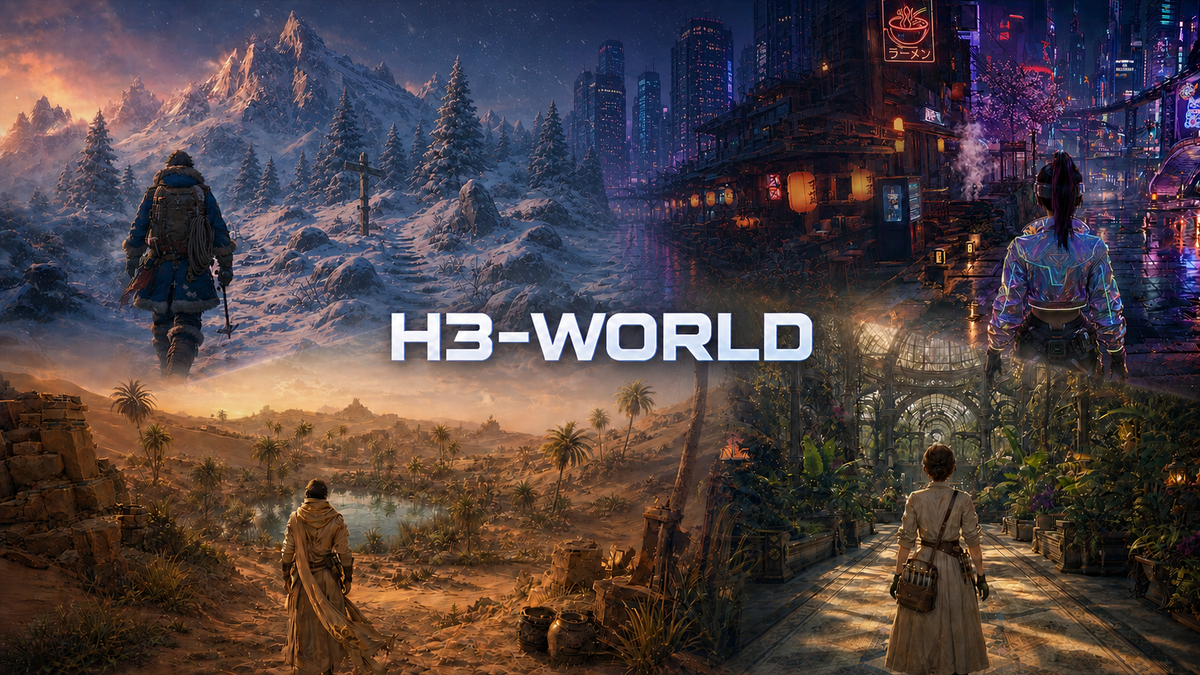
Interactive worlds. These generate a scene you can steer or explore in real time. Runway's GWM Worlds 2 lets users direct characters and camera moves with text actions. Alibaba's Happy Oyster offers a "Directing" mode for steering a scene and a "Wandering" mode for free exploration. MiniMax's H3-World adapted an existing video model so it responds to keyboard controls, like a video game.
Spatial and 3D models. These focus on understanding a space in three dimensions. World Labs' Atlas can reconstruct a real scene from a handful of photos or camera angles, then generate new viewpoints of it, including camera moves that were never actually filmed.
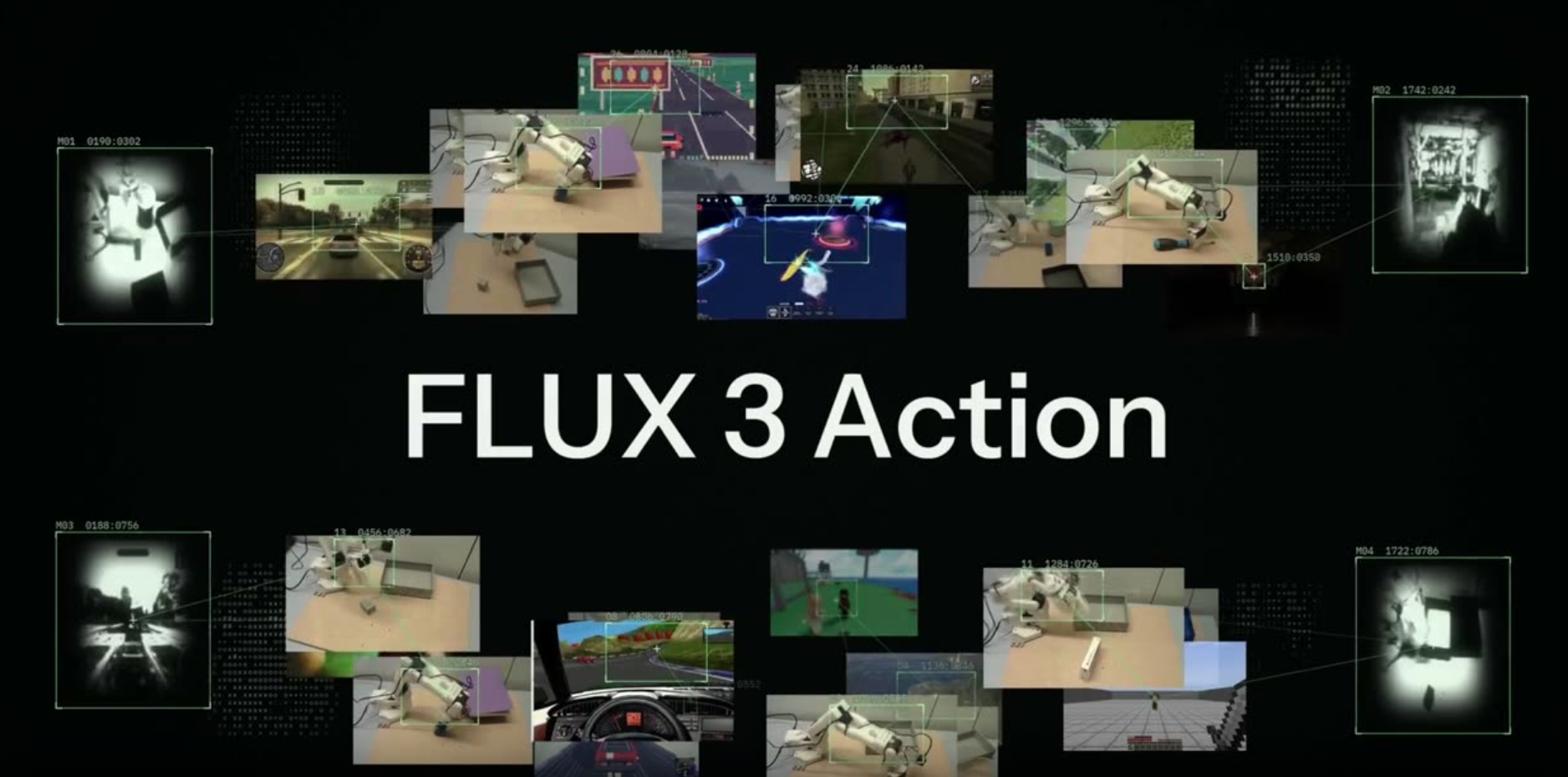
Action models. These predict not just how a scene will look, but what an agent, such as a robot, should do in it. Black Forest Labs' FLUX 3 Action predicts future video frames and robot movements together, and NVIDIA's Cosmos models are built for this kind of physical AI.
Why Every Company Is Building One
A few forces are pushing the industry in this direction at once.
Video models turned out to be a strong foundation. Black Forest Labs found that FLUX 3 Action barely worked without its video-heavy pretraining. Learning to predict the next frame of video appears to teach a model a surprising amount about how physical space works.
The markets are bigger than video. A model that understands how environments behave is valuable for robotics, games, simulation, and training AI agents, not just for making clips. That's a much larger commercial opportunity, and it's why labs known for creative tools are expanding into robotics.
Generation got fast enough. Real-time interaction needs video to be generated at least as fast as it plays. Recent speedups, like NVIDIA's Sol-H3 generating MiniMax H3 video faster than playback, and fal's continuous H3 Max Director, make interactive worlds practical in a way they weren't a year ago.
What World Models Mean for Filmmakers
The most interesting uses for filmmakers are still early, but a few are already visible.
Directing instead of prompting. Runway explicitly lists "filmmaking, directing" as a use for GWM Worlds 2's ahead-of-time mode, where you script a scene's actions, dialogue, and camera moves before generating it.
Previsualization. Being able to build a space and move a camera through it freely is a natural fit for blocking and planning shots.
Camera control after the fact. World Labs' Atlas can reframe footage captured on a few ordinary cameras into new angles, a capability that normally takes a multi-camera volumetric stage.
New kinds of storytelling. Interactive, never-ending, or audience-steered stories are becoming technically possible, from continuous AI livestreams to playable narratives.
The Current Limitations
World models are impressive, but most are still research previews. Common limitations include:
- Visual details drifting over longer sessions or during fast camera moves
- Relatively low resolution, often 720p or below
- Limited session lengths
- Limited or request-only access, with little public pricing
- Benchmark claims that are mostly self-reported
For most working filmmakers today, they're more useful for experimentation and planning than final delivery.
Competitive Context
The companies building world models come from very different starting points. Runway and Alibaba are extending their video platforms. World Labs, founded by AI researcher Fei-Fei Li, focuses on spatial intelligence and 3D understanding. Google's Genie and NVIDIA's Cosmos come from large research labs with robotics and simulation ambitions. Black Forest Labs is extending its FLUX models into robotics.
That range of backgrounds is why the term can feel slippery. Each company emphasizes a different part of the same idea.
The Signal in the Noise
The shift to world models suggests AI video companies no longer see clip generation as the end goal. They see it as a foundation for something bigger: models that understand and simulate environments well enough to explore, direct, and act inside them.
For filmmakers, that could eventually mean more control, not less. A world you can direct is a lot closer to how filmmaking actually works than a prompt you hope comes out right.
Which would be more useful to your work: a world model for planning and previs, or one that lets you direct the final shot?
The Details
- World model: an AI system that learns how an environment looks and changes over time, and predicts what happens next
- Key difference from video generators: ongoing, interactive simulation versus a fixed clip from a prompt
- Interactive world examples: Runway GWM Worlds 2, Alibaba Happy Oyster, MiniMax H3-World, Google Genie
- Spatial/3D example: World Labs Atlas
- Action/robotics examples: Black Forest Labs FLUX 3 Action, NVIDIA Cosmos
- Enablers: real-time generation speedups (Sol-H3) and continuous generation (H3 Max Director)
- Current limits: drift, lower resolution, short sessions, limited access, self-reported benchmarks
Resources & Reads
- BRC: Runway's Next World Model Can Be Directed Like a Film, or Played Like a Game
- BRC: Meet Atlas: World Labs' New Model Beats MiniMax H3 and Reframes Real Footage
- BRC: Happy Oyster Joins Runway and MiniMax in the Race to Build Interactive Worlds
- BRC: MiniMax H3 Can Now Be Steered Like a Game, Using Barely Any New Training
- BRC: Why Black Forest Labs Is Taking Its Video Model Into Robotics
- BRC: NVIDIA's Sol-H3 Generates Video Faster Than You Can Watch It