YouTube's Biggest Creator Updates, From Voice Protection to Edit Testing
Everything YouTube announced at Made on YouTube 2026 for video creators: voice likeness detection, edit A/B testing, swappable sponsor segments, and more.

YouTube held its annual Made on YouTube event today and announced one of its largest batches of creator tools in years. The updates span AI-assisted editing, likeness protection that now covers your voice, A/B testing for entire edits, new sponsorship tools, and a long list of ways for fans to find, fund, and follow creators.
Some of it is live now. A lot of it rolls out through 2027. Here's everything that matters for people who actually make video, what each tool does, and when you'll see it.
The Scale Behind the Announcements
YouTube CEO Neal Mohan opened the company's recap with a number that frames everything else: more than 20 million videos are uploaded to YouTube every day. His stated goal for the event was to make sure YouTube's technology "stays one step ahead of how the world creates, discovers, and connects."
The announcements fall into five buckets: creation and editing, protection, monetization, fan engagement, and discovery. For filmmakers and video creators, the first three carry the most weight.
Likeness Detection Now Covers Your Voice
This is the most significant protection update of the event. YouTube's likeness detection tool, which already scans for unauthorized AI-generated uses of a creator's face, will start using speaking voice as an additional signal alongside facial detection.
YouTube says combining the two should improve overall match accuracy. That matters because AI voice cloning is now cheap, fast, and increasingly convincing. Google itself released voice models today that can replicate a voice from a 30-second sample, gated behind a consent check.
Likeness detection is also coming to mobile. Creators will be able to enroll, get alerts when a match is found, and take action directly from their phone rather than waiting until they're back at a desk.
For filmmakers who appear on camera, host a channel, or build a personal brand around their voice, this is the update worth paying attention to. Detection won't stop every misuse, but it gives creators a real way to find and remove it at scale.
Conversational Editing Comes to Shorts
YouTube introduced a conversational editing tool across Shorts and the YouTube Create app. You start from a suggested prompt or your own to get a first draft, then keep chatting to refine it.
The tool offers personalized suggestions, such as automatically trimming pauses or reordering clips for better pacing. You can also drop into manual editing at any point, so the AI never locks you out of your own cut.
This is aimed squarely at short-form creators who need to move quickly. It's not replacing a real NLE for longer work, but it fits a broader pattern across the industry: editing tools that take direction in plain language instead of requiring every cut by hand.
YouTube Studio Becomes a Creative Partner
YouTube is repositioning Studio from an analytics dashboard into what it calls an end-to-end creative partner, covering production, packaging, and channel strategy.
Studio will offer personalized feedback on early video drafts and generate thumbnails designed to match a channel's existing visual style. A research tool helps surface outlier ideas and patterns worth building a video around, and a new Insights feature aims to turn raw analytics into actual strategy.
Ask Studio, YouTube's AI assistant inside Studio, is coming to mobile globally this year. A back-catalog optimization feature, which identifies older videos that could find new audiences with updated thumbnails, arrives globally in early 2027.
A/B Testing Your Actual Edits
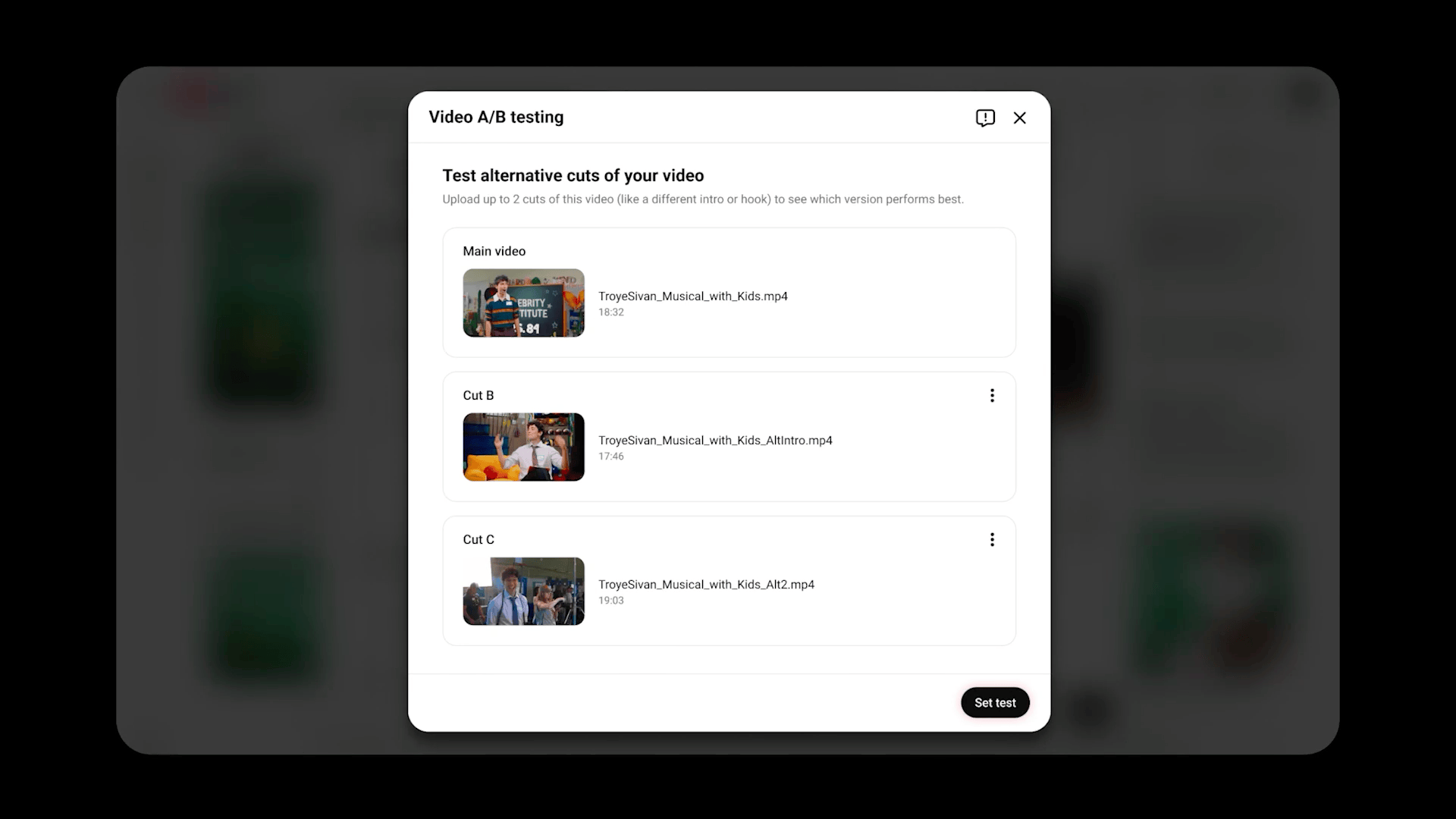
This is the most genuinely new idea from the event. YouTube already lets creators test thumbnails. Now it's extending testing to the video itself.
Video A/B testing lets creators upload up to three different cuts of the same video and see which one holds audience attention best. Instead of guessing whether a tighter opening or a different structure performs better, you can test it against real viewers.
For editors, that changes the feedback loop. Pacing decisions that used to live entirely in instinct can now be measured. The catch is timing: this feature doesn't roll out globally until 2027.
Alongside it, dynamic thumbnails let creators upload up to three thumbnails per video, with YouTube matching each one to the viewers most likely to respond to it.
Sponsorships Get More Flexible
Brand deals got several meaningful upgrades, and one of them changes the math on your back catalog.
Dynamic brand segments, currently in a limited pilot, let creators add sponsor segments to existing videos in bulk, up to 20 at once. Segments can be tailored by region and swapped out when a deal ends. That turns older videos into ongoing sponsorship inventory rather than one-and-done placements.
YouTube Creator Partnerships, which helps brands and agencies discover creators, is now live in 20 countries and will integrate with 60 agency partners by the end of the year.
Brand partner access is now easier to share. Creators can give partners a code that lets them amplify a creator's top-performing content.
Ask Studio will also help build tailored responses to brand briefs, customized pitches, and media kits. That's live in select markets now, with global availability in early 2027.
Shopping and Affiliate Expansion
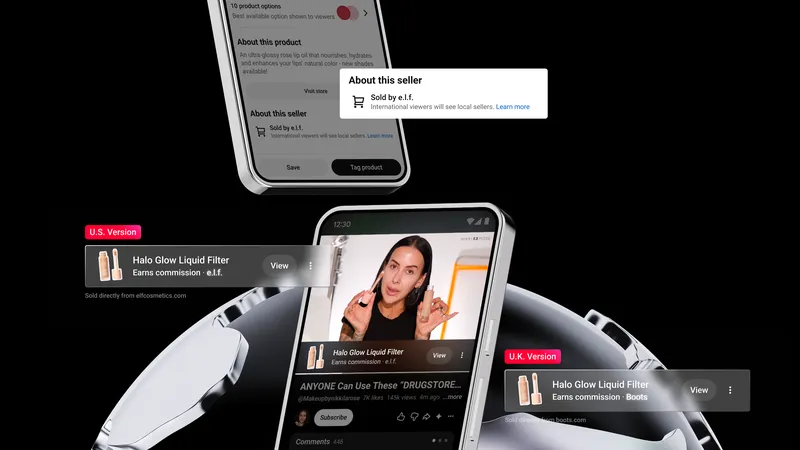
YouTube's affiliate program will reach 35 countries by the end of 2026. The company is also partnering with Amazon to let creators tag products in the US, with more countries coming this fall.
Product tags will now automatically localize, showing viewers offers based on where they're watching from. For creators with international audiences, that means earning commissions from viewers who previously saw links they couldn't use.
A new Affiliate Campaigns feature lets merchants send creators time-limited invitations to tag their products, often with exclusive commission rates or bonuses. Creators stay in control of the content itself.
New Ways for Fans to Support Creators
Two fan-funding tools are rolling out in phases over the next year.
Members-only Communities create a private space inside a creator's Community tab, reserved for paying channel members. It's a way to give your most committed supporters something exclusive without leaving YouTube.
Hype with Jewels lets fans spend Jewels to boost a creator's position on YouTube's Hype leaderboard, and creators earn Rubies in return. It turns fan enthusiasm into both visibility and revenue.
Live Streaming Updates
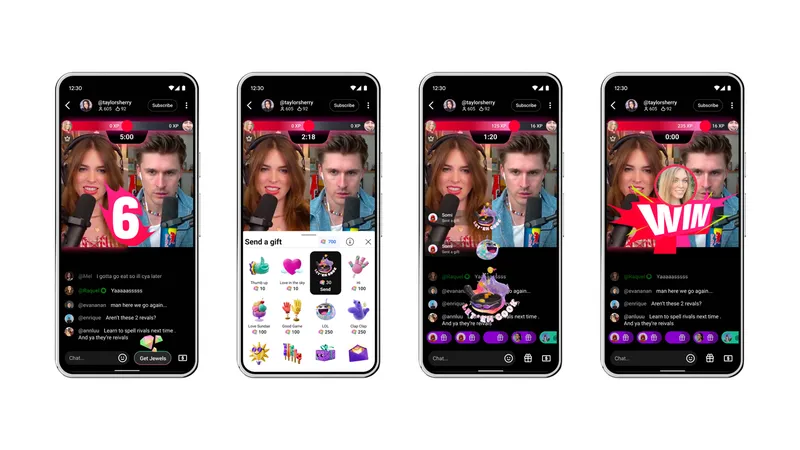
YouTube announced three notable Live features.
Auto dubbing for Live will translate a livestream's audio in real time so creators can reach viewers in their preferred language. It launches with limited availability early next year, starting with English and Spanish.
Watch With is expanding to long-form videos and past uploads, letting creators pull trending content into their own stream to react alongside their audience. It arrives globally by the end of the year.
Live showdowns let creators merge their streams for head-to-head competitions, with fan funding turning into interactive gameplay. That launches globally in 2027.
Shorts Series and Posts Everywhere
Shorts can now be organized into seasons and episodes, with custom thumbnails and sequential viewing. YouTube is clearly aiming this at serialized short-form storytelling, including the fast-growing microdrama format.
For filmmakers experimenting with episodic short-form work, this is a real structural change. A series can now live on YouTube as a series, rather than a scattered set of individual Shorts.
Posts are also spreading across the platform. Image posts and carousels now appear in the Shorts feed, and posts are coming to channel pages on TV in the coming months, so viewers can browse carousels, like, and comment from the living room.
What Viewers Are Getting
The viewer-facing updates matter to creators because they change how people find videos.
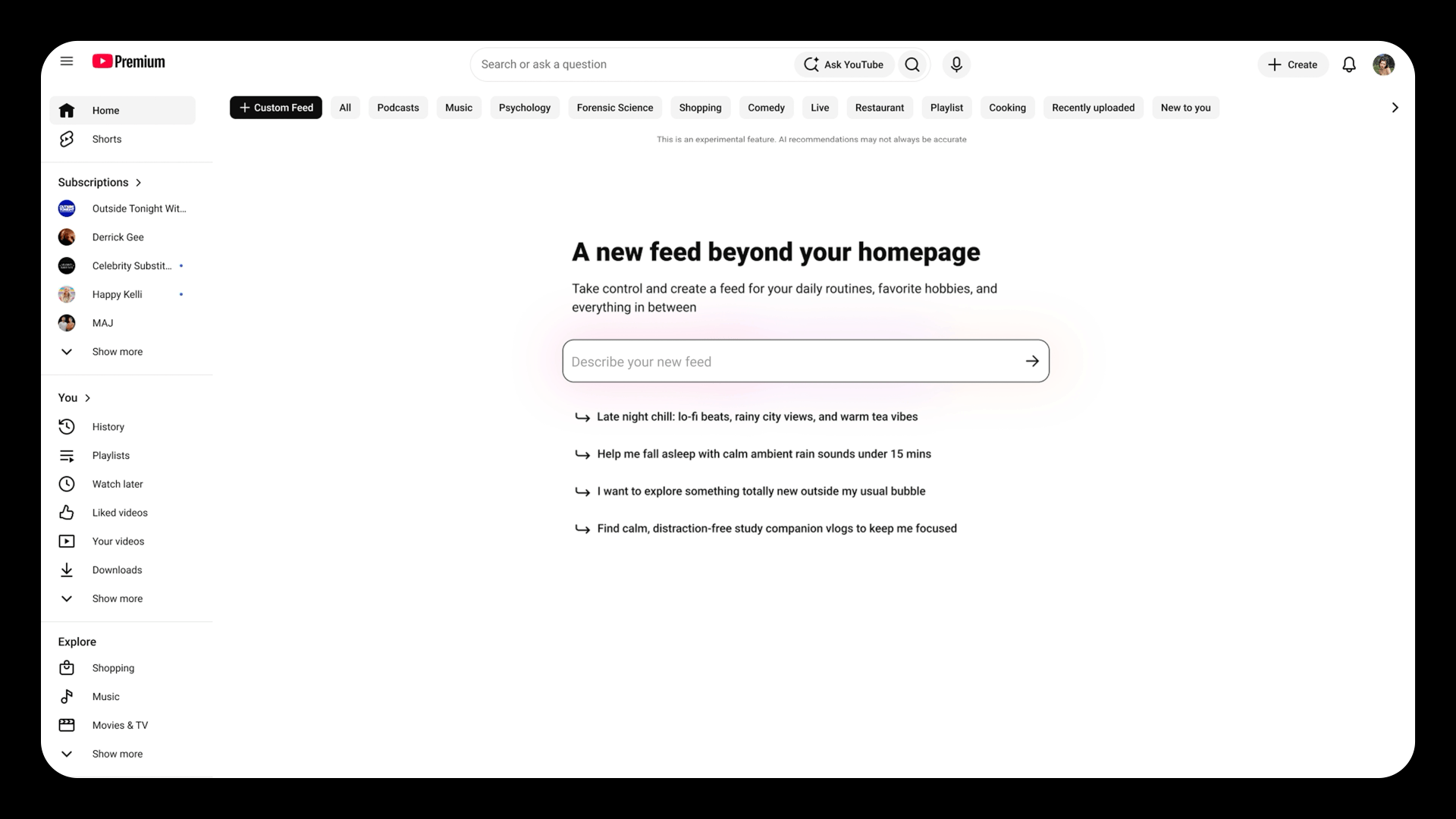
Custom Feeds will let viewers build their own homepage tabs using plain-language prompts, like "evening wind down with long documentaries." Those feeds update automatically with fresh recommendations.
Ask YouTube is expanding into search, letting viewers ask complex questions and follow up. It also adds visual understanding, identifying products, techniques, and equations shown on screen even without a transcript, and shopping features for checking prices and community sentiment without leaving a video.
Ask Music and a weekly podcast lineup aim to surface niche artists and shows, which could help smaller audio and podcast creators get discovered.
Smaller additions round it out: GIFs in comments, commenting from a TV remote, group messaging, and personalized comment moderation that filters based on a creator's own preferences.
Competitive Context
Nearly every major platform is racing to build AI into the creation process, and YouTube's approach stands out for how much of it lives inside the tools creators already use. Studio, Shorts, and the Create app are becoming the places where editing, packaging, and strategy happen, rather than stops after the real work is done elsewhere.
The monetization push also lands at a notable moment. Streaming services, including Netflix, have been actively signing YouTube creators, and YouTube has reportedly offered to fund creators' projects to keep them exclusive. Tools like dynamic brand segments, affiliate expansion, and new fan-funding options read as YouTube making the case that the most money for a creator is still on YouTube.
The Signal in the Noise
Two threads run through almost everything announced today. The first is measurement: testing edits, matching thumbnails to viewers, and turning analytics into strategy. YouTube is pushing creators to make decisions with data at every stage, not just after publishing.
The second is protection. As AI makes it easier to generate a convincing copy of a creator's face and voice, platforms are under pressure to give creators real tools to fight back. Adding voice to likeness detection is a direct response to how quickly voice cloning has improved.
For filmmakers, the most practical near-term wins are voice protection and dynamic brand segments. The most interesting long-term shift is video A/B testing, which could change how editors think about pacing once it arrives in 2027.
Which of these would actually change how you make or publish video: testing multiple cuts, monetizing your back catalog with swappable sponsors, or protecting your voice from AI copies?
The Details
- Voice protection: Likeness detection adds speaking voice and comes to mobile
- Conversational editing: Chat-based editing in Shorts and YouTube Create
- Video A/B testing: Test up to three cuts of a video (2027)
- Dynamic brand segments: Swap sponsors into up to 20 old videos at once (pilot)
- Affiliate expansion: 35 countries by end of 2026, plus Amazon tagging
- Fan funding: Members-only Communities and Hype with Jewels (rolling out over the next year)
- Live auto dubbing: English and Spanish, early 2027
- Shorts Series: Seasons and episodes for serialized Shorts