NANLUX Just Split Its Lights Into Two Different Light Engines — Here's Why
NANLUX built two separate light engines, one for maximum white output, one for color flexibility, instead of one that tries to do both. Here's the actual engineering logic behind the split.

NANLUX published a technical breakdown this week explaining its Nebula Light Engine system, and the short version is this: the company decided one light engine design can't do everything well, so it built two, each purpose-built for a different job on set.
The Nebula system is now integrated across the company's fixture range, from the compact Evoke 5C up to the high-output Evoke 5000B. Understanding the split is useful for anyone deciding which NANLUX fixture actually fits their setup, since the two engines aren't interchangeable, they're built for genuinely different priorities.
What a Light Engine Actually Is
A light engine is the specific arrangement of LED chips inside a fixture that determines its spectral output, what colors are present, how strong they are, and how they combine into white or colored light.
That spectrum determines how skin tones render, how fabrics reflect, and how colors hold up across different lighting conditions. A poorly designed light engine causes visible skin tone shifts or unnatural saturation; a well-designed one delivers consistent, predictable results across a range of situations.
Nebula B4: Built for Maximum White Output
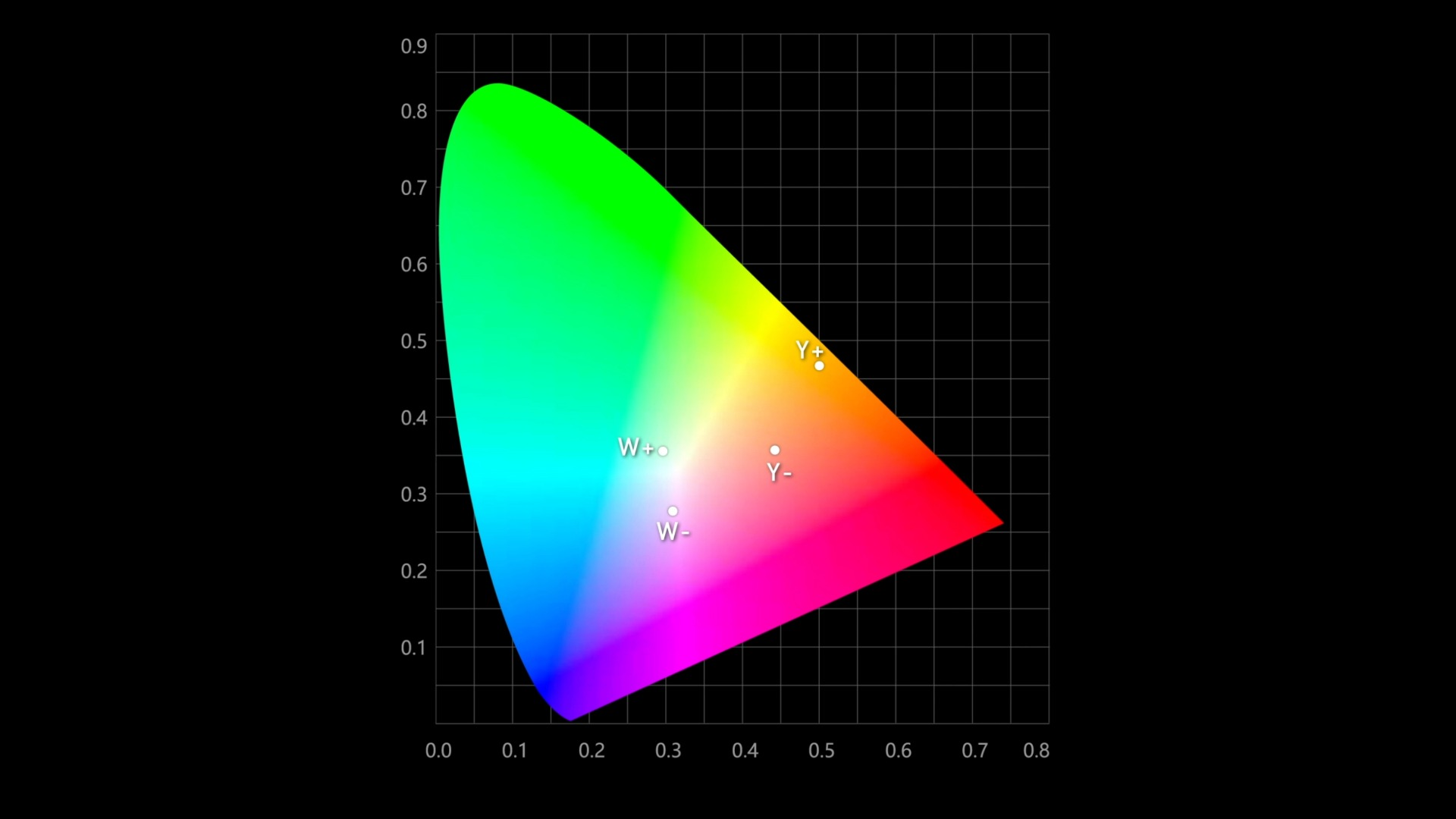
The Nebula B4 is a bi-color engine built from four white LEDs, Cool White+, Cool White−, Warm White+, and Warm White−, rather than mixing colored LEDs to create white light. That distinction matters more than it sounds. Using only white LEDs achieves higher luminous efficiency than color-mixing systems, meaning more electricity converts to usable light and less gets wasted as heat.
Less wasted heat means a smaller, lighter cooling system, a more compact fixture overall, and more importantly, stable output during long stretches of high-power operation. That's specifically why NANLUX puts the B4 into its highest-output fixtures: the Evoke 2400B, Evoke 5000B, and Matrix 2500B, all fixtures built for large-scale matrix lighting setups where sustained brightness matters more than color flexibility.
The B4 covers the Planckian locus from 2700K to 6500K, with green/magenta adjustment across that full range, correcting a real limitation in traditional bi-color systems, which often can't fix green/magenta shifts properly at all.
Nebula C8: Built for Color Flexibility
The Nebula C8 is described as the industry's first eight-color light engine, combining Deep Red, Red, Amber, Lime, Green, Cyan, Blue, and Indigo LEDs. Adding Deep Red specifically extends the color temperature range down to 1,000K, giving an unprecedented 1,000K to 20,000K span, warm candlelight tones on one end, cool daylight and beyond on the other.
The eight-color mix also fills gaps traditional color engines tend to miss, particularly in deep red and indigo, colors that are notoriously hard to render accurately. NANLUX claims roughly 82% coverage of the CIE 1931 color space, about 6% above Rec. 2020 in the visible gamut, and around 94% coverage within Rec. 2020 specifically.
One detail worth flagging directly: the C8 removes the ultraviolet wavelength from its indigo LED. That's not just a safety footnote, it prevents UV-triggered fluorescence on subjects and objects, which matters if you're shooting anything with fluorescent materials or fabrics on set, where unfiltered UV can cause visible, hard-to-predict glow. The C8 goes into fixtures built for color flexibility: the Evoke 5C, Evoke 150C, Evoke 600C, and Matrix 2500C.
Why the Split Makes Sense
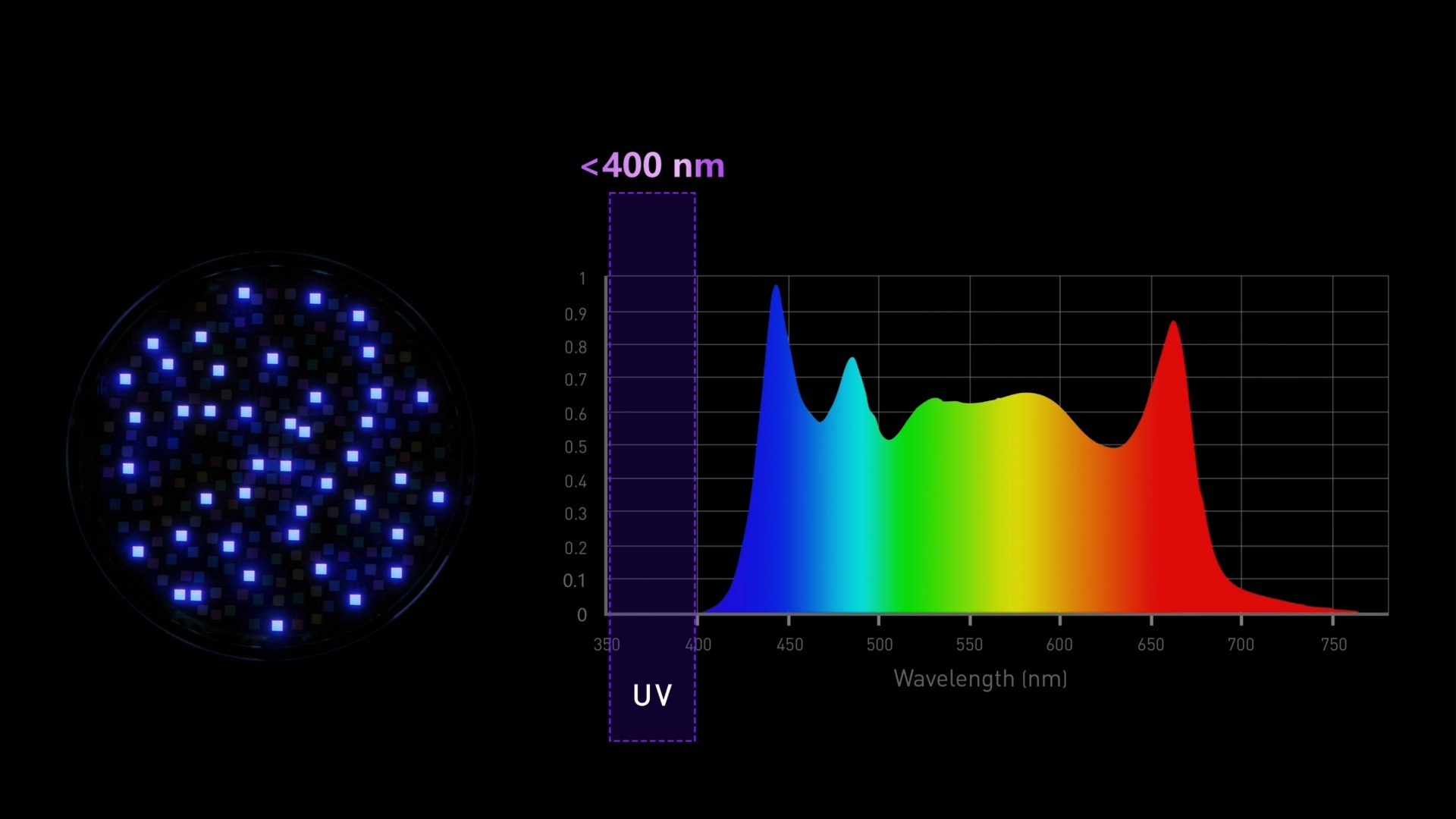
The engineering logic here is straightforward once you see it laid out: maximizing raw white-light output and maximizing color flexibility are genuinely competing design priorities. A white-only engine can chase efficiency and heat management harder because it doesn't need to also juggle eight separate LED colors.
A color-flexible engine has to accept some efficiency tradeoff in exchange for that range and gamut. Trying to build one engine that does both well means compromising on both fronts instead of excelling at either.
Competitive Context
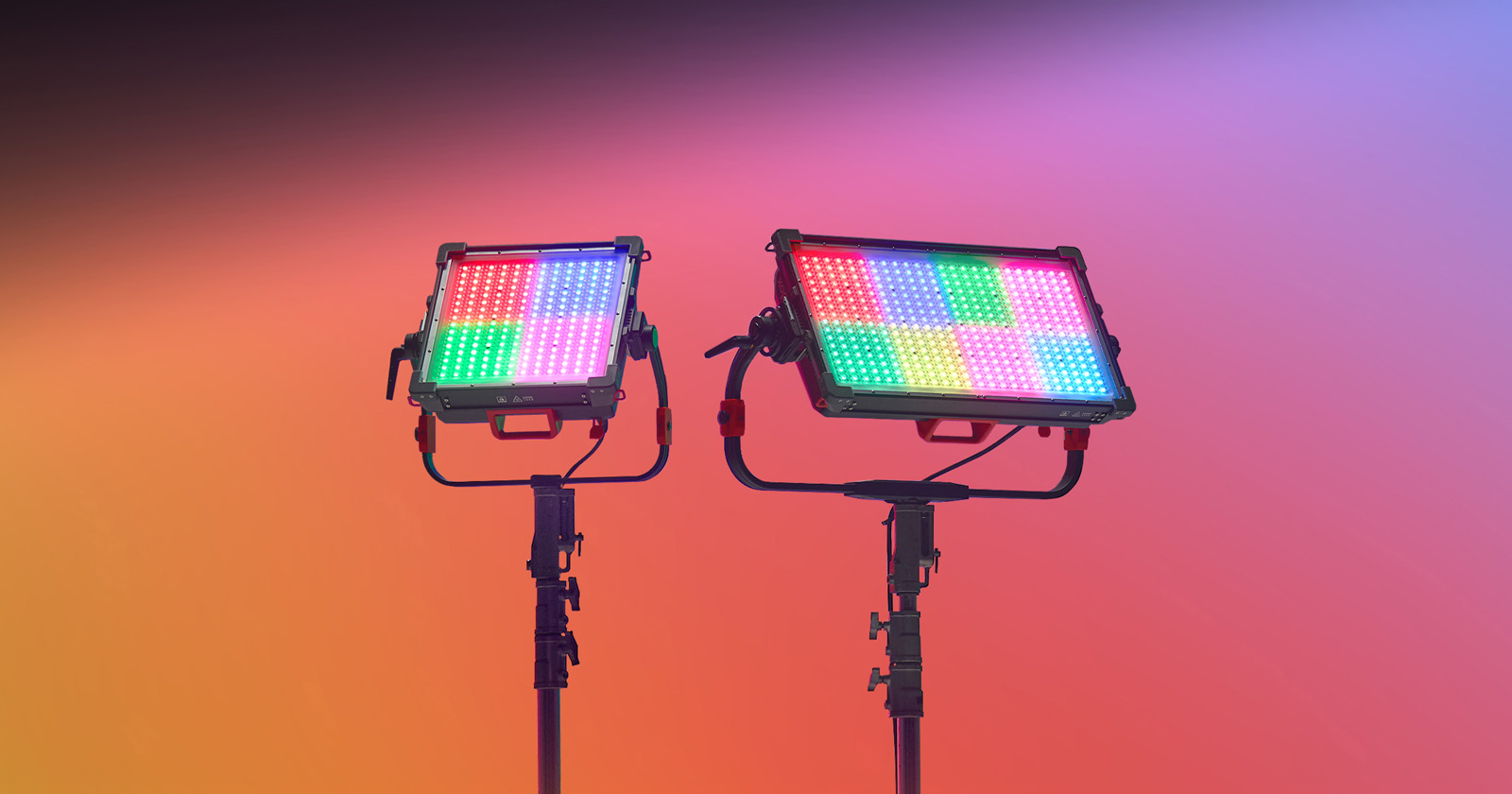
Other lighting manufacturers, Aputure, Nanlite (a related NANLUX brand), and Godox among them, have generally moved toward broader multi-color LED arrays for flexibility, but a formalized two-engine system with this level of published spectral detail is a more transparent approach than most manufacturers offer.
Whether that transparency reflects genuinely superior engineering or just better marketing documentation is worth judging against real-world footage rather than a spec sheet, but the willingness to publish the actual chromaticity and gamut data is a point in NANLUX's favor regardless.
The Signal in the Noise
For anyone buying into the NANLUX ecosystem, the practical takeaway is simple: match the engine to the job, not just the fixture name. If you need raw output for a large matrix setup or need to run hard on a domestic power circuit without instability, the B4-equipped fixtures are the right call.
If you need genuine color range, deep color effects, accurate skin tones across a wide temperature range, or you're shooting around fluorescent materials where UV matters, the C8-equipped fixtures are built for that job specifically. Buying a B4 fixture expecting C8-level color flexibility, or vice versa, misunderstands what each engine is actually optimized to do.
Specs & Pricing
- Nebula B4 fixtures: Evoke 2400B, Evoke 5000B, Matrix 2500B
- Nebula B4 range: 2700K–6500K with green/magenta adjustment
- Nebula C8 fixtures: Evoke 5C, Evoke 150C, Evoke 600C, Matrix 2500C
- Nebula C8 range: 1,000K–20,000K with green/magenta adjustment
- Nebula C8 color coverage: ~82% CIE 1931, ~94% Rec. 2020
- Pricing: varies by fixture; exact pricing available on NANLUX's website or B&H