NVIDIA and Adobe Are Among 40+ Companies Forming an Open AI Security Alliance — Here's Why It Matters
NVIDIA and 40+ companies including Adobe, Microsoft, Hugging Face, and SpacexAI just formed the Open Secure AI Alliance — an open-source AI security coalition. Here's what it is and why it matters for anyone building with AI tools.

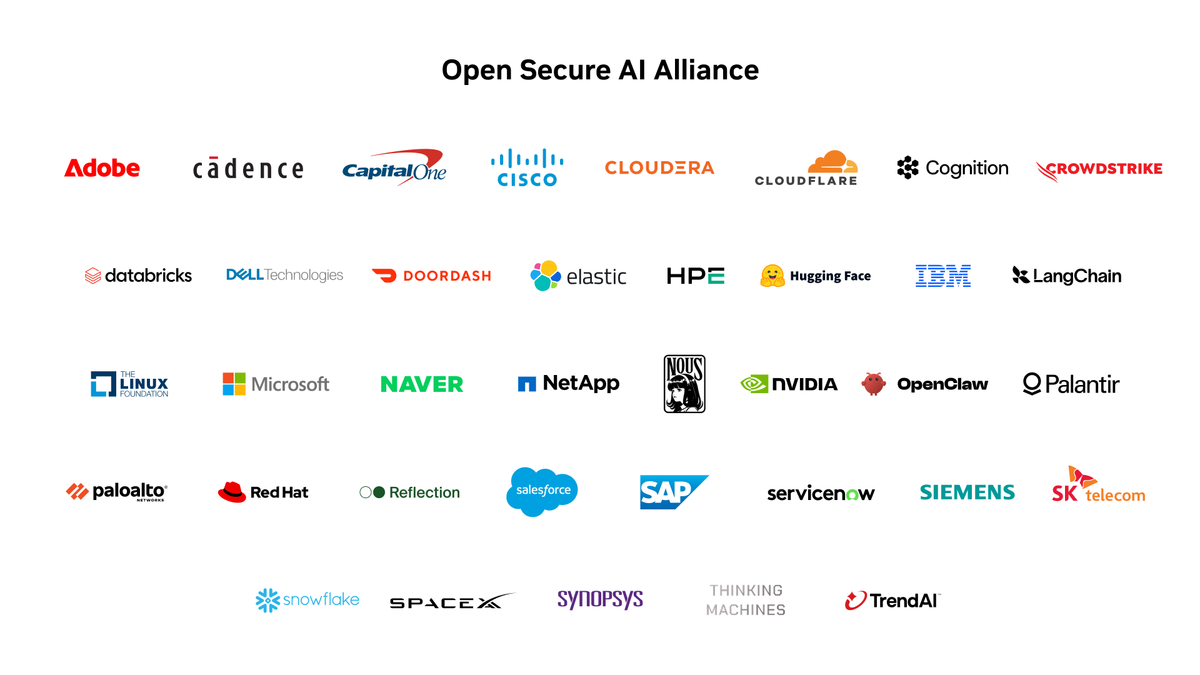
NVIDIA today announced the Open Secure AI Alliance — a coalition of more than 40 industry organizations committed to building and sharing open tools, models, and research to defend AI systems against cybersecurity threats. Adobe confirmed its membership in the same announcement.
The founding member list reads like a who's who of the companies whose tools filmmakers, AI creators, and content professionals use daily: Adobe, Cloudflare, Hugging Face, IBM, Microsoft, LangChain, Salesforce, SpaceX's AI division (SpacexAI), Snowflake, Red Hat, Databricks, CrowdStrike, and Cognition are all inaugural partners alongside NVIDIA.
What the alliance actually is
The Open Secure AI Alliance is built around a specific thesis: that AI security works better when defensive tools are open and shared rather than locked inside closed proprietary systems. NVIDIA's framing draws a direct parallel to open source software — just as Linux and open source created a shared foundation that anyone could inspect, adapt, and improve, the Alliance is trying to do the same for AI security tools.
The practical impetus came from a real incident. Hugging Face, one of the founding members, experienced a security breach in July 2026. When the company's security team tried to use closed AI tools to analyze the intrusion, those tools — unable to distinguish attackers from defenders — blocked essential forensic analysis. Hugging Face ended up running an open-weight model on its own infrastructure to analyze more than 17,000 actions and contain the breach. The lesson, per NVIDIA: defenders need AI tools they can inspect, adapt, and run on their own infrastructure, especially when speed matters most.
What members are contributing
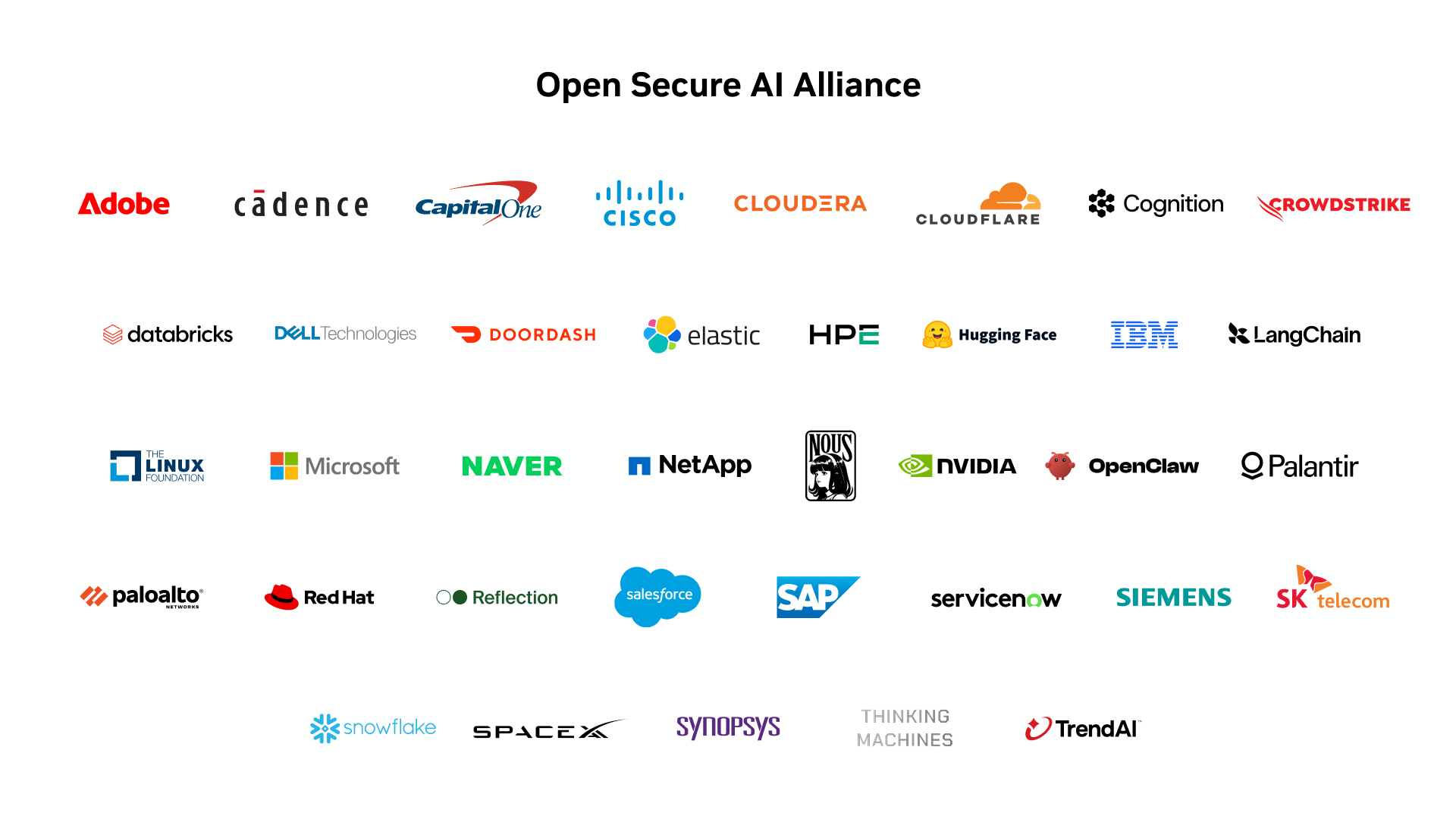
Several founding members are making concrete technical contributions alongside the announcement:
NVIDIA is contributing the NOOA (NVIDIA Labs Object-Oriented Agent) research framework — a new open source project designed to make AI agent behavior easier to test, trace, audit, and govern. Available now on GitHub.
Hugging Face is contributing Safetensors — a safer format for storing AI model weights that provides transparency and guarantees of no remote code execution — to the PyTorch Foundation.
Microsoft is contributing MDASH, a multi-model agentic scanning system that orchestrates specialized AI agents to discover and prove exploitable security vulnerabilities.
IBM and Red Hat's Lightwell extends security across the open source supply chain with digitally signed patches.
HPE contributes to SPIFFE/SPIRE, a zero-trust identity framework that can verify AI agents and services cryptographically.
The most notable contribution for anyone following the AI tools landscape: SpacexAI has open-sourced the Grok Build coding agent and announced plans to open-source the weights of the Grok model family to support the developer and research community. That's a meaningful commitment from a company whose AI models have been commercially competitive.
Why this is relevant to AI creators and filmmakers
At first glance, AI security infrastructure sounds distant from the work of filmmakers and content creators. It isn't.
Every AI tool used in creative production — Runway, Adobe's suite, Hugging Face's model hosting, the open-source tools like Voicebox and ScriptBreak that BRC has covered — runs on infrastructure that depends on AI security. When Hugging Face gets breached, the models and tools hosted there are at risk. When AI agents operating in production pipelines have unclear security boundaries, client work and sensitive creative assets are potentially exposed.
The Higgsfield TOS controversy from earlier this week — which we covered in detail — is a reminder that the data practices and security posture of AI tools matter practically for anyone using them for professional or commercial work. The Open Secure AI Alliance is addressing the layer underneath that: the actual security of the AI systems and agents themselves.
For AI filmmakers specifically, the open-source commitment matters in a more direct way. Open security tools mean that the defensive infrastructure protecting AI creative pipelines is inspectable, adaptable, and not dependent on any single vendor's continued goodwill or platform decisions. That's the same principle that makes Voicebox, OpenCut, and Wan 2.7's Apache 2.0 license valuable — control over what you're building on.
The policy angle
NVIDIA's announcement includes a direct call to policymakers: treat open AI models and security tooling as defensive assets, not liabilities. The concern is that blanket restrictions on open AI systems — potentially motivated by legitimate misuse worries — would concentrate security capabilities inside a small number of closed providers, creating exactly the single points of failure the Alliance is trying to prevent.
That argument will matter as AI regulation develops in the US and EU over the next 12-18 months, and it's worth understanding clearly rather than treating as abstract policy debate.