NVIDIA's Synthetic Video Detector Is the Media Authentication Tool the Industry Has Been Waiting For
NVIDIA unveiled Synthetic Video Detector at SIGGRAPH 2026 — 92% accuracy, 22 milliseconds, frame-by-frame analysis using frequency-domain pattern detection. Here's how it works and the accuracy caveat that actually matters.

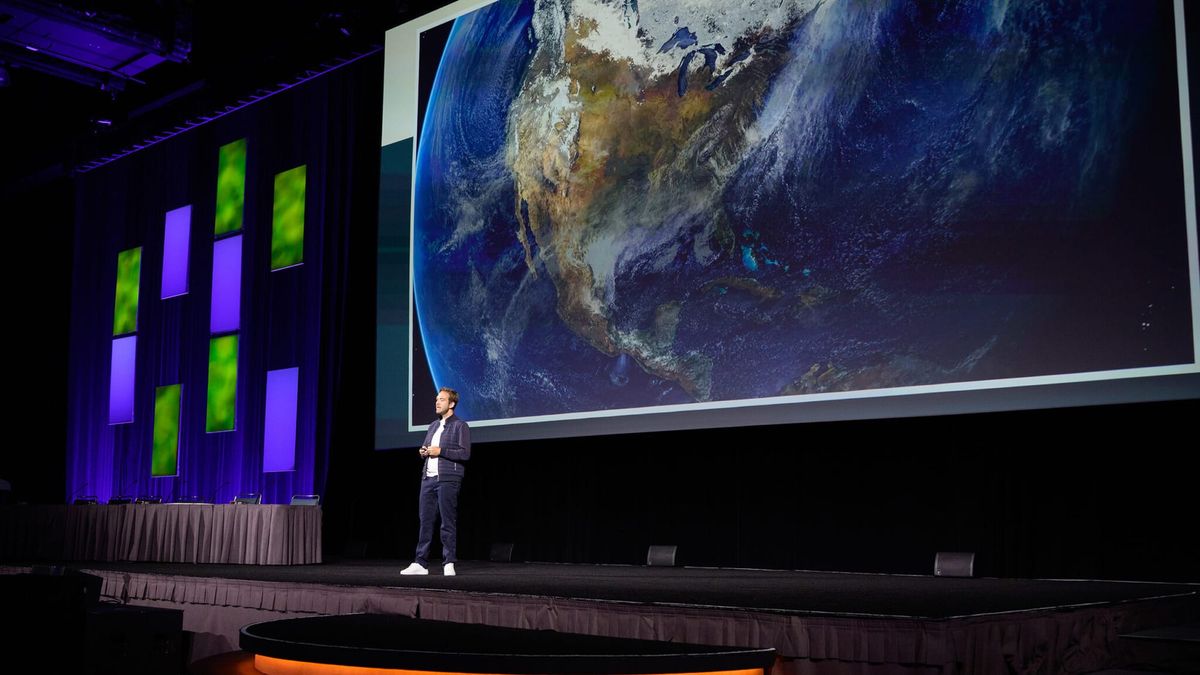
At SIGGRAPH 2026 in Los Angeles this week, NVIDIA unveiled Synthetic Video Detector — an AI-powered tool that identifies AI-generated or manipulated video with up to 92% accuracy in as little as 22 milliseconds on RTX-powered hardware. It's being positioned as a verification layer for newsrooms, broadcasters, and enterprises before synthetic video reaches the public domain.
The irony is worth naming: NVIDIA's GPUs are the primary hardware enabling the AI video generation explosion we've been covering all year — every Runway, Kling, Veo, and Seedance generation runs on NVIDIA compute. NVIDIA is now also building the tool to detect what those systems produce. As Notebookcheck put it, the company is "essentially helping solve a problem it has played a huge role in enabling."
How it works
Synthetic Video Detector uses a Vision Transformer architecture built from an ensemble of DINOv2 and DINOv3 backbones. Before analysis begins, each video frame is cropped to 504×504 pixels and normalized. The model contains 172 million parameters and runs on NVIDIA GPU-accelerated systems using TensorRT.
The detection method doesn't rely on watermarks or metadata — it analyzes video frames and extracts frequency-domain statistical patterns that are indicative of diffusion-based generation. In plain terms: the way diffusion models construct images leaves statistical fingerprints in the frequency domain that don't appear in real camera footage. The detector looks for those fingerprints frame by frame and assigns a probability score estimating whether the footage is AI-generated.
At 22 milliseconds for a full HD 1080p video on RTX hardware, the speed is suited for real-time or near-real-time verification in broadcast and editorial workflows. Analysis rate on a single GPU runs approximately 100 videos per second.
The accuracy numbers — and the caveat that matters
NVIDIA claims the detector achieves up to 92% accuracy on uncompressed video, with accuracy falling to 87% on videos compressed by 15% and 82% when compression reaches 50%. Notebookcheck's report cites 94% accuracy in NVIDIA's own internal testing.
The compression caveat is the one that actually matters for practical use: platforms like YouTube, TikTok, and Instagram routinely compress uploaded videos, often removing subtle visual artifacts that detection models rely upon. Most AI-generated video that reaches the public has gone through at least one compression pass, which means real-world detection accuracy on platform-distributed content is closer to 82-87% than the 92% headline figure. That's still strong — and tops the AI GVD Bench leaderboard for synthetic media detection — but it means the tool performs best as a pre-publication verification layer rather than a retroactive detector of already-distributed compressed video.
Who it's for and how to access it
Synthetic Video Detector is being introduced as part of NVIDIA's NIM microservices, designed to integrate into existing newsroom, broadcaster, and enterprise workflows without requiring organizations to rebuild their verification processes. Distribution runs through video streaming company Wowza's Video Intelligence Framework, allowing analysis of live video streams across on-premises, edge, hybrid, and air-gapped computing environments.
Hardware requirements: the model supports Linux and NVIDIA Ampere, Blackwell, Turing, and Lovelace GPU architectures. Worth noting: it requires NVENC and NVDEC hardware, which means NVIDIA's own datacenter-grade A100, H100, B100, and B200 cards cannot run it — it's specifically designed for RTX-class hardware.
The bigger picture
According to Surfshark, fraud linked to AI-generated content resulted in an estimated $410 million in losses during the first half of 2025. Research from Gartner cited by Wowza found that 62% of organizations experienced a synthetic media attack in the previous 12 months. Those are the numbers NVIDIA's VP of physical AI simulation technology Rev Lebaredian referenced in the announcement, making the commercial case for why broadcasters and enterprises need this layer.
For the filmmaking and content creation community specifically, the implications run in two directions. For legitimate creators using AI tools to produce content: watermarking and verification infrastructure becoming standard means disclosed AI-generated content needs to be clearly labeled and provably so — not just a promise in a caption but a detectable signal in the file. For anyone whose job involves verifying the authenticity of video footage — journalists, broadcasters, legal teams — a 22-millisecond pre-publication check that tops the industry benchmark is a meaningful addition to the verification toolkit, even at 82-87% accuracy on compressed content.