What's Going On With OpenAI Reportedly Buying a Camera AI Startup?
OpenAI has reportedly bought Glass Imaging, an ex-Apple team's camera AI startup. Here's what it does and why OpenAI might want it.


OpenAI has reportedly acquired Glass Imaging, a small California startup that uses AI to get more detail out of tiny cameras. The Wall Street Journal first reported the deal, saying it closed quietly in recent months and valued the company at more than $300 million.
Neither OpenAI nor Glass Imaging has confirmed it. But the story says a lot about where AI is heading next: not just generating images, but deciding what your camera records in the first place.
Who Glass Imaging Is

Glass Imaging was founded in 2019 by Ziv Attar and Tom Bishop, two former Apple engineers. According to TechCrunch, they led the team that developed the iPhone's Portrait Mode.
Attar has sold an imaging company to Apple before. He co-founded LinX Imaging, a multi-aperture camera company Apple acquired in 2015.
Glass Imaging positioned itself as a supplier, not a device maker. Its business was licensing its technology to companies building smartphones, drones, and wearables.
What GlassAI Actually Does
Every digital camera runs raw sensor data through an image signal processor, or ISP, before you get a finished image. Traditionally, that's a chain of separate steps: turning sensor data into color, reducing noise, sharpening, and correcting lens flaws.
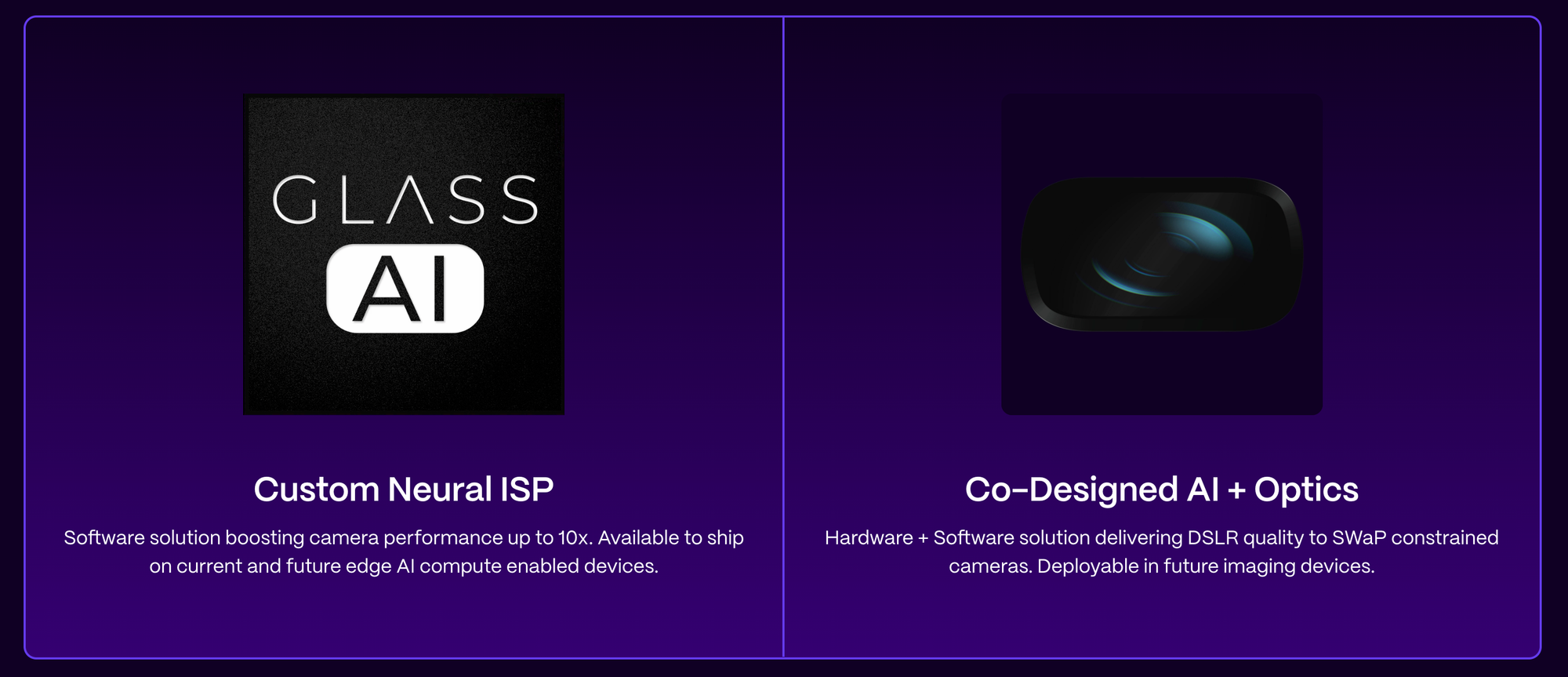
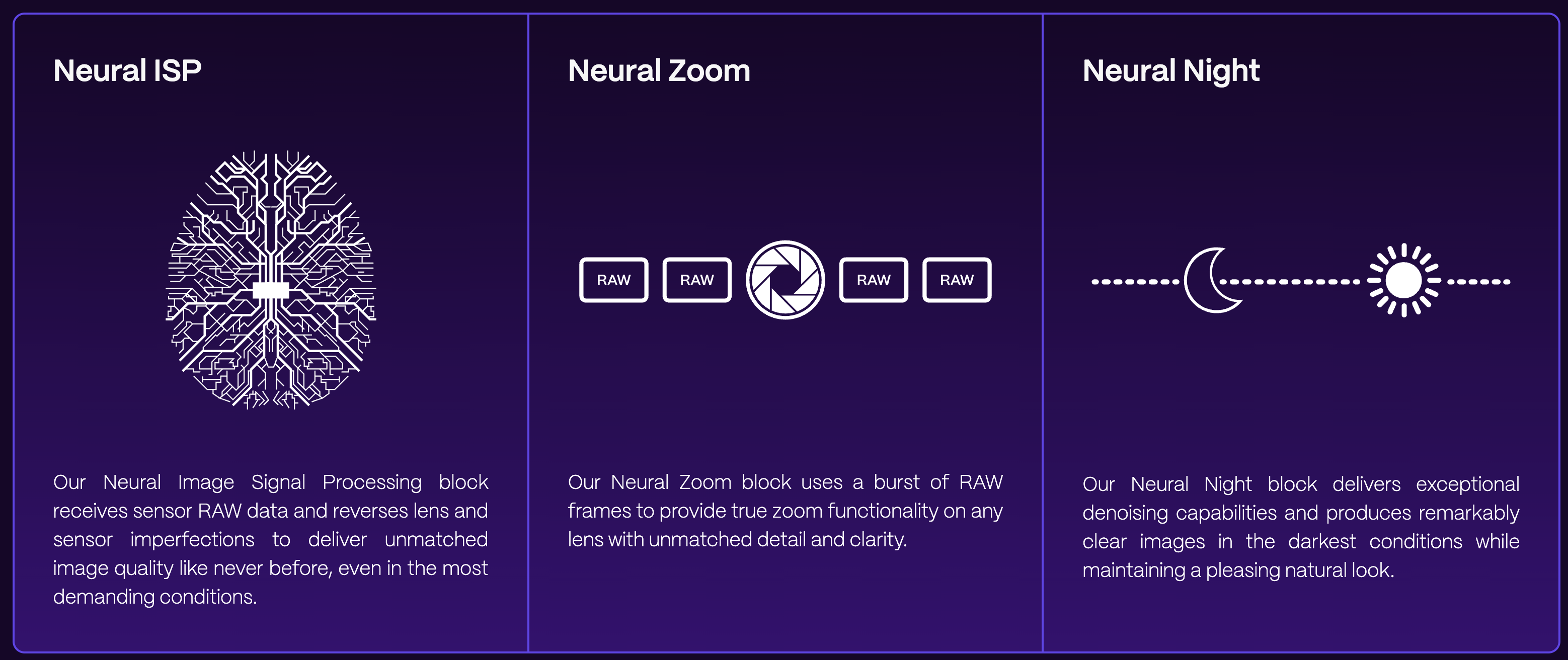
GlassAI replaces that chain with a single neural network trained for one specific camera module. The network learns exactly how that lens and sensor degrade an image, then works to reverse those flaws from bursts of RAW data.
Glass says the results "remain true to life with no hallucinations or optical distortions." That's the company's own claim, and there's no independent measurement of it yet. The practical tradeoff is clear, though: every new lens and sensor combination needs its own trained network.
It Works on Video, Too

This isn't a stills-only technology. Glass has demonstrated GlassAI processing 4K video in real time on Qualcomm hardware, including at extreme zoom levels.
In January, the company said its RAW video pipeline was ready for production on Qualcomm chips. The first shipping product using GlassAI arrived this spring: HONOR's 600 series phones, where it handles zoom.
What the Deal Status Actually Is
The acquisition hasn't been officially announced. Glass Imaging's own website makes no mention of a sale.
There are signs the exit is real, though. Glass's early investors, including Ground Up Ventures, GV, and Insight Partners, posted farewell messages on LinkedIn, and Attar reshared them. What remains unconfirmed is the price, how the deal is structured, and what happens to the team and its existing customers.
Why Would OpenAI Want a Camera Company?
OpenAI hasn't said, so this part is informed reading, not confirmation. The most likely answer is hardware.
OpenAI bought Jony Ive's device startup io Products in 2025, in a deal valued at around $6.5 billion. Bloomberg has reported that OpenAI's first device will be a portable, screenless AI companion with a camera and sensors, launching in 2027.
A small device means a small camera. And an AI model can only understand what its camera actually captures. A team that has spent seven years pulling real detail out of tiny sensors is a natural fit for that problem.
There's also a legal backdrop. Apple sued OpenAI in July, alleging trade secret theft tied to its hardware effort. That suit doesn't involve Glass Imaging, whose founders left Apple years before starting the company, but it adds another group of former Apple camera engineers to a company Apple is already fighting in court.
This Isn't an AI Video Move
It's tempting to read this as OpenAI getting back into video. It's closer to the opposite.
OpenAI shut down Sora, its AI video generator, earlier this year. GlassAI works on light that actually hit a real sensor, and it's sold on the promise that nothing gets invented. It sits at the capture end of the chain, not the generation end.
Competitive Context
AI processing has been taking over phone cameras for years. Apple, Google, and Samsung all lean heavily on computational photography to overcome the physical limits of tiny lenses and sensors.
Glass's approach goes a step further by collapsing the entire processing chain into one trained network. The more that happens, the harder it becomes to separate what a camera's hardware captured from what its software decided the image should look like.
The Signal in the Noise
For filmmakers, this matters most anywhere small-camera footage has to match or cut against other cameras. CineD's lab testing has already found that the iPhone 17 Pro applies scene-dependent processing even in full manual mode, making it hard to measure objectively.
A single AI network handling every step makes that harder still. There's no individual stage to switch off, and even content credentials like C2PA record what device made a file and how it was edited, not how much reconstruction happened before the file existed.
None of that means the detail is fake. It means the question of what a camera "really" captured is getting harder to answer, and AI companies are now the ones building the answer.
Would you trust footage from a camera whose entire processing pipeline is a single AI model, as long as the detail holds up?
The Details
- Reported deal: OpenAI acquiring Glass Imaging, valued at more than $300 million (per The Wall Street Journal)
- Status: unconfirmed by either company; investors have posted farewell messages
- Founders: Ziv Attar (CEO) and Tom Bishop (CTO), former Apple engineers reportedly behind iPhone Portrait Mode
- Founded: 2019
- Technology: GlassAI, a neural image signal processor trained per camera module
- Video: real-time 4K processing demonstrated on Qualcomm hardware; RAW video pipeline declared production-ready in January 2026
- First shipping product: HONOR 600 series phones
- Likely connection: OpenAI's first hardware device, reportedly a screenless AI companion with a camera, planned for 2027