PDD Isn't a Normal LoRA, Here's How Alibaba Sped Up MiniMax H3
Alibaba's PDD method speeds up MiniMax H3 to 8 steps, but the files aren't normal LoRAs, and loading them wrong silently breaks the acceleration.


Alibaba PAI released official 8-step acceleration LoRAs for MiniMax H3 using a method called Parallel Decoding Distillation (PDD), compressing generation down to 8 or even 4 sampler steps with no classifier-free guidance required. The files themselves aren't standard LoRAs, and understanding why matters if you're planning to actually use them.
What Makes PDD Different From a Standard LoRA
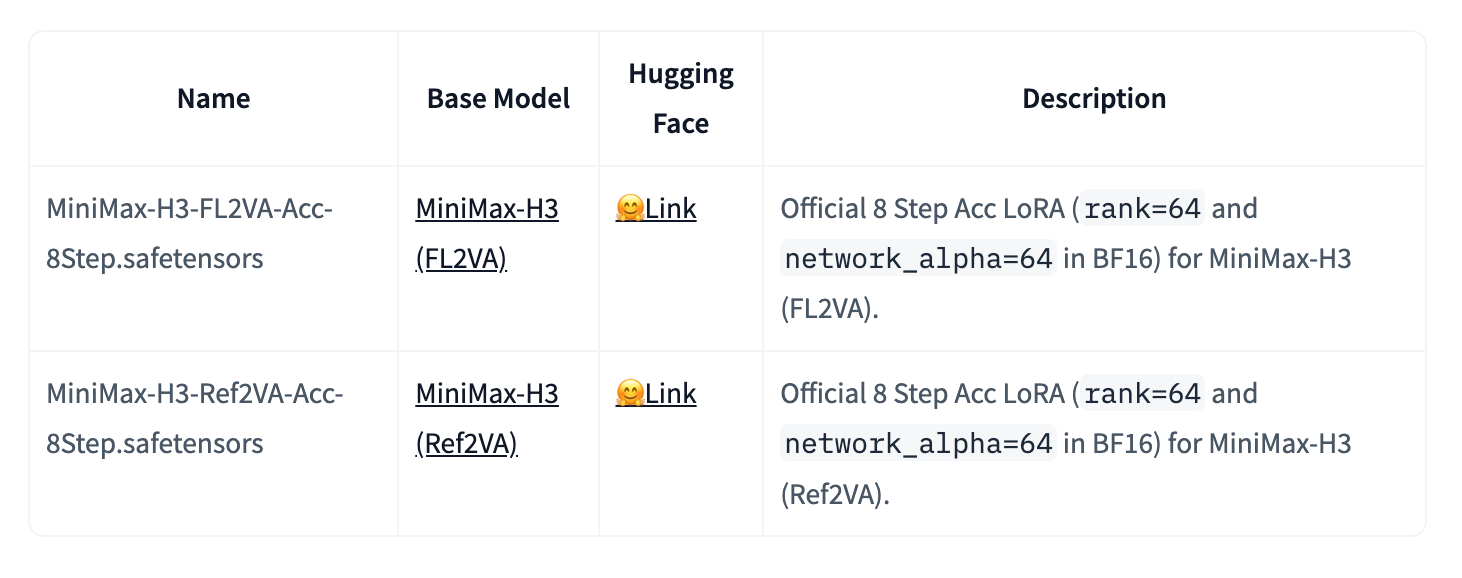
A typical LoRA adds a small set of trained weight adjustments layered on top of a base model. Alibaba's Acc-LoRAs carry something extra: alongside a rank-64 trunk LoRA, each file includes what the documentation calls a "head bank," 32 per-interval copies of the model's final-layer video and audio output projections. At each step of generation, the correct copy from that bank gets fused into a single output head specific to that point in the process.
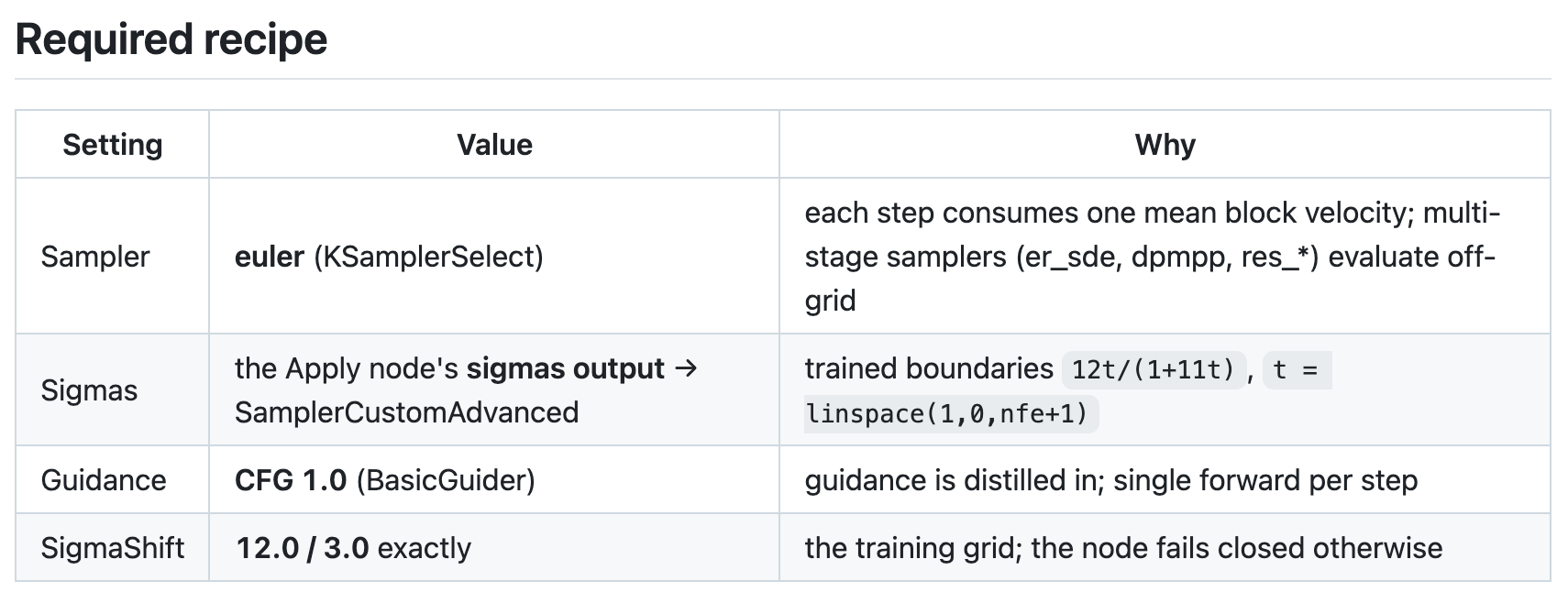
That's a meaningfully different mechanism than weight adjustment alone, and it comes with a real practical consequence: a plain LoRA loader can't read these files correctly. Drop the head bank, and the distillation silently breaks, the model will still run, but without the actual acceleration method doing its job. Using these requires software built specifically to handle the format, which is why a dedicated ComfyUI node pack exists specifically for loading them correctly.
The Actual Method Behind It
PDD comes from a 2026 research paper by Shaul et al., and Alibaba PAI's implementation applies it specifically to MiniMax H3's FL2VA (first/last-frame) and Ref2VA (reference-conditioned) generation modes. Each acceleration file runs 1.4GB in size at rank 64, applied at full strength over the base H3 transformer, with separate adapters for each generation mode, they aren't interchangeable, an FL2VA adapter pairs specifically with an FL2VA model, and the same goes for Ref2VA.
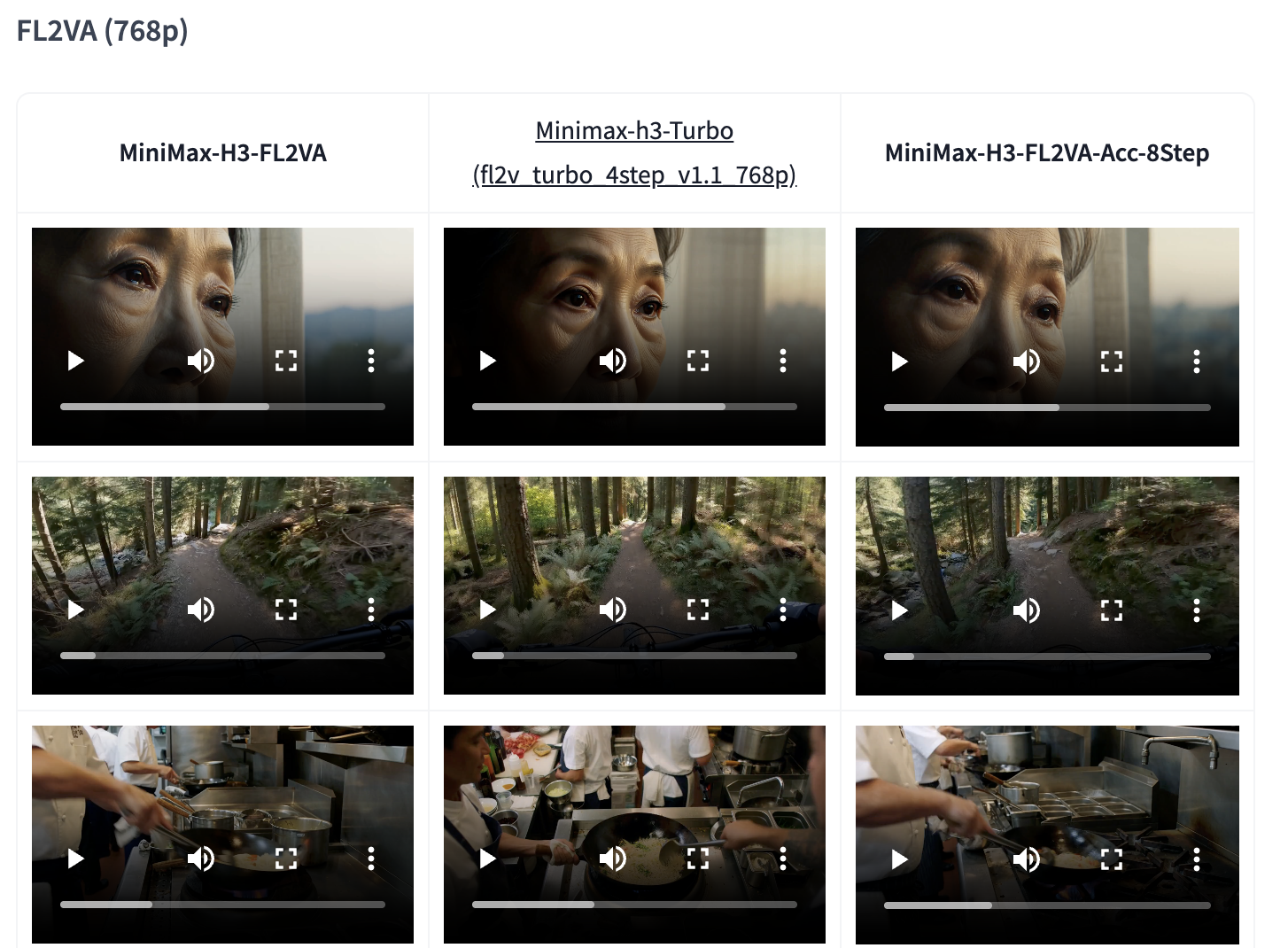
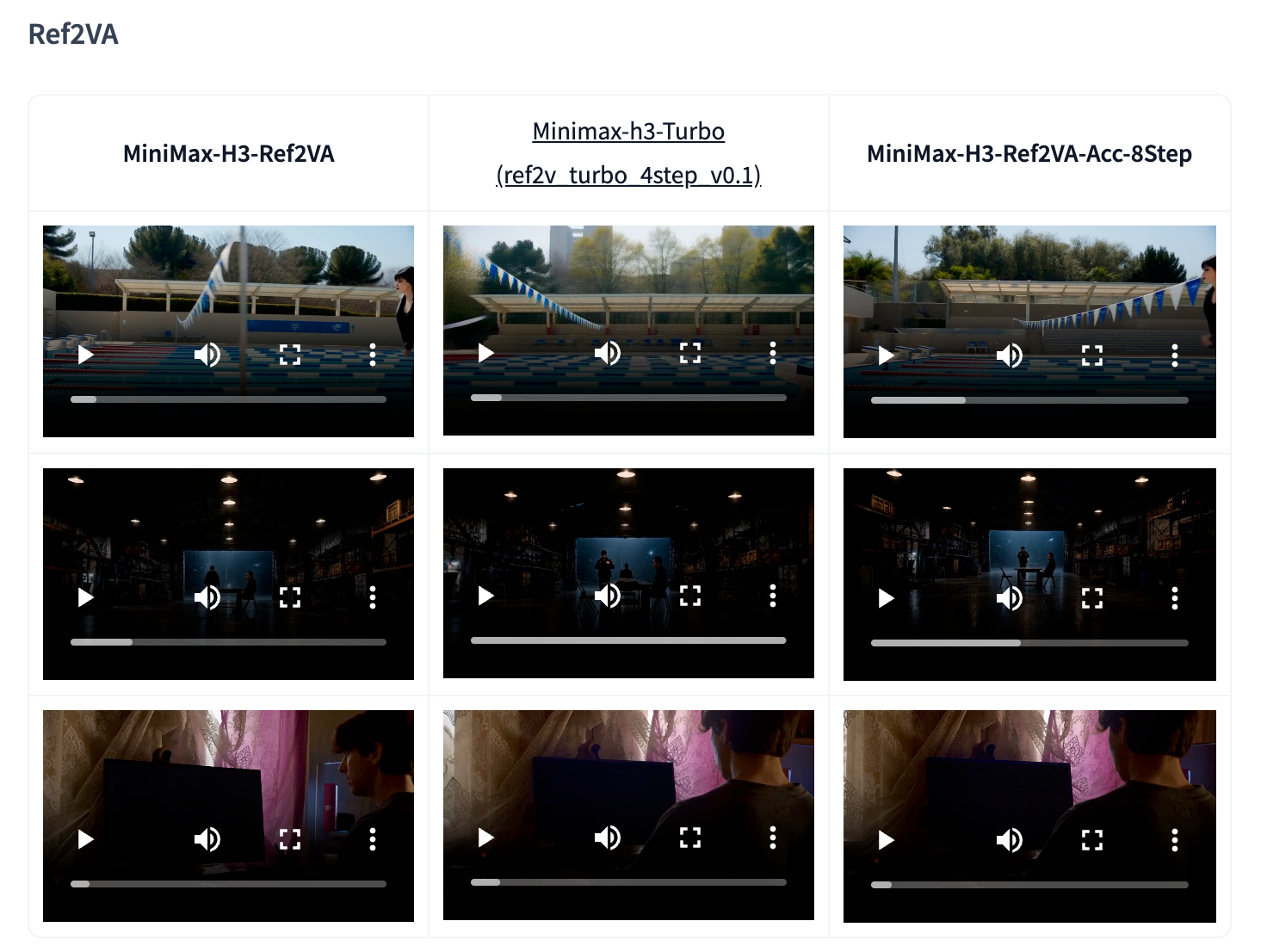
The official release includes side-by-side comparison samples against both the undistilled baseline and community-built alternatives like the Turbo 4-step LoRAs, letting users evaluate the actual quality tradeoff themselves rather than taking a bare speedup number at face value.
Where It's Already Being Used
Beyond the official release, the community has moved quickly to build on top of it. Repackaged versions exist specifically for cleaner ComfyUI integration, and at least one merged checkpoint combines PDD's 8-step distillation with 4-bit quantization, cutting file size by roughly 30% over the official int8 version while running notably faster, with documented benchmarks showing real performance across a range of VRAM budgets, from 96GB workstation cards down to 12GB consumer GPUs.
Competitive Context

PDD joins FastH3 and VDN as a third genuinely distinct approach to accelerating MiniMax H3, and it stands out specifically for being an official release from a major cloud and AI company, Alibaba PAI, rather than an independent research effort. That institutional backing tends to come with more sustained support and documentation, worth factoring in if you're choosing between multiple acceleration options for a real production workflow rather than experimentation.
The Signal in the Noise
The real lesson from PDD's release isn't the step count, it's a reminder that not every acceleration method labeled a "LoRA" behaves like one. Understanding what a specific file actually contains, and what breaks if you load it incorrectly, matters more here than with a typical style or character LoRA, where dropping a file just means losing an aesthetic rather than silently losing your entire speed gain.
Given how many different acceleration approaches now exist for MiniMax H3, would you rather stick with one official, well-documented option, or keep testing across FastH3, VDN, and PDD to find whichever performs best for your specific use case?
The Details
- Method: Parallel Decoding Distillation (PDD), based on a 2026 paper by Shaul et al.
- Implementation: official release by Alibaba PAI, published August 26, 2026
- Speed: full audio+video generation in 8 (or 4) sampler steps, no classifier-free guidance required
- Format: rank-64 trunk LoRA plus a 32-copy "head bank" fused per generation step; not compatible with standard LoRA loaders
- Available modes: FL2VA (first/last-frame) and Ref2VA (reference-conditioned), each with dedicated, non-interchangeable adapters
- File size: 1.4GB per adapter (BF16)
- Access: official weights on Hugging Face and VideoX-Fun; dedicated ComfyUI node pack required for correct loading