VDN Rebuilds MiniMax H3's Attention Instead of Just Speeding It Up
VDN rebuilds MiniMax H3's attention mechanism itself, generating video faster than it plays, with a real licensing catch worth knowing.


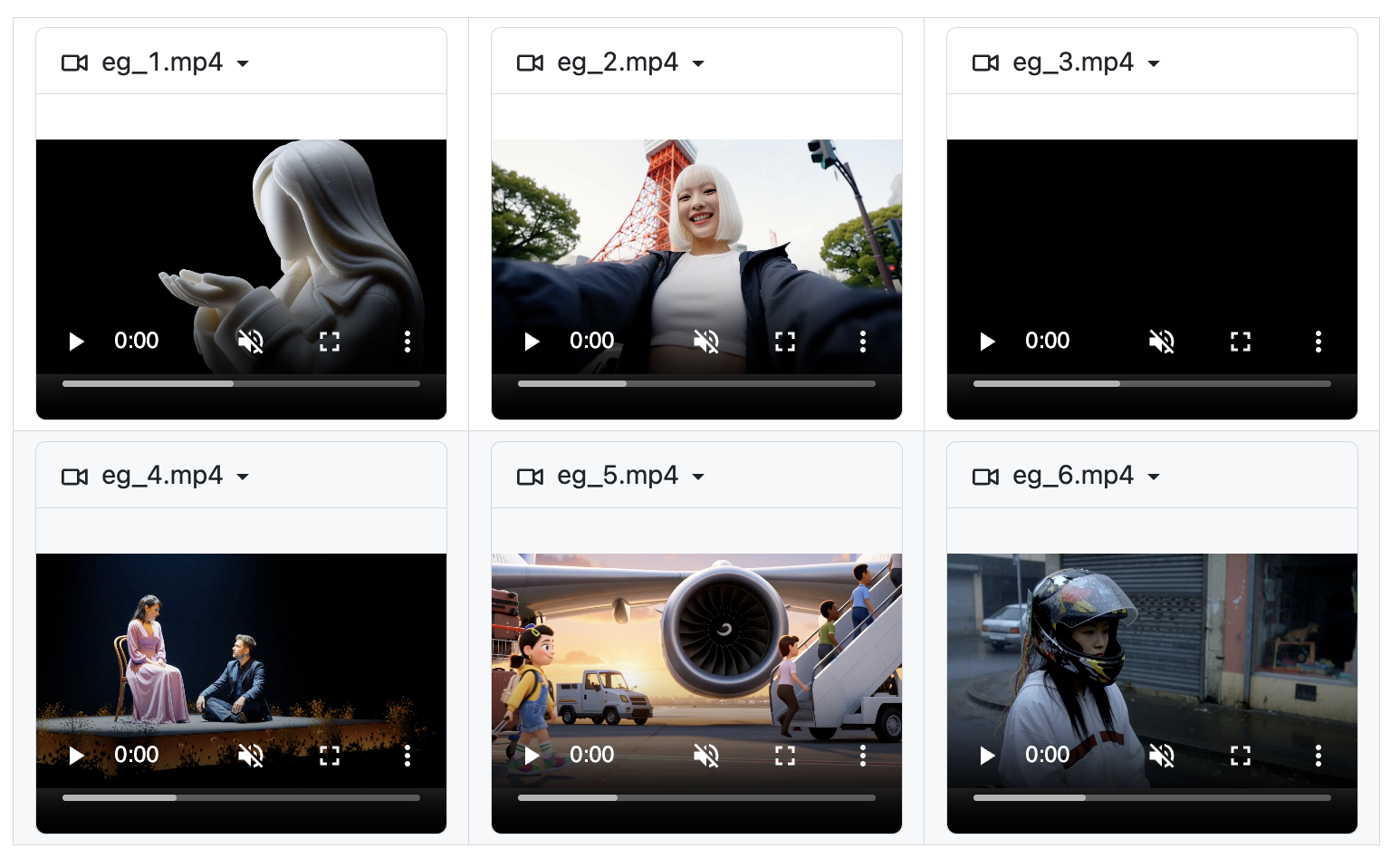
Haocheng Xi and the OpenVDN team released Video Delta Net (VDN), a hybrid-attention rebuild of MiniMax H3 that generates video faster than it plays back, without retraining the model's core weights. On 8x NVIDIA B200 GPUs, VDN-H3 generates a 14.4-second 768p clip in 11.23 seconds.
A Genuinely Different Approach Than the Other H3 Speed Projects
Most H3 acceleration work BRC has covered, FastH3, Sol-H3, reduces the number of denoising steps or optimizes how existing attention gets computed. VDN does something architecturally different: it changes the attention mechanism itself.
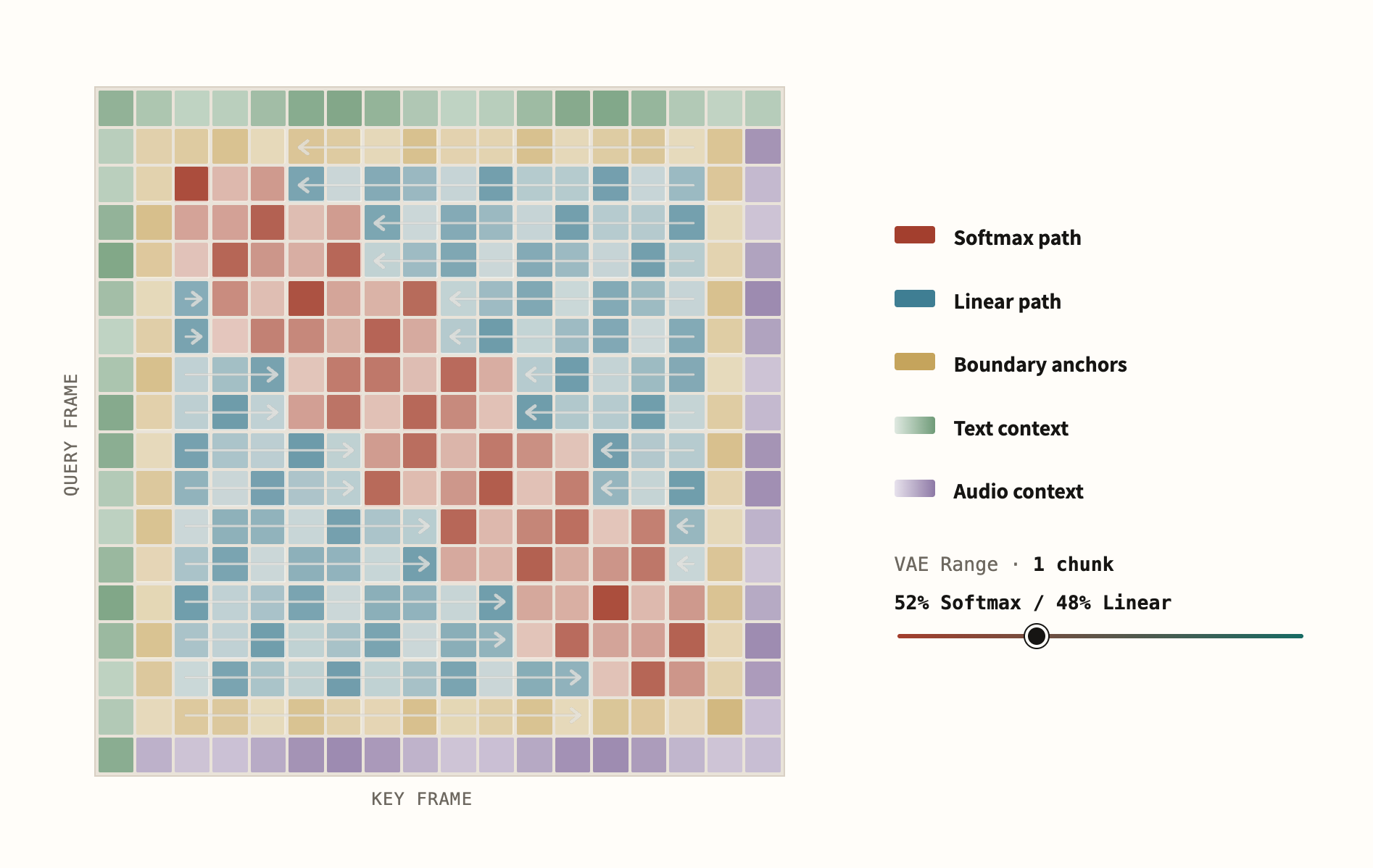
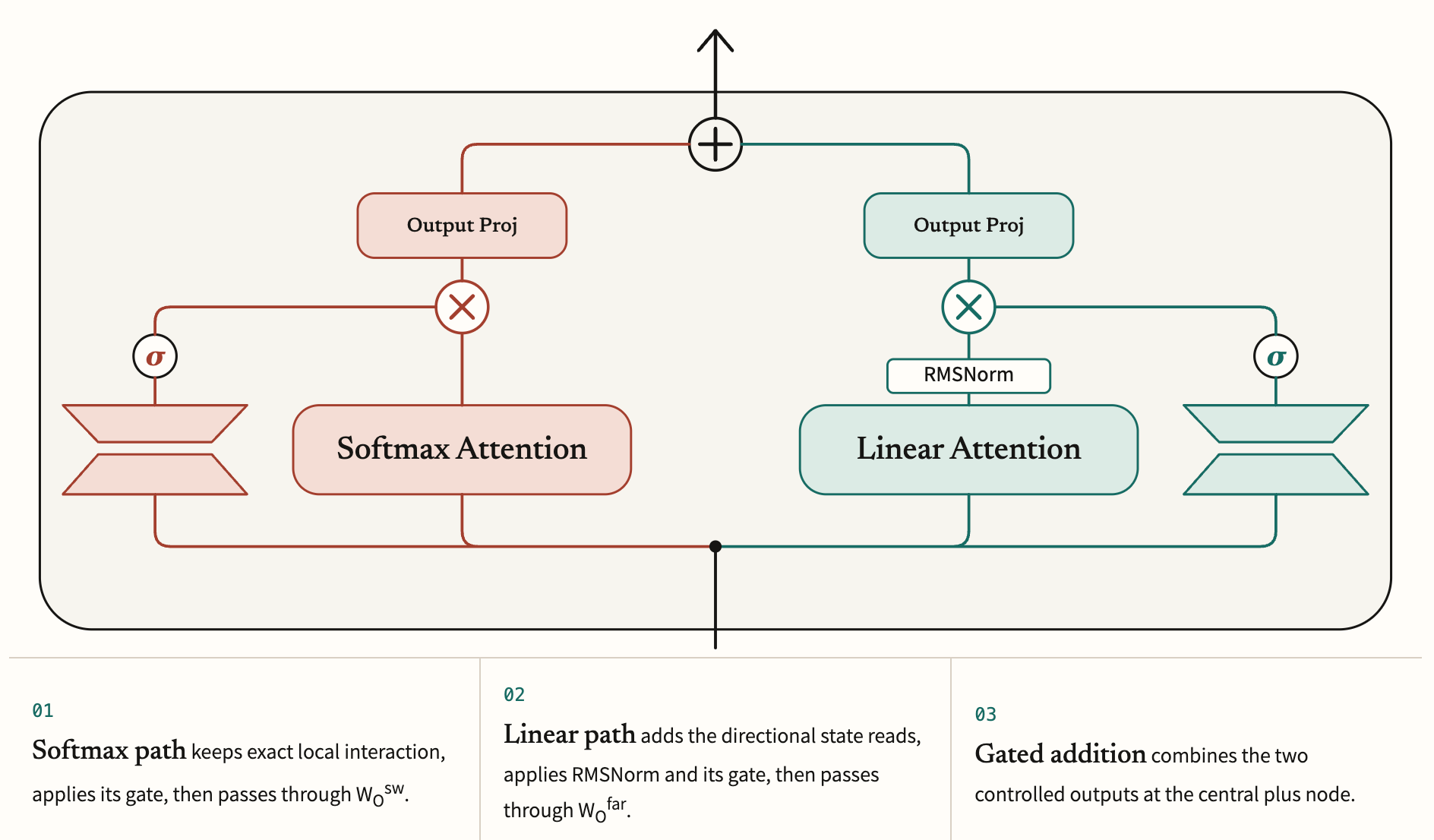
Softmax attention, the standard mechanism most video models use, accounts for more than 85% of MiniMax H3's runtime, and its cost grows quadratically as clip length increases. VDN splits that workload into two branches instead of relying on softmax attention alone. A sliding-window softmax branch handles nearby frames, preserving the visual quality and consistency softmax attention is known for. A separate frame-wise linear attention branch handles long-range context across the rest of the clip, at a fraction of the computational cost.
How It Attaches Without Touching the Original Model
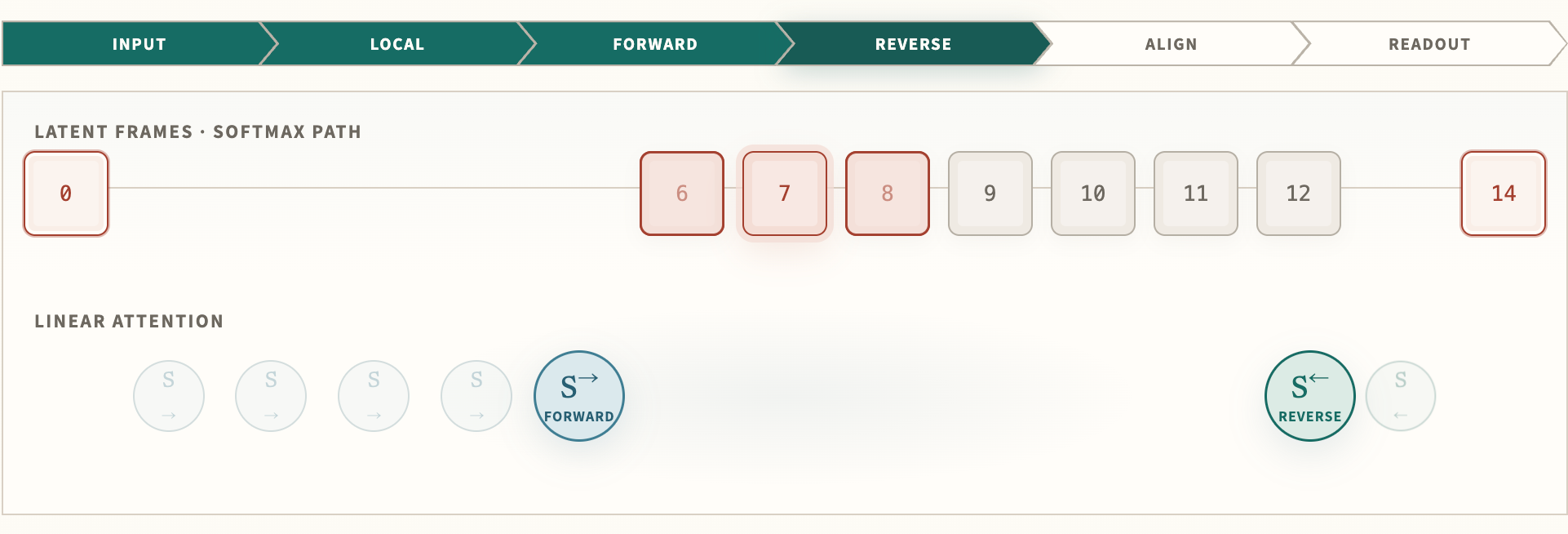
The linear attention branch and two small LoRA adapters merge into H3's existing backbone at inference time, without modifying the original weights at all. That's a meaningfully different integration approach than a full distillation, VDN is closer to a plug-in architectural patch than a retrained student model.
The team also released training code alongside the weights, not just the checkpoint itself, something the project's own documentation notes is unusual in this specific category, most H3 acceleration work has published weights only.
The Speed Claim, With an Important Caveat
Xi's own announcement states VDN accelerates MiniMax H3 by 75 to 90 times, but clarified directly that this figure compares against single-GPU generation using no other optimization, not against the multi-GPU, already-optimized baselines other H3 speed projects measure themselves against. The more directly comparable, apples-to-apples number is the 11.23-second generation time for a 14.4-second clip on 8x B200 GPUs, which is genuinely competitive with the fastest H3 variants covered here so far, even if the "75-90x" framing needs that context to interpret correctly.
A Real Licensing Restriction Worth Knowing
VDN-H3's code is released under Apache 2.0, a permissive open-source license. The weights, however, are distributed under the MiniMax H3 Community License, which explicitly excludes several major markets from authorized use: the European Union, the United Kingdom, South Korea, and the United States. Anyone in one of those excluded territories is directed to contact MiniMax directly about separate licensing terms. That's a real, practical constraint that limits who can actually deploy this legally, regardless of how fast it runs.
Competitive Context
VDN joins FastH3 and Sol-H3 as genuinely distinct technical approaches to the same underlying problem, and it's already reached the wider ComfyUI ecosystem through a community-built native node, though the official release targets data center hardware specifically (8x B200 GPUs with Ulysses sequence parallelism), and consumer-grade GPUs currently aren't supported by the official release.
The Signal in the Noise
VDN's real contribution isn't just another speed number, it's evidence that meaningfully rethinking a model's architecture, not just its schedule or its attention implementation, can produce results competitive with pure distillation approaches. Multiple genuinely different technical paths converging on similar speed results within the same month is a strong signal that MiniMax H3's underlying design has real headroom for optimization, however the story gets told next.
Given the licensing restriction, does that change how useful this specific project is to you personally, or does it mainly matter for anyone trying to deploy it commercially?
The Details
- Project: Video Delta Net (VDN-H3), by Haocheng Xi and the OpenVDN team
- Method: hybrid attention, sliding-window softmax for nearby frames plus frame-wise linear attention for long-range context, merged via LoRA adapters onto frozen H3 weights
- Benchmark: 14.4-second 768p clip in 11.23 seconds on 8x NVIDIA B200 GPUs, 8 denoising steps
- Claimed speedup: 75-90x, measured against unoptimized single-GPU generation (not directly comparable to multi-GPU optimized baselines)
- Released: September 6, 2026; both training and inference code open, not just weights
- License: code under Apache 2.0; weights under MiniMax H3 Community License, which excludes the EU, UK, South Korea, and United States from authorized use
- Hardware: official release targets data center GPUs (8x B200, Ulysses sequence parallelism); consumer Blackwell GPUs and Windows not officially supported