Promise Leads a Group of Companies Disney Is Backing to Prepare for the AI Filmmaking Revolution
Disney named AI studio Promise to its 2026 Accelerator cohort, backing MUSE, a production system built to support filmmakers with generative AI. Here's what it means, and who else made the cut.

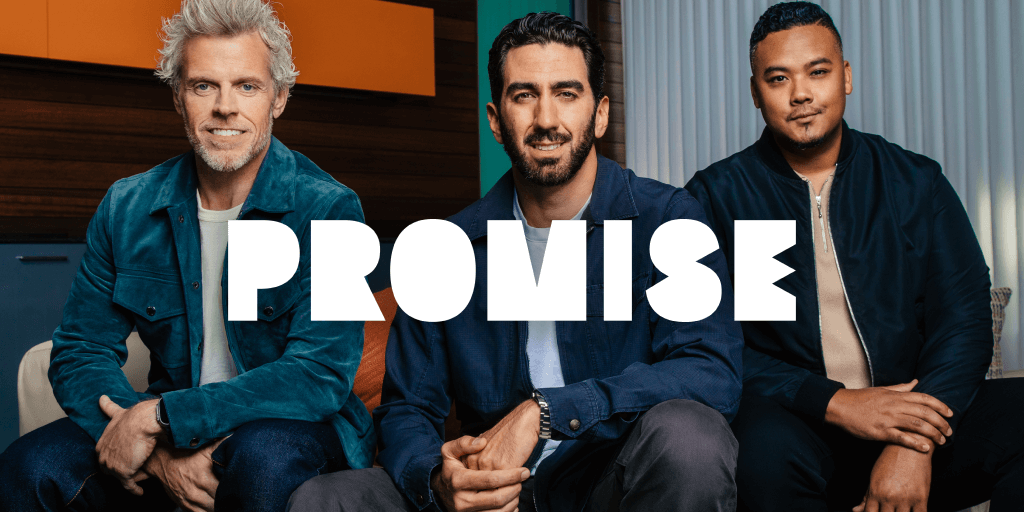
Disney named Promise, an AI-native studio building tools for filmmakers, as part of its 2026 Accelerator cohort, one of five growth-stage companies selected this cycle. Promise's flagship product, MUSE, is a studio operating system that integrates generative AI across every stage of production while keeping human artists at the center of the process, and Disney's backing is a real signal about how seriously major studios are taking AI-assisted filmmaking right now.
Promise wasn't picked in isolation, though. The rest of the cohort, spanning robotics and AI-based audience simulation, reveals a company placing coordinated AI bets across its entire business, not just production.
The Five Companies, and What Each One Actually Does
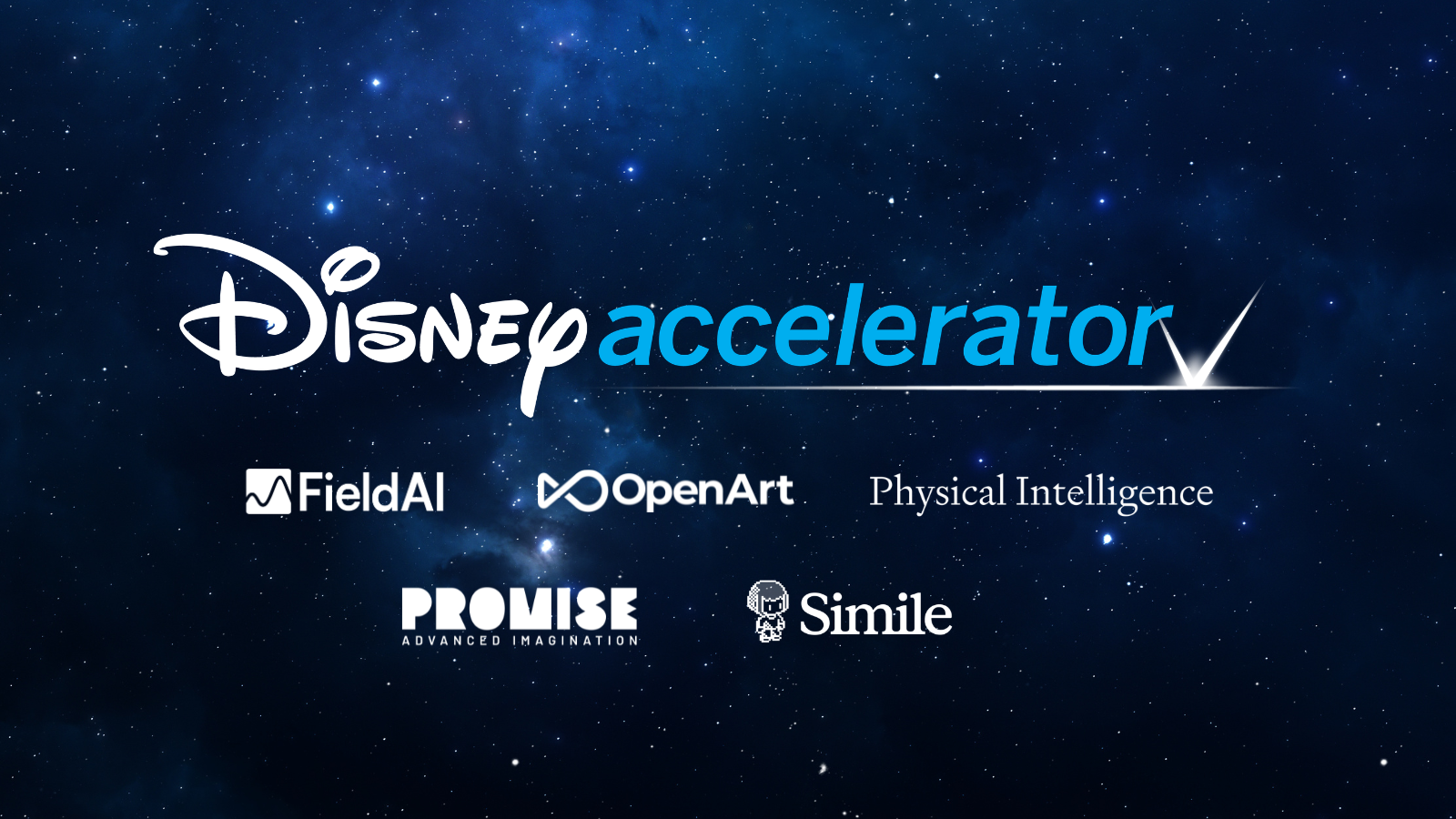
Promise develops film, series, and visual effects through MUSE, integrating generative AI across production stages while explicitly framing the tool as supporting human artistry rather than replacing it. It's the name most directly relevant to BRC's beat, and the clearest signal in this cohort about where studio-level AI filmmaking tools are headed.
OpenArt rounds out the content side, focused on fan engagement rather than production specifically, letting creators conversationally generate characters and stories through what it calls "Vibe Direct," while emphasizing IP protection for the resulting content.
FieldAI builds foundation models that let robots operate safely in dynamic, unmapped environments, already deployed commercially across hundreds of sites on three continents.
Physical Intelligence develops general-purpose AI for the physical world, foundation models meant to let robots and machines handle a wide range of tasks without task-specific programming. Both point toward the same obvious Disney application: theme park robotics that can operate reliably without pre-planned routes or rigid programming.
Simile is the odd one out on the surface but arguably the most quietly significant: an AI-based simulation company building models grounded in real human behavior, designed to let organizations explore consumer insights before making decisions. For a company like Disney, that's a direct line to testing audience reactions to content, experiences, or products before committing real production budget to them.
Why the Grouping Matters
Two robotics companies, two generative content companies, and one audience-simulation company, selected in the same cohort, isn't a random spread. It's a map of where Disney is placing simultaneous AI bets: physical operations, creative production, fan-facing content generation, and audience research, all at once, rather than picking one department to experiment with AI in isolation.
What the Accelerator Actually Provides
Selected companies get four months of investment capital and direct collaboration opportunities with leaders across the Walt Disney Company, culminating in a Demo Day at the Walt Disney Studio Lot in early November.
Since 2014, more than 60 companies have gone through the program, including Epic Games, ElevenLabs, Animaj, and AudioShake, several of which (ElevenLabs and AudioShake specifically) are names BRC readers will already recognize from AI audio and voice coverage.
ElevenLabs' presence on that alumni list is worth noting directly: a past Disney Accelerator company going on to become one of the most widely used AI voice platforms in the industry is a reasonable signal of what "selected by Disney" can mean for a startup's trajectory afterward.
Competitive Context
Disney isn't alone in running a startup accelerator tied to entertainment technology, but the specific combination of robotics and generative content in one cohort is a distinctly Disney-shaped bet, reflecting a business that spans both physical theme park operations and content production in a way most other studios or tech companies don't need to solve simultaneously.
The Signal in the Noise
Promise's inclusion, and its explicit framing around supporting rather than replacing human artists, is genuinely worth watching as more details on MUSE's actual capabilities become public.
But the bigger takeaway is the breadth of this cohort itself: Disney is making a coordinated, multi-front AI investment right now, not a single cautious experiment in one department, and that's a more significant signal than any individual company's product.