RED RAW vs Canon RAW vs BRAW: Magnus Video Productions Tests Them All
Magnus Video Productions ran a real-world comparison of five RAW video formats across multiple camera bodies. The Blackmagic Pocket Cinema Camera 4K came out on top for image feel, despite its age.

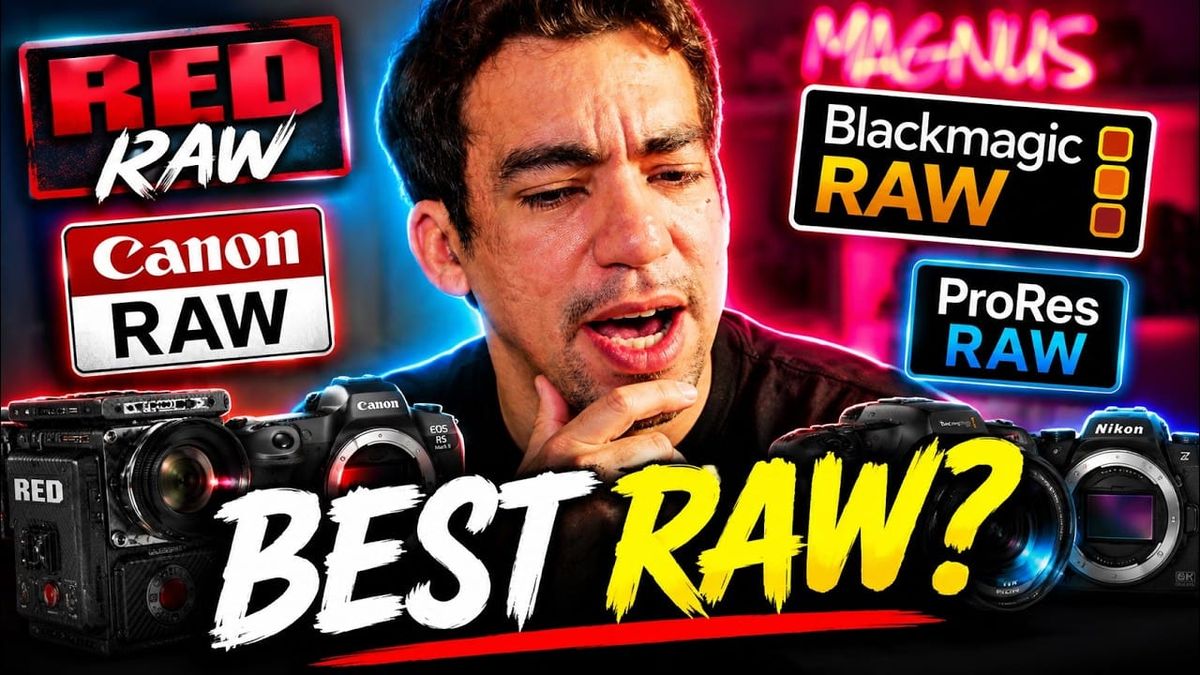
Magnus Video Productions published a real-world RAW format shootout on June 17, 2026, pitting RED RAW, Canon RAW, Blackmagic RAW, N-RAW, and ProRes RAW against each other across multiple camera bodies.
Five Formats, One Hybrid Shooter's Verdict
The test covered the Nikon Z8, Canon R5 Mark II, Blackmagic Pocket Cinema Camera 4K, and Blackmagic Cinema Camera 6K full-frame.
Magnus evaluated each format on color flexibility, file size, render times, ease of grading to REC.709, and personal aesthetic preference.
ProRes RAW posted the longest render times in Premiere. Canon RAW was described as feeling "video-ish" rather than delivering the creamy, filmic quality the creator was after.
The Blackmagic Pocket Cinema Camera 4K came out on top for image feel. Magnus stated, "The winner from these I would say my favorite image was the Blackmagic Pocket Cinema Camera 4K just by a hair."
The creator framed the entire test through a practical lens. As Magnus put it, "I'm a hybrid shooter that has different camera bodies and if it's good and if it's useful to me I'm going to use it."
Competitive Context
The RAW format conversation has shifted significantly since RED's acquisition by Nikon in 2024 introduced N-RAW as a hybrid ecosystem format.
Canon RAW Light and Canon RAW on the R5 Mark II are aimed squarely at hybrid shooters who want cinema-grade files without leaving the EOS ecosystem.
Blackmagic RAW remains the workflow benchmark for independent filmmakers, largely because of DaVinci Resolve's tight integration and the format's relatively lean file sizes compared to ProRes RAW.
The Pocket Cinema Camera 4K is a years-old body at this point, and Blackmagic has since released the Cinema Camera 6K full-frame. That the older sensor placed first in a subjective test against newer full-frame hardware is the most notable data point here.
The Signal in the Noise
Spec-for-spec comparisons rarely settle the "which RAW looks best" question, and this video is a useful reminder of that.
Autofocus, sensor size, and body ergonomics matter depending on the shoot. The BMPCC 4K has no continuous autofocus, which is a real constraint for solo operators or documentary work.
For narrative or controlled setups where autofocus isn't a factor, the BRAW workflow still holds up against formats from newer and more expensive bodies.
The ProRes RAW render time finding is worth noting separately for anyone cutting in Premiere rather than Resolve. Workflow overhead adds up on long-form projects.
Specs & Pricing
| Formats Tested | RED RAW, Blackmagic RAW, Canon RAW, N-RAW, ProRes RAW |
| Camera Bodies | Nikon Z8, Canon R5 Mark II, BMPCC 4K, Blackmagic Cinema Camera 6K |
| NLE Used | Adobe Premiere (render time testing) |
| Evaluation Criteria | Color flexibility, file size, render times, REC.709 grading ease, aesthetic preference |
| Top Pick (Creator) | Blackmagic Pocket Cinema Camera 4K (BRAW) |
| Noted Limitation | BMPCC 4K lacks continuous autofocus |
Camera pricing for the bodies tested varies widely. Exact current pricing for the Blackmagic Pocket Cinema Camera 4K, Canon R5 Mark II, and Nikon Z8 is available on B&H Photo.