What Runway's Pivot Into Operating Systems Says About Its Video Tools
Runway's new Solaris interface generator reveals a bigger strategic pivot, away from video tools and toward general world simulation.


Runway announced Solaris, its first "Interface World Model," a system that generates interactive user interfaces and applications in real time, frame by frame, with no underlying code. It's built on Gen-4.5, the same video model behind Runway's filmmaking tools. For anyone using Runway for actual video work, the more useful question isn't what Solaris does, it's what building it reveals about where Runway is spending its resources and attention.
What Solaris Actually Does
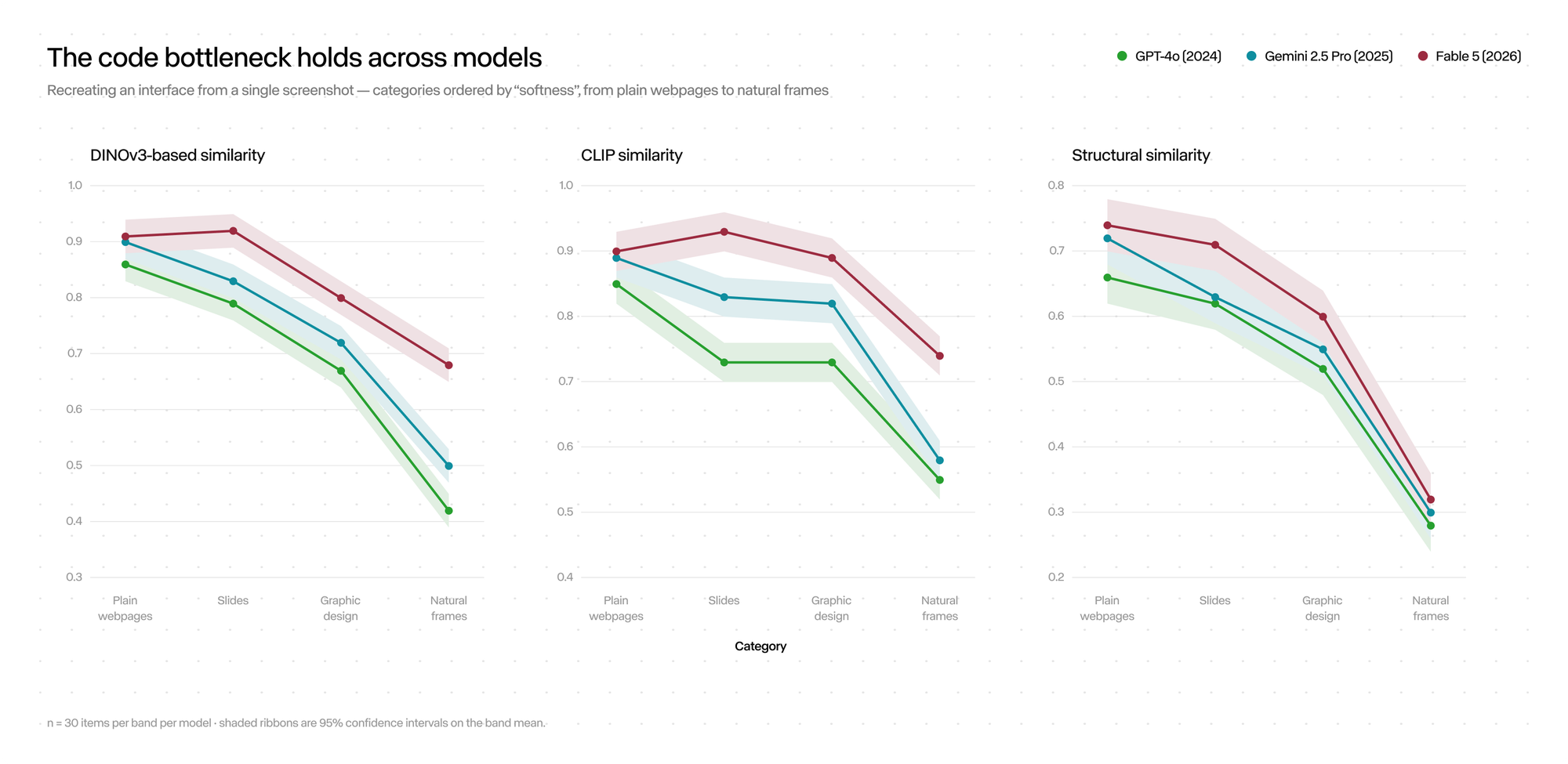
Runway frames Solaris as a rethink of how operating systems work. Traditional software renders fixed applications built once and updated occasionally; Solaris instead generates the interface itself continuously, responding to user input in real time rather than executing pre-built code. Runway claims Solaris outperforms frontier LLMs on structural similarity and information retention when generating new interfaces from scratch.
The company is candid about real limitations. Stable, legible text remains genuinely difficult in real-time video generation, so Solaris currently uses a hybrid approach, image models handle text-heavy views during brief pauses, while the video-generation layer handles continuous interaction. Runway also acknowledges that maintaining coherence over long sessions, and grounding generated interfaces in real, trustworthy information rather than confident-sounding fabrication, remain open research problems rather than solved ones.
This Isn't a One-Off, It's a Pattern

Solaris didn't come out of nowhere. In December 2025, Runway announced GWM-1, its first "General World Model" family, also built on Gen-4.5, also frame-by-frame, real-time, and interactive, but aimed at simulating explorable environments, conversational avatars, and robotics training data instead of interfaces. Runway has explicitly stated its long-term goal is unifying these different domains, interfaces, environments, robotics, into a single foundational world model.
That's a meaningfully different ambition than "make better video generation tools." One industry analysis described the shift directly: Runway is trying to evolve from a "special effects supplier" for film and television into an "AI architect" for simulating environments and systems more broadly, a much bigger, much riskier bet than incrementally improving Gen-4.5's video output.
The Money Behind the Pivot

This pattern lines up with Runway's own funding story. The company raised a $315 million Series E at a $5.3 billion valuation, explicitly reported as signaling a strategic pivot from video generation toward world simulation.
Runway also opened a new European headquarters in London specifically as a world model research hub, backed by a planned $100 million UK AI investment. That's real capital and real headcount being redirected toward a much broader ambition than the video tools that built Runway's reputation with filmmakers in the first place.
Competitive Context
Runway isn't chasing this alone, and it's arguably no longer the frontrunner in the category it's now betting heavily on. Google and Nvidia both have significant world-model research programs backed by resources Runway can't easily match.
Runway's core advantage was being early and excellent at video generation specifically; whether that advantage transfers into a much larger, more contested race against companies with deeper infrastructure is a genuinely open question.
The Signal in the Noise
None of this means Runway's actual video tools are being deprioritized, Gen-4.5 reportedly topped both Google's and OpenAI's video generation benchmarks as recently as this year, and Runway still serves a claimed 60 million-plus creatives on its core platform.
But a company's biggest strategic bets tend to be where its best research talent and infrastructure investment concentrate over time. If Runway succeeds at building genuinely general world models, video generation ends up being one application among several rather than the whole business, which could mean either faster, more capable video tools as a side effect of that broader research, or a slower cadence of filmmaking-specific updates if resources increasingly shift elsewhere.
Does Runway's expansion into interfaces and robotics-adjacent world models make you more confident in the underlying technology powering its video tools, or more concerned that video generation might become a smaller piece of a much bigger company?
The Details
- Solaris: Runway's first "Interface World Model," generates real-time interactive UIs frame by frame, no code, built on Gen-4.5
- GWM-1 (December 2025): Runway's "General World Model" family, three variants (Worlds, Avatars, Robotics), same frame-by-frame real-time architecture
- Runway's funding: $315 million Series E at a $5.3 billion valuation, explicitly tied to a strategic pivot toward world simulation
- New investment: London HQ opened as European world model research hub, backed by a planned $100 million UK AI investment
- Runway's core video platform: reportedly used by 60 million-plus creatives; Gen-4.5 reportedly topped Google and OpenAI on recent video generation benchmarks
- Competitors in the broader world model space: Google, Nvidia