Sigma FP2 or Sony FX3? What Actually Separates These Tiny Full-Frame Cinema Cameras
The $2,199 Sigma FP2 brings 6K open gate, a stacked sensor, and internal storage. The Sony FX3 counters with IBIS, 4K 120p, and an XLR handle. Here’s what separates them.


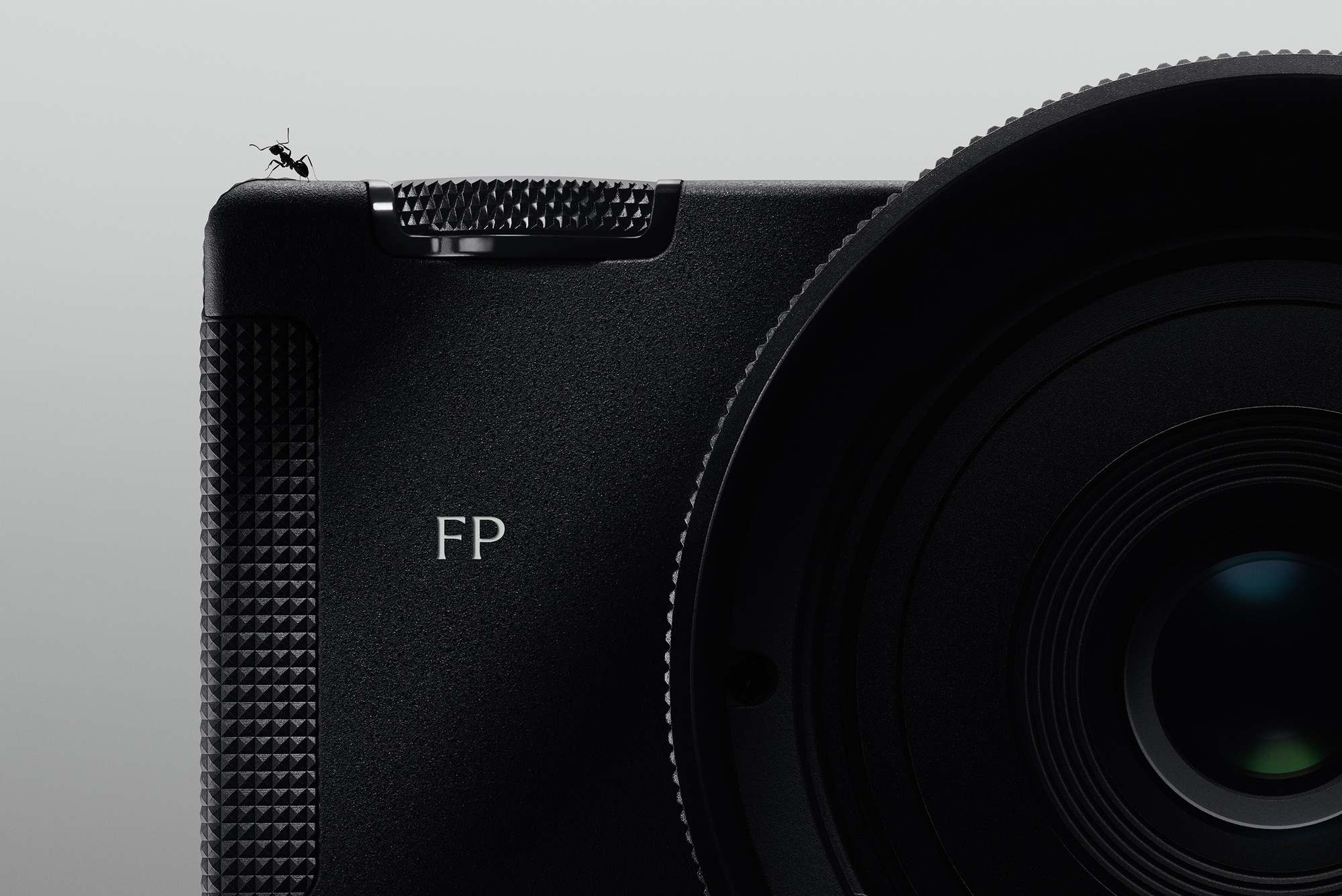
Sigma’s new FP2 lands squarely in Sony FX3 territory: a small, full-frame camera built for video, meant to be rigged up or flown on a gimbal. On paper, the FP2 has the newer sensor and the lower price, at $2,199 against the FX3’s $3,900 launch price.
The FX3 has five years of production use behind it and a few features the FP2 skips. Here’s how the two compare where it matters.
Sensor and Resolution
The FP2 uses a new 24.5MP partially stacked full-frame sensor and records 6K open gate in CINE mode. Sigma says the faster readout reduces rolling shutter distortion.
The FX3 uses a 12MP full-frame sensor, the same one in the Sony a7S III, and tops out at 4K. Its lower resolution is part of why it’s known for strong low-light performance.
If you need open gate for reframing between vertical and horizontal, or extra resolution for cropping, the FP2 has the edge. For more on the format, see The Best Open Gate Cameras in 2026.
Frame Rates
The FX3 records up to 4K 120p, which makes it a strong slow-motion camera in a small body.
Sigma’s FP2 announcement doesn’t list frame rates, so how it handles high frame rates is still an open question until the full spec sheet or early reviews arrive.
Raw and Log
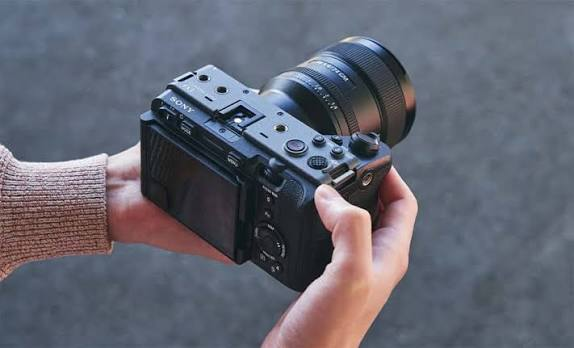
Both cameras support raw, but in different ways. The FP2 supports ProRes RAW and records L-Log, licensed from Leica, with Sigma rating up to 14.1 stops of dynamic range in 4K full-frame L-Log.
The FX3 records 16-bit raw only over HDMI to an external recorder, with no internal raw. Sony rates its dynamic range at 15+ stops, using S-Log3.
For exposure targets in either log format, see How to Expose S-Log3, C-Log2, and N-Log Without Guesswork.
Stabilization
This is one of the biggest practical differences. The FX3 has 5-axis in-body image stabilization, which helps for handheld run-and-gun work.
Sigma’s FP2 announcement doesn’t list in-body stabilization. Without it, the FP2 depends on stabilized lenses, a gimbal, or electronic stabilization for handheld shots.
Size, Build, and Audio
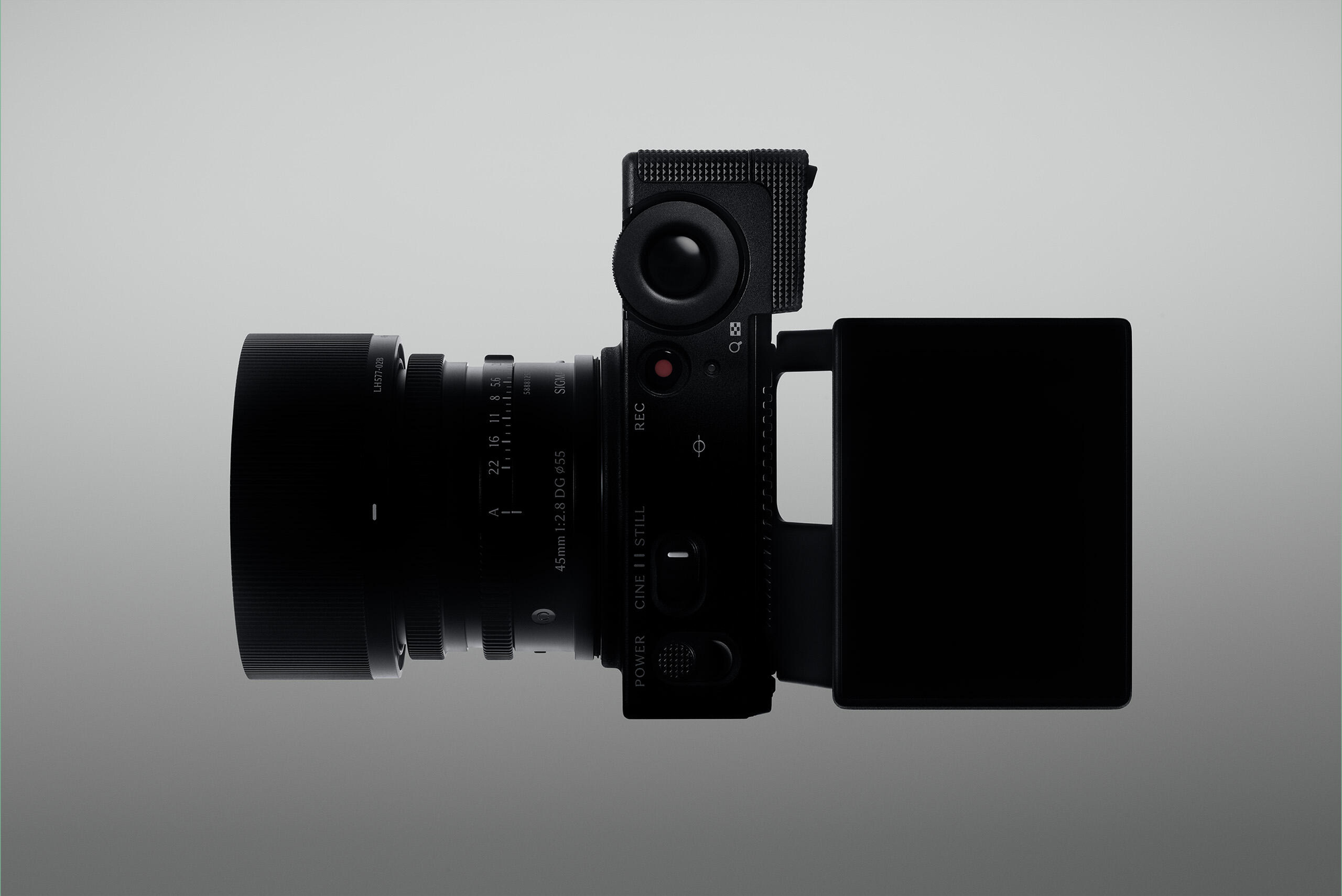
The FP2 is much smaller and lighter, at 388g body only and 446g with the battery. Sigma calls it the world’s smallest full-frame camera.
The FX3 weighs about 1,015g with its battery, card, and included XLR handle. That handle gives the FX3 two XLR inputs out of the box, along with a built-in cooling fan for long takes.
The FP2 can record 32-bit float audio, but only with Sigma’s optional HU-21 hot shoe unit and Panasonic’s XLR or microphone accessories.
Storage and Viewfinder
The FP2 has 70GB of built-in storage plus an SD card slot, and it keeps recording internally if the card fills mid-take. The FX3 uses dual slots that accept both CFexpress Type A and SD cards.
Neither camera has a built-in viewfinder. Sigma offers the optional EVF-21, a tilting OLED viewfinder that clips on over USB-C, while FX3 shooters typically add a loupe or external monitor.
Lenses and Ecosystem
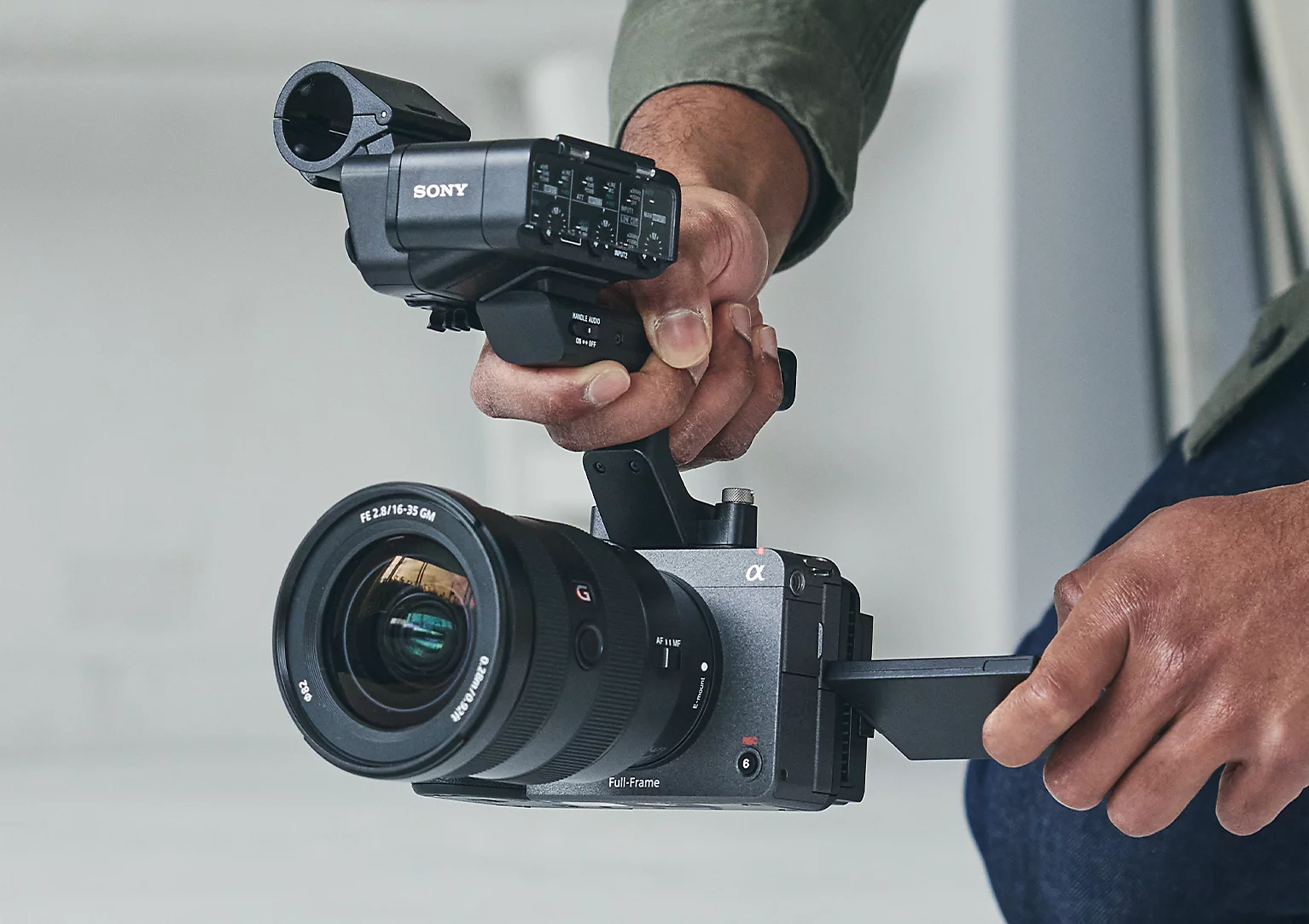
The FX3 uses Sony’s E-mount, one of the largest lens and accessory ecosystems available. For lens options on Sony’s newer FX5, which shares the mount, see Sony FX5 Lens Guide.
The FP2 uses the L-Mount, shared with Panasonic and Leica, and Sigma makes a wide range of lenses for it. Sigma also announced a new 50mm f/1.4 CL lens alongside the FP2.
Competitive Context
Both cameras compete with Sony’s newer FX5, which adds a stacked sensor and triple base ISO at a higher price, covered in Sony FX5 vs. FX3. Nikon’s Z5 IIC is another compact full-frame option with internal raw.
For many buyers, the choice comes down to whether they want a proven, all-in-one cinema body or a smaller, newer, more modular camera at a lower price.
The Signal in the Noise
The FX3 is the safer choice for run-and-gun, documentary, and event work. In-body stabilization, 4K 120p, the included XLR handle, a cooling fan, and Sony’s autofocus make it ready to shoot with less setup.
The FP2 makes the most sense for shooters who want open gate, higher resolution, and internal storage in the smallest possible body, and who plan to rig it or fly it on a gimbal. Its lower price also leaves room in the budget for lenses and accessories.
Full specs and hands-on reviews will fill in the gaps, especially on frame rates and stabilization, once the FP2 ships November 11.
Which would you pick for your next small rig, the FP2 or the FX3? Share why in the comments.
Specs & Pricing
| Sigma FP2 | Sony FX3 | |
|---|---|---|
| Price | $2,199 (body) | $3,900 at launch |
| Sensor | 24.5MP full-frame, partially stacked | 12MP full-frame |
| Max resolution | 6K open gate (CINE mode) | 4K |
| High frame rate | Not yet listed | 4K up to 120p |
| Raw | ProRes RAW | 16-bit raw via HDMI |
| Log | L-Log, up to 14.1 stops | S-Log3, 15+ stops (Sony) |
| IBIS | Not listed | 5-axis |
| Storage | 70GB internal + SD | CFexpress Type A / SD (dual) |
| Audio | 32-bit float with optional HU-21 | XLR handle included |
| Viewfinder | Optional EVF-21 | None |
| Weight | 446g with battery | ~1,015g with XLR handle |
| Mount | L-Mount | Sony E-mount |
| Availability | November 11, 2026 | Available now |