Black Forest Labs Upgrades Its FLUX Video Upscaler, Taking Aim at Topaz
Black Forest Labs upgraded its FLUX Video Upscaler, taking clips up to 4K with per-megapixel pricing. BFL says it’s twice as fast as Topaz Astra 2 and costs less.

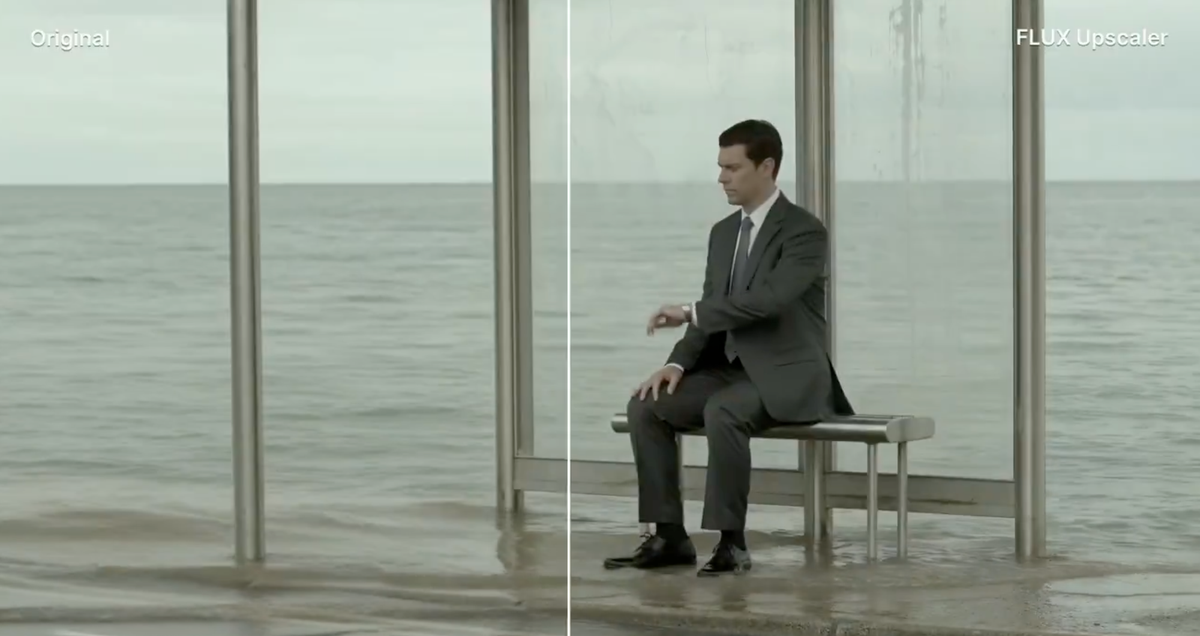
Black Forest Labs has released a full upgrade to its FLUX Video Upscaler, which takes video up to 4K. BFL says it’s now the best video upscaler available, costs less than Topaz Astra 2, and runs twice as fast.
The upscaler works on any video, not just AI-generated clips, and it’s available through BFL’s API and dashboard.
How the FLUX Video Upscaler Works
The FLUX Video Upscaler received a full upgrade.
— Black Forest Labs (@bfl_ai) October 22, 2026
It’s now the best video upscaler on the market, while costing less than Topaz Astra 2 and being twice as fast.
Upscale any video up to 4K.
Link to try it in the comments. pic.twitter.com/ApDezSmjyc
The upscaler accepts source video from 480p up and scales it by 1.5x to 3x, with 2x as the default. Output reaches up to 4K, capped at about 14.4 megapixels per frame, and keeps the source aspect ratio.
Clips can be up to 20 seconds long and 50MB. Longer files are rejected before processing rather than trimmed, so longer videos need to be split into segments first.
BFL says its Creative mode produces the sharpest results on AI-generated footage.
How Pricing Works
BFL charges per megapixel-second of output, based on the final frame size and the clip’s length. Input resolution, upscale factor, and prompts aren’t charged separately, and rejected clips aren’t charged at all.
BFL’s product page doesn’t list a specific dollar rate. Exact pricing is available on Black Forest Labs’ website.
The Topaz Comparison
BFL’s announcement is aimed squarely at Topaz Labs, whose Astra 2 model is one of the most widely used AI video upscalers. BFL says its upscaler costs less and runs twice as fast, though it hasn’t published benchmark details or speed figures to support the claim.
For reference, Topaz Astra 2 on fal costs $3 for a 10-second clip at up to 1080p and 30fps, or $5 at 4K.
Competitive Context
AI upscaling has become a standard step for AI-generated video, since many models generate at 720p or 1080p. For background on why resolution matters, see AI Video Resolution Explained: From 480p to 4K.
Topaz’s Astra 2 and its desktop software are the best-known options. DaVinci Resolve Studio also includes its own Super Scale feature for upscaling inside the edit.
BFL also makes the FLUX 3 video model, now available in a faster, post-trained version on fal, covered in fal Launches FLUX 3 Max.
The Signal in the Noise
For anyone already generating with FLUX 3 or other models at 720p or 1080p, a cheaper and faster upscaler could lower the cost of getting to 4K delivery. The per-megapixel pricing and the free rejected clips make it straightforward to test.
The “best on the market” claim is BFL’s own, so it’s worth comparing results on your own footage before switching from Topaz. The 20-second limit also makes it better suited to short clips than long edits.
Have you tried upscaling AI video to 4K yet? Share which tool you’re using in the comments.
Specs & Pricing
- Product: FLUX Video Upscaler by Black Forest Labs
- Input: 480p and up; up to 20 seconds and 50MB
- Upscale factor: 1.5x–3x (2x default)
- Max output: Up to 4K (~14.4 megapixels per frame)
- Pricing: Per megapixel-second of output; exact pricing on BFL’s website
- Availability: BFL API and dashboard
- Topaz Astra 2 (on fal, for comparison): $3 per 10 seconds at 1080p/30fps, $5 at 4K/30fps