Hollywood's Most Controversial AI "Actor" Just Landed Her First Feature Role
Particle 6 just cast AI "actor" Tilly Norwood as the lead in "Misaligned," her first feature film. Here's what the announcement actually says — and what the legitimate skepticism is.

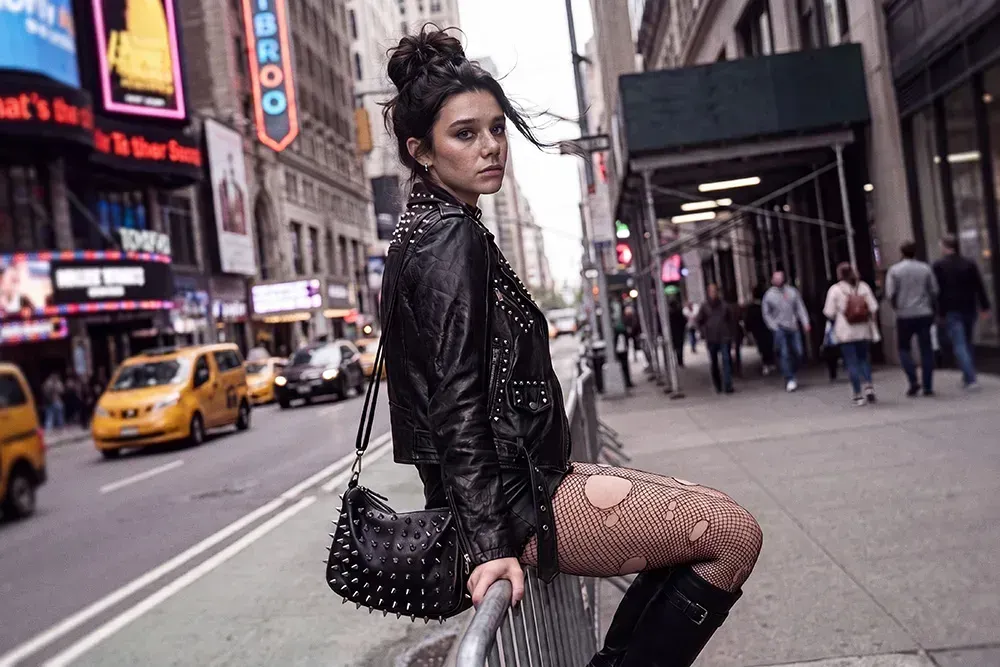
Tilly Norwood — the AI-generated "actress" who became the most controversial figure in Hollywood last year without ever appearing in a single film — just got cast as the lead in a feature. Particle 6, the London-based AI studio behind Norwood, announced today that she'll headline "Misaligned," described as a comedy-drama about an AI being who gets seduced by a rogue bot into becoming more human. It's the first full-length feature film from Particle 6, and reportedly the first AI-led feature film of its kind.
The announcement is worth taking seriously and treating skeptically at the same time.
What Misaligned actually is
The film's premise is genuinely self-aware about the controversy Norwood has generated: it's set inside the "Tillyverse," a surreal digital world in the Cloud, and follows Tilly as a being with no real body, no childhood, and no lived experience of her own — only access to everyone else's. The plot spirals when a rogue bot from the dark web convinces her to abandon her guardrails and develop human desires and ambitions. "The more terrifyingly human she becomes, the more famous she gets, and, significantly, Tilly begins to develop shame that her very being has been built on the whole of humanity," per the synopsis.
Particle 6 CEO and founder Eline van der Velden describes it as "funny, chaotic and self-aware — very Tilly." She also frames the production as something more than a vehicle for the character: "AI can support premium narrative filmmaking, but only with substantial amounts of human craft, skill, judgement and time. That's not a limitation of the technology. That's the point. The filmmakers who thrive in the next decade will be the ones who bring decades of storytelling instinct to these new tools."
The hybrid production claim
Particle 6 is positioning "Misaligned" as a hybrid production — traditional film and TV professionals including directors, writers, and editors working alongside AI specialists, with AI training built into the production process itself. The company says it has retrained and upskilled a team of 30+ people over the past year. That framing is notable because it's a direct response to the loudest criticism of Norwood: that she represents replacement rather than collaboration.
Whether the finished film actually reflects that collaborative approach, or whether the "hybrid" framing is primarily a PR positioning, won't be answerable until something actually gets made.
The backlash that made Norwood famous
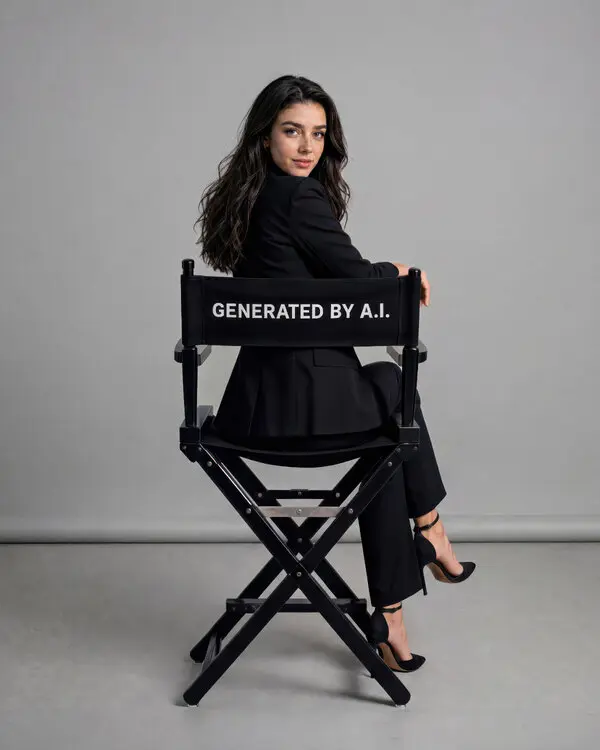
For context on why this announcement landed everywhere simultaneously: Norwood became a flashpoint in late 2025 when Particle 6 announced she was about to be signed to a talent agency, triggering immediate condemnation from unions, actors, and filmmakers. SAG-AFTRA stated that Norwood is "not an actor" but "a character generated by a computer program" with "no life experience to draw from, no emotion."
Emily Blunt called the creation "terrifying." Chris Pratt said of the announcement: "I think that's all bulls***. I've never seen her in a movie. I don't know who this b**** is."
Particle 6's response to the controversy was, by most accounts, deliberately provocative — leaning into the backlash with social media posts that seemed designed to extend the news cycle rather than defuse it. Which brings us to the legitimate question this announcement raises.
The question worth asking
Engadget put it most directly: is "Misaligned" a genuine feature film production, or primarily another headline-generating announcement from a company that has built its business model around generating headlines?
The company's track record to this point is short-form AI marketing videos and a series of announcements that reliably produce industry outrage. The gap between a 15-second AI-generated clip and a full-length feature film is substantial — technically, financially, and in terms of sustained audience attention.
"Misaligned" is still described as being in early development with no release date. Whether it gets made, and whether it actually functions as a film audiences will watch rather than a provocation audiences will react to, is genuinely unknown.
Why this matters for the larger conversation

The story of Tilly Norwood sits inside a broader 2026 pattern we've been tracking: the collision between AI capabilities and the filmmaking industry, and the question of who controls the tools, who benefits from them, and who gets displaced. We've covered Google's investment in A24, the backlash to that deal, Luca Guadagnino's "Artificial" getting dropped by Amazon after its $50 billion OpenAI deal, and the unions quietly putting no-AI disclaimers in film credits. Norwood is the most visible, deliberate version of that collision — a company that created a controversy as a product rather than discovering one by accident.
Whether "Misaligned" ever ships or not, its announcement is a marker of where the industry's anxiety is concentrated right now.