The Tilta Nucleus AF Adapter Lets You Autofocus PL Lenses on Sony — If You Can Get Through the Setup
The Tilta Nucleus AF Adapter puts Sony autofocus on PL cinema lenses. The results are genuinely good. The setup process is genuinely painful. Here's the honest breakdown.

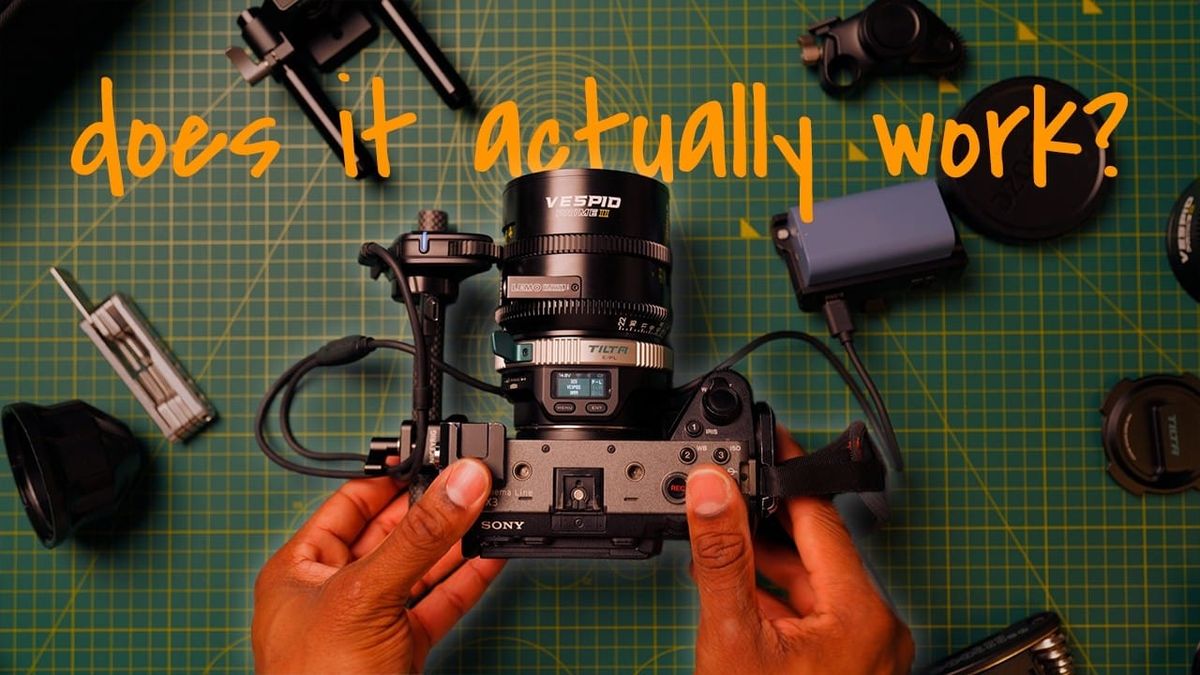
The Tilta Nucleus AF Adapter does something that wasn't practical for solo operators until recently: it puts Sony's native autofocus system to work on PL-mount cinema lenses. The results, once the system is dialed in, are genuinely good. Getting there is a different story.
What It Does
The adapter sits between a PL-mount lens and a Sony E-mount camera body — tested here on the FX3 and FX6 with DZOFILM Vespid Prime 2 primes — and uses Tilta Nucleus Nano II motors to communicate lens position data back to Sony's autofocus system. The camera sees a native-like lens with electronic focus control. The Nucleus motors physically drive the focus ring based on Sony's AF calculations.
The appeal for solo operators is direct: cinema glass with autofocus. The rendering characteristics of PL cine primes — the focus falloff, the flare behavior, the overall image character — paired with the reliability of Sony's subject tracking rather than a human focus puller. For documentary work, event coverage, or any situation where a dedicated AC isn't viable, that combination has real value.
Compatible camera bodies include the Sony FX3, FX6, and A7 series. The system requires Tilta Nucleus Nano II motors; the adapter doesn't work with other motor systems.
The Setup Problem
Here's where the honest part of the review earns its "brutally" qualifier.
The initial configuration process — firmware updates, motor calibration, lens mapping — is described as one of the most frustrating setup experiences the reviewer has encountered. Each component requires separate firmware updates that aren't automatically flagged by the manufacturer. The adapter and each individual motor need to be updated independently. The lens mapping process, which teaches the system where focus positions correspond to specific distances for each lens, is non-intuitive and time-consuming.
As the reviewer puts it: "This is kind of groundbreaking technology... but the adapter is one of the most annoying things you've ever had to work with."
The physical design adds another friction point: the current screen placement and USB-C port location create ergonomic conflicts with standard camera cages and top handles. It's a solvable problem with the right cage configuration, but it's an additional variable to work around during a setup process that's already demanding.
The Performance Once It's Running
Get through the setup and the system works. Subject tracking is reliable. The autofocus behavior doesn't match the instant snap of native electronic lenses — the mechanical motor drive introduces a response speed that's more measured — but for documentary-style shooting where subjects are moving through a scene rather than snapping to a new focus plane instantly, the tracking holds.
The reviewer's summary: "Once you get past that [mapping], the results you can get are so so so good."
That's the fundamental tension in this product. The output quality is high enough to justify the purchase. The path to that output quality requires a few hours of patient configuration work that will frustrate anyone who expects plug-and-play behavior from a $500-plus adapter.
Who This Is For
The use case that makes the most sense for the Nucleus AF Adapter is a solo operator or small crew working documentary or commercial work who wants the optical character of cinema glass without a dedicated focus puller.
For narrative production with a full camera department, a focus puller pulling cinema glass manually is still the more controlled and reliable approach — the mechanical motor response isn't going to match a skilled human puller for precision on a locked narrative setup. For a solo documentary shooter following a subject through an uncontrolled environment, reliable autofocus tracking on PL glass is a meaningful capability that the alternative (pulling focus manually while operating) can't match.
The reviewer's honest threshold test: "If you haven't got the patience to really take a few hours to sit down figure this thing out... you don't want it enough."
Competitive Context
The Nucleus AF Adapter competes with LiDAR-based autofocus adapter systems and with solutions from Viltrox, which the reviewer found less compelling. The broader market context is a growing category of tools aimed at solo operators who want cinematic optical characteristics without the crew overhead that cinema glass traditionally requires.
Native electronic autofocus lenses — Sony G Master, Sigma Art, and similar — remain the straightforward answer for solo operators who prioritize reliability over optical character. The Nucleus AF Adapter is for operators who've made a deliberate choice to shoot on cinema glass and want to recover some of the workflow advantages that electronic lenses provide.
The Signal in the Noise
The Nucleus AF Adapter is a legitimate solution to a real problem, with a setup process that doesn't match the quality of the output. That gap is worth knowing about before purchase. The adapter isn't broken — it's configurable, and the configuration takes time.
For solo operators who regularly shoot on Sony bodies and own or rent PL glass, the time investment in setup pays off across repeated use. For someone considering the adapter as a one-project solution, the setup overhead probably doesn't make sense.
Specs & Pricing
Tilta Nucleus AF Adapter specifications:
- Mount: PL to Sony E-mount
- Compatible bodies: Sony FX3, FX6, A7 series
- Required motors: Tilta Nucleus Nano II
- Firmware: Requires separate updates for adapter and each motor
- Physical: Screen and USB-C placement creates ergonomic conflicts with some cage configurations
Pricing:
- Tilta Nucleus AF Adapter: current pricing at tilta.com
- Tilta Nucleus Nano II motors: approximately $149 each at B&H; multiple motors required for full lens control
- DZOFILM Vespid Prime 2 primes (used in review): pricing varies by focal length, available at bhphotovideo.com
Resources & Reads
- It's JC!'s full review: https://www.youtube.com/watch?v=pnqxxMXpTgU
- Tilta Nucleus AF Adapter product page: https://tilta.com
- Tilta Nucleus Nano II motor: https://www.bhphotovideo.com/c/search?Ntt=tilta+nucleus+nano+ii
- DZOFILM Vespid Prime 2 product page: https://www.dzofilm.com/collections/vespid-prime